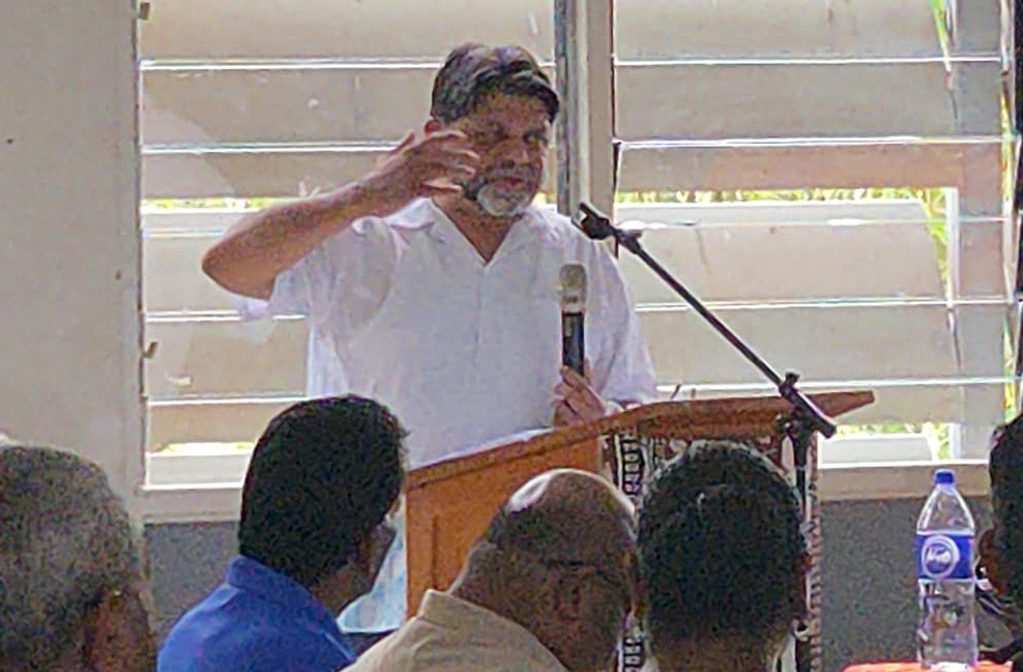
FORMER attorney-general Aiyaz Sayed-Khaiyum has questioned the proposed role of the Great Council of Chiefs (GCC) in appointing Fiji’s President and Vice-President, arguing that the head of State should represent all citizens.
Speaking at a public consultation on the proposed constitutional amendments in Labasa Mr Sayed-Khaiyum said the President was expected to symbolise national unity.
“The President is supposed to symbolise the unity of the country,” he said.
“Supposed to symbolise and bring everybody together, whether they’re in Cikobia, whether they’re in Yasawa, or Rotuma, everywhere, they’re supposed to bring the unity of the country.”
He questioned why the appointments should be reserved exclusively for an indigenous institution rather than made through Parliament.
“Now, why should the President, instead of being elected by the House of Representatives or by Parliament, should be only given exclusively to a body that is indigenous?”
Mr Sayed-Khaiyum said the role of traditional chiefs should be respected without necessarily giving them political authority.
“Chiefs are chiefs, the chiefs are here to stay, and people are to honour them. It does not mean they’re given political significance.”
He warned that the proposed arrangements could deepen divisions within the iTaukei community, particularly between chiefs and commoners.
“So, what I’m concerned about is that this constitution, Prime Minister, is going to create a bigger divide within the iTaukei people themselves.
“The commoners and the chief members, and the haves and the have-nots.”
Mr Sayed-Khaiyum also questioned proposals concerning religious values in constitutional interpretation, saying people already had the liberty to practise their faith.
He argued that the Government should remain neutral and that existing laws already addressed many of the principles raised in debates about religious values.
His submission raised broader questions about representation, equality and the balance between traditional institutions and political governance under the proposed amendments.