
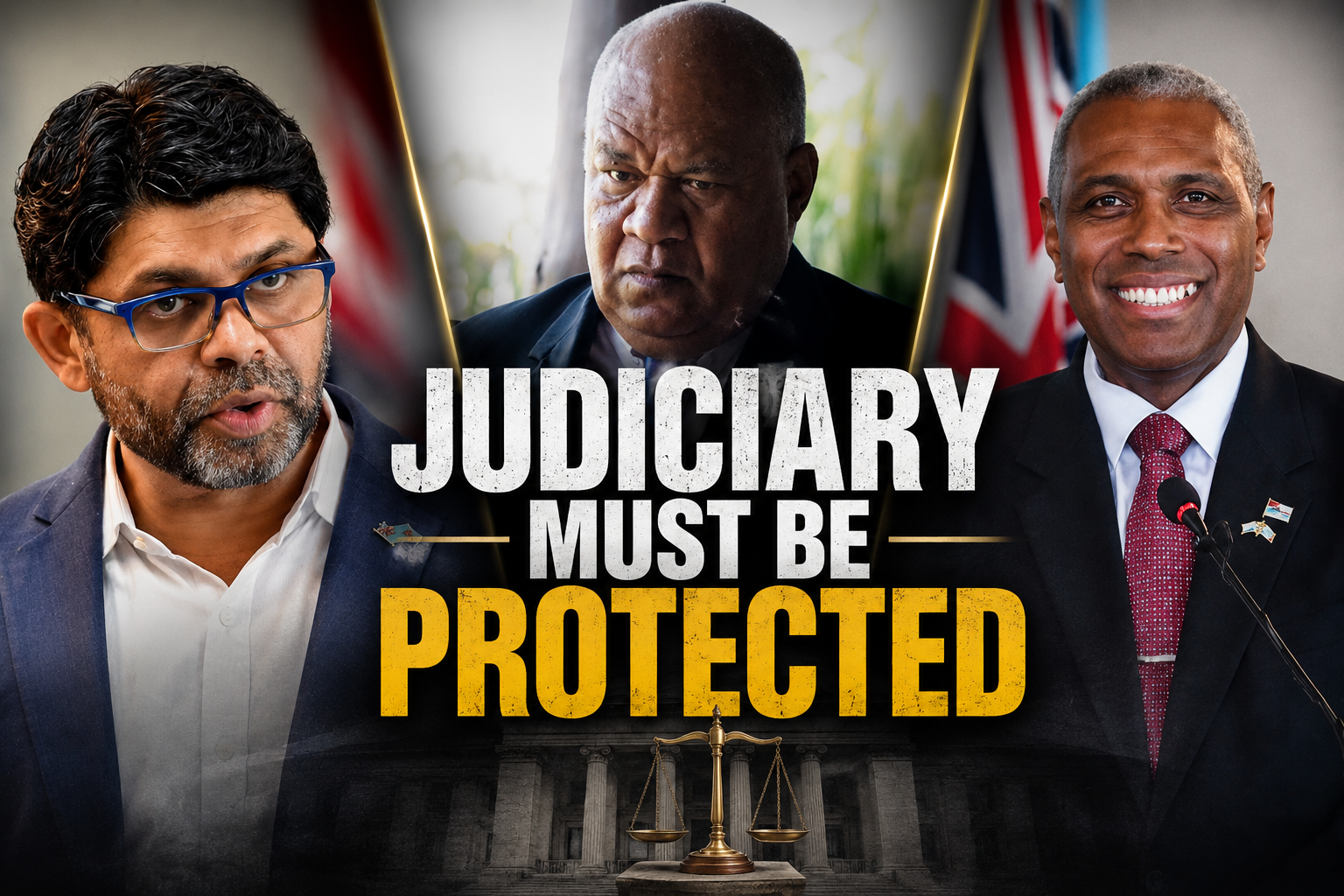
Former Attorney-General Aiyaz Sayed-Khaiyum says it is the responsibility of the Acting Attorney-General to protect Fiji’s judiciary from public attacks that could undermine confidence in the courts.
In a social media post, Sayed-Khaiyum said more than a month had passed since a politician published what he described as disparaging comments and a video targeting Chief Justice Sailesi Temo following the judgment in the State v Aiyaz Sayed-Khaiyum and Mohammed Saneem case on 26 June 2026.
He claimed the comments amounted to contempt of court and questioned why no legal action had been taken.
“The obvious person who can immediately and effectively do something tangible about it is the Attorney-General, in our situation the Acting Attorney General,” Sayed-Khaiyum said.
He argued that safeguarding the independence and integrity of the judiciary is a core responsibility of the Attorney-General.
“It is the absolute responsibility of the Attorney-General to safeguard the Honourable Chief Justice, any member of the judiciary, the judiciary as a whole from being attacked, maligned and threatened by any member of the public.”
Sayed-Khaiyum said contemptuous remarks erode public confidence in the justice system.
“Contemptuous comments undermine the standing of the judiciary. A standing that is critically necessary to ensure that the sanctity of the workings and independence of the judiciary is maintained unhindered and respected by all,” he said.
He said the legal test for contempt is whether comments create a real risk of undermining the authority, integrity and impartiality of the courts in the eyes of a fair-minded and reasonable member of the public.
Sayed-Khaiyum also questioned whether the Acting Attorney-General’s response would have differed had criticism of the judiciary come from another group.
“The Acting Attorney-General needs to understand that applying the law, and in this case protecting the judiciary, must be above his political and personal views and proclivities. He needs to apply and practice the law impartially,” he said.
While acknowledging that court decisions can be criticised through legal analysis or appealed through the courts, Sayed-Khaiyum said there was a clear distinction between legitimate criticism and personal attacks on judges.
“You cannot malign a judge or the Judiciary as a whole just because you don’t like the decision of the Court,” he said.
Sayed-Khaiyum urged the Acting Attorney-General to immediately commence contempt proceedings, arguing that protecting the judiciary and preserving public confidence in the administration of justice must take precedence over political considerations.

