With the Government aiming to introduce national container deposit legislation next month, Fiji’s Return & Earn recycling scheme is urgently calling for stakeholder alignment to transition the program from a voluntary system into a mandatory compliance model.
Without legislative backing to compel all beverage manufacturers and importers to contribute, the private sector-led initiative has reached the upper limit of what its existing funding can sustain.
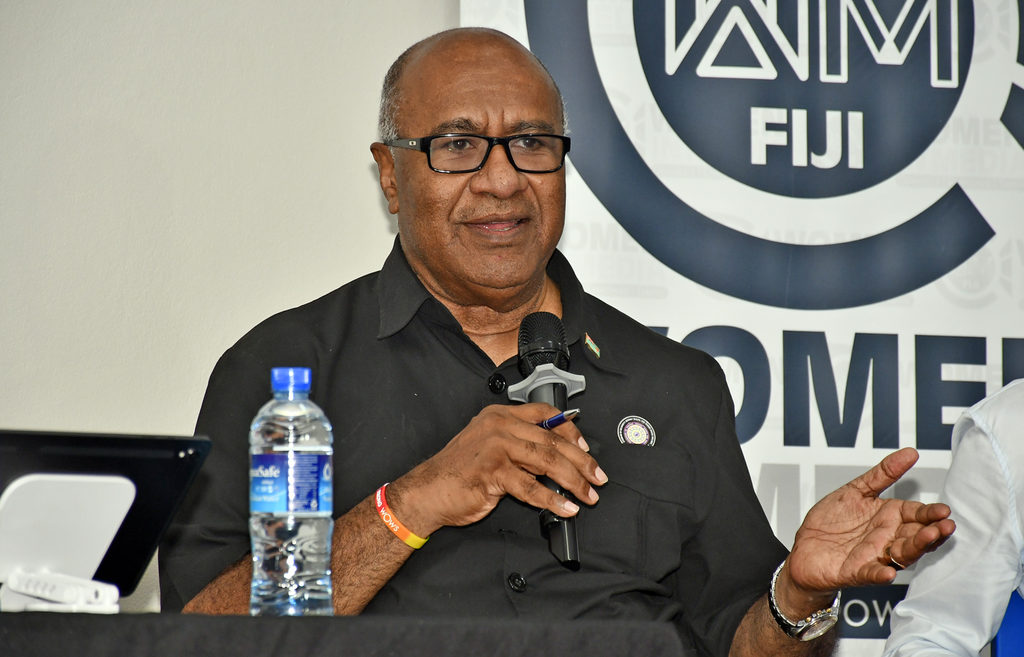
Return & Earn Fiji representative Dwain Qalovaki said only seven out of more than 50 beverage companies operating in or importing into Fiji are currently funding the scheme.
“That’s what legislation is meant to achieve, making sure that everyone is compelled to move from a voluntary system to a compliance system,” Mr Qalovaki told The Fiji Times in an interview.
He said discussions with the Government indicated an intention to move the matter forward next month to put the national legislation in place.
“But we need to all align on what the legislation actually looks like – as a private sector, as NGOs, as government – so that we can prepare for its implementation. If we don’t know what’s in the legislation, all the stakeholders aren’t able to adequately prepare for that transition,” he added.
Financial threshold reached
Between January and October this year, the small group of participating companies – which includes Motibhai Group – invested about $2 million into the system.
This voluntary funding covers the five-cent per container refunds paid to the public, the handling fees paid to municipal councils for operating collection centres, and physical collection infrastructure.
Infrastructure investments include sorting tables, industrial scales, and collection bags at municipal centres, as well as the transport and truck network moving containers to processing depots in Lautoka and Suva.
At the Lautoka and Suva depots, PET and aluminium machines process the collected waste into export-ready feedstock. However, revenue generated from selling processed PET flake and aluminium overseas does not cover the scheme’s total operational expenses.
“The revenue from the sale of the material supplements the operating cost, but it by no means covers the entirety of the operating cost,” Mr Qalovaki said.
“And so that’s why it’s important for us to get all the beverage companies on board, because it means that everyone is able to contribute and share the financial responsibility. That is why we need the legislation.”
With the scheme collecting more than 20 million containers in 10 months at a five-cent refund rate, Mr Qalovaki said current backers are stretching their investment limits.
“We’re now at the higher end of our threshold in terms of what our current investments can achieve. And what we’re waiting for is for clarity of what the legislation will look like so that the private sector can continue to deepen its investment in this program.”
Collection milestones and community uptake
From January to October this year, Return & Earn collected more than 20 million beverage containers nationwide, split almost evenly at 50-50 between aluminium cans and PET plastic bottles.
Major Viti Levu municipalities are driving the bulk of those volumes.
Lautoka, Nadi, and Lami municipal councils account for more than 40 per cent of national collections, collectively bringing in more than one million beverage containers every month.
Mr Qalovaki said the steady growth demonstrated that the model for nationalising beverage container collection worked, while also providing an income stream for ordinary citizens.
Across the participating municipalities, families, retirees, school children, and stay-at-home adults are redeeming beverage containers at the five-cent rate to supplement their household incomes. Farmers and rural communities have also begun collecting and redeeming containers as an additional source of income.
“This trend tells us that Return & Earn will continue to grow steadily.
“We need legislation to ensure that the financial mechanism is one that is financially sustainable, given the current conditions that we’re going through.”
National and maritime
expansion
Return & Earn currently operates in eight of Fiji’s 13 municipalities. While the system is designed as a national network, expanding into the remaining five municipalities—including on Vanua Levu—and reaching the maritime islands depends entirely on passing the container deposit law.
“It’s a national system. Right now, we’re in eight of the 13 municipalities.
“Once we have the legislation passed, we will roll out in the other five municipalities and then across the maritime. That’s why we need government to do its part, which is create the legislation that enables this environment.”
According to Mr Qalovaki, transitioning Return & Earn from a private sector-funded initiative into Fiji’s permanent national waste management infrastructure is the only way to scale current collection figures.
“This performance that we’re seeing with Return & Earn to double, to triple, to quadruple—it starts with strong laws around ensuring that all beverage companies participate.
“But equally as important that the financial model is sustainable.”