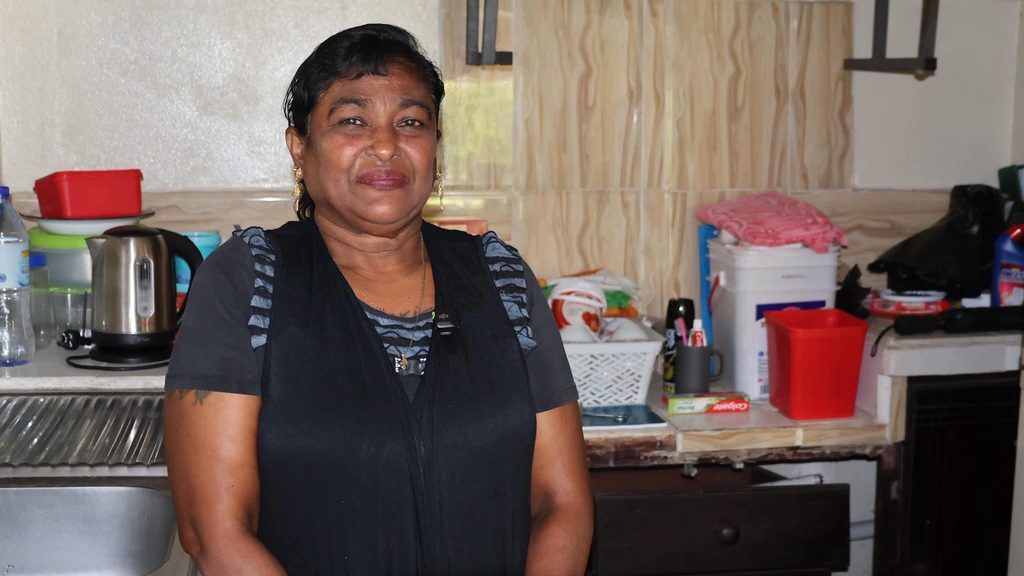
Today, more than 10 years after her diagnosis, Pushpa Wati is living a life she once feared she might never see again.
The ovarian cancer survivor is healthy, working and caring for her family.
The pain that once made sitting at a sewing machine unbearable became the beginning of a journey that tested her physically, emotionally and spiritually.
Yet it is not the fear of her diagnosis that she wants other women to remember.
It is the importance of seeking help, the value of support and the hope that can endure even in the darkest moments.
Her message is especially important for women who may be experiencing persistent pain but are delaying medical attention.
She urges women not to wait until symptoms become unbearable before seeking help.
Her own experience showed how difficult it can be to find answers when early tests do not reveal the cause of the problem.
Persistent or unexplained symptoms deserve medical attention, even when initial results are clear.
Ovarian cancer can be difficult to detect early because its symptoms may be vague. Persistent abdominal or pelvic pain, bloating, feeling full quickly, or changes in urinary habits should be discussed with a health professional.
She worked at United Apparel, but sitting at the machine became unbearable. Her back and stomach kept hurting.
Doctors did Pap smears, blood tests, and urine tests. The results kept coming back clear.
They then sent her samples overseas for testing. After two to three weeks, she was called back to the hospital.
She was told she had stage three ovarian cancer. By the time she arrived in India for treatment, it had moved to stage four.
Ms Wati had just built her house when she got the news. There was no money for overseas treatment.
She and her family started selling whatever they could.
“We sold food, flowers, we did all sorts of things, but God was with us and showed us the way to get the money,” she said.
In July 2016, she left Fiji with her husband. Her daughter, who was six years old at the time, had to stay with her parents.
In India, doctors told her she had a 50 per cent chance of survival.
Treatment started two weeks after they arrived. She had surgery, then chemotherapy and radiation.
The treatment lasted three months. It left her too weak to stand, eat, or wash herself.
“My husband was there. He did everything for me.”
After three months, doctors told her she was healed.
“Even the doctors were excited. They said they wouldn’t perform any operation. They only did treatment. It was a miracle.”
When she returned to Fiji, she became sick again and was admitted to the Colonial War Memorial Hospital.
There she was told she would need another round of chemotherapy. She prayed again.
“God, please help me, I don’t want to go through another round of chemotherapy. If I am healed in your name, that is enough for me.”
The CT scan showed she was clear.
Through her journey, she learned she was not alone. She joined the Fiji Cancer Society and later met Mereane Vavataga, who introduced her to Self Care Retreat Fiji.
At the retreat, she met other women who had gone through cancer.
“When I came here, I found peace, happiness, and love. I saw that I am not the only one who is sick. So many women are sick, but they survived.”
She now goes every Wednesday for Bible study and prayer.
“I don’t want to miss it. I want to get closer to God. I thank Mereane for accepting us and looking after us.”
She says she is living proof that there is life after cancer.
She knows that every cancer journey is different, and her experience cannot guarantee the same outcome for others. But she hopes her survival will give women facing their own battles the courage to keep seeking care and to hold on to hope
“I thank God. It was a miracle through Him. I want other women to know that if I can survive, they can too.”