The Fiji Police Commissioner would be required to respond to complaints against police staff within 30 days of receiving them under a proposed amendment to the Fiji Police Bill 2026.
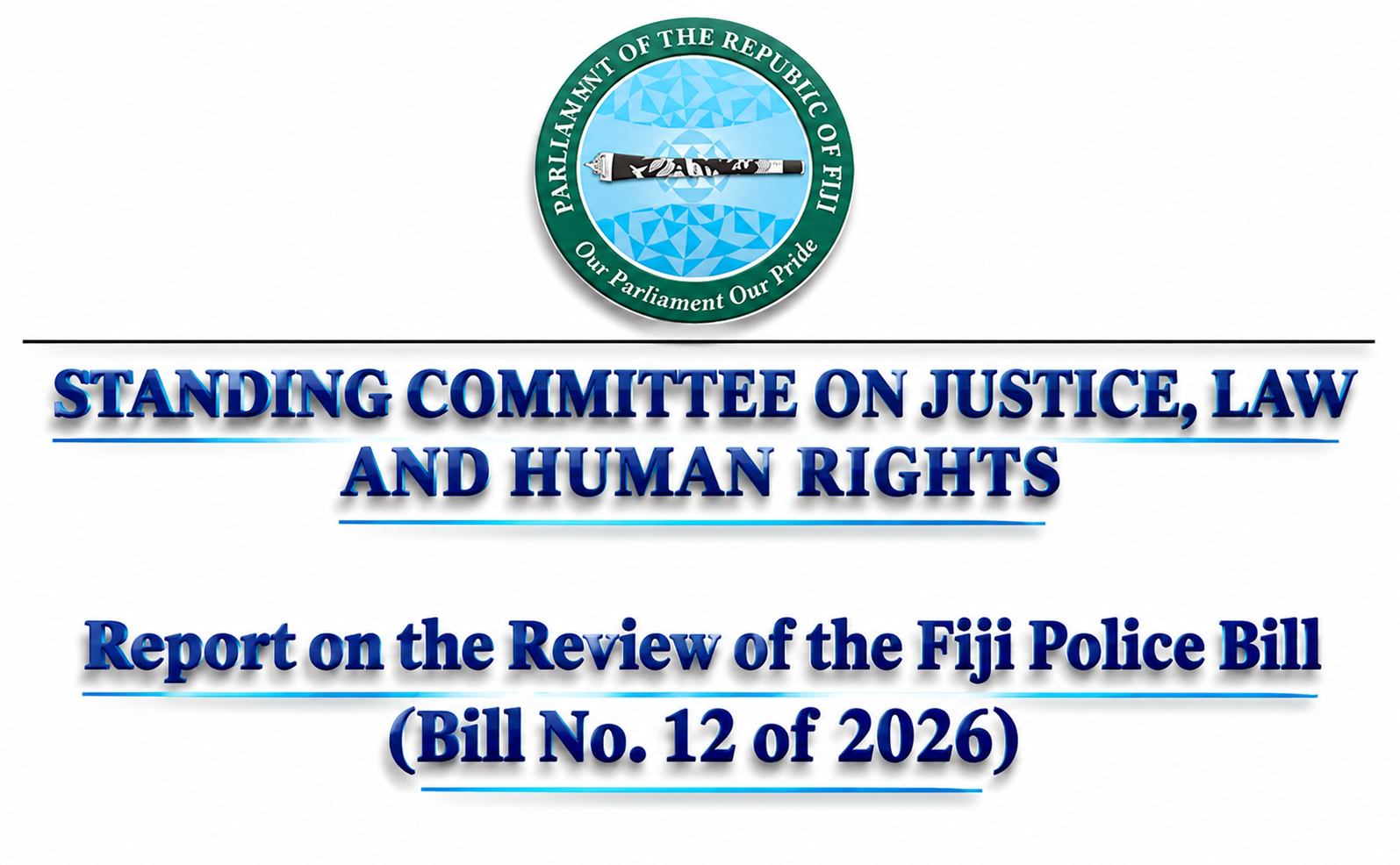
The recommendation is contained in the Standing Committee on Justice, Law and Human Rights’ report on the review of the Fiji Police Bill (Bill No. 12 of 2026), tabled in Parliament.
The committee has recommended inserting a new provision under Clause 126 to make it mandatory for the Commissioner to respond to complaints within the 30-day period.
“The Committee recommended the insertion of a new sub-clause to require the Commissioner to respond to complaints within 30 days and ensure timely resolution of complaints,” the report states.
The proposed amendment states: “The Commissioner must within 30 days after receiving a complaint, respond to the complaint.”
The committee has also retained a provision requiring the Commissioner to establish a platform allowing members of the public to lodge complaints anonymously through a user-friendly system.
Under the proposed legislation, any person would be able to lodge a complaint against a member of police staff in the prescribed form and manner.
Clause 127 further requires complaints to be investigated as soon as practicable.
The Commissioner would also have the authority to dismiss complaints considered frivolous, vexatious, repetitive, lacking substance or outside the Commissioner’s jurisdiction.
However, complainants would have the right to appeal such dismissals to the Fiji Police Force Disciplinary Tribunal.
Complaints that are not dismissed would be referred to a senior officer for consideration by an internal tribunal.
The committee said its proposed amendments were aimed at strengthening accountability, transparency and public confidence in the Fiji Police Force.
The Fiji Police Bill 2026 seeks to repeal and replace the Police Act 1965, introducing a modern legislative framework covering police powers, investigations, disciplinary procedures and community policing.