LAST week, we left the Andersons returning to Delanasau after what had been their longest break from the plantation in many years.
Their months in Auckland had offered a temporary escape from the pressures of plantation life and the uncertainties of wartime Fiji, but by the time Leslie Norman Anderson (LNA) and Hilda stepped back onto the property in early 1944, the realities awaiting them had become impossible to ignore.
In this next part of “The View from Delanasau: The Life and Times of Leslie Norman Anderson (LNA)”, James Norman Stevenson writes that around October 1943, the Andersons had sailed for Auckland aboard the United States troopship Talamanka via the New Hebrides, now Vanuatu.
The vessel serviced American military bases across the Pacific during the war and, for the Andersons, the voyage itself became a welcome respite.
Their stay at Grey Lynn in Auckland proved, Stevenson writes, “just the tonic needed”.
It lasted several months and included what was remembered as a particularly happy Christmas.
For Hilda, there was also the simple pleasure of being close to the Adelphi Picture Theatre, only a short walk down Castle St, allowing her to indulge once again in her love of films.
But in March 1944, they returned home to Delanasau, once again aboard the Talamanka.
Although refreshed by the holiday, LNA had begun to accept that serious consideration needed to be given to the future.
His declining health had become the catalyst.
More than ever, the plantation demanded constant hands-on management.
The copra sheds and sun-drying facilities stood on the flats below the home hill, and the repeated walks up and down the incline each day were beginning to take a visible toll on him.
There were broader concerns as well.
Synthetic oil products developed during the war were now becoming available to the public, raising uncertainty about the long-term future of the copra industry itself.
And beyond the practical matters of business and health lay another question that required thoughtful consideration: where would they live once their time at Delanasau came to an end?
Meanwhile on Viti Levu, their daughter Jean Kennedy had suffered the loss of her husband Martin Kennedy, who died while serving with the Royal New Zealand Air Force.
She had since regained possession of her property, Cawa, in Nadi after wartime government controls were lifted and restrictions removed.
Jean offered her parents a home there, and they accepted.
So began the painful task of preparing to leave Delanasau.
Stevenson writes that the process would take many months, as the Andersons sorted through decades of possessions and memories, deciding what could realistically be taken and what would remain behind.
It was arranged with the controlling interests of the plantation that LNA’s longtime acquaintance, Mah Yoh would move across the river and take over management of Delanasau.
Yet even as preparations for departure continued, the routines of plantation life still carried on.
Villagers from distant settlements travelled to Delanasau to pay their respects.
Among the regular visitors was Mohamed, an Indian landowner from the rice-growing district of Sarawaga, who often visited on postal matters.
Each Christmas he presented the Andersons with a goat, which in due course became what Stevenson described as “the most delicious of curries”.
Showing particular sadness during this period was the respected longtime retainer Lala.
As a young man, he had stood waiting at the wharf to welcome LNA when he first arrived at Delanasau many years earlier.
Over time he had taught the Anderson children local customs and language, and later extended the same guidance to the grandchildren.
In those final months, Stevenson suggests LNA’s thoughts often drifted back over the many characters and moments that had shaped life at Delanasau.
There was Gaugau, the village gossip and prolific fisherwoman who always seemed to have another story about someone.
On one occasion, villagers from Lekutu reportedly sought revenge on her by reporting her to authorities for fishing on a Sunday, regarded at the time as a serious offence.
The complaint required a long walk to the police station at Nabouwalu.
When Gaugau later brought the summons to LNA, he somehow managed to negotiate its withdrawal.
“Such was Colonial Fiji,” Stevenson writes.
Another memory involved son Don, who once “went bush” to avoid boarding the Adi Rewa back to school.
Even Lala was unable to locate him.
Only later did Don reveal that he had hidden high within the leaves of a Kavika tree far from the wharf.
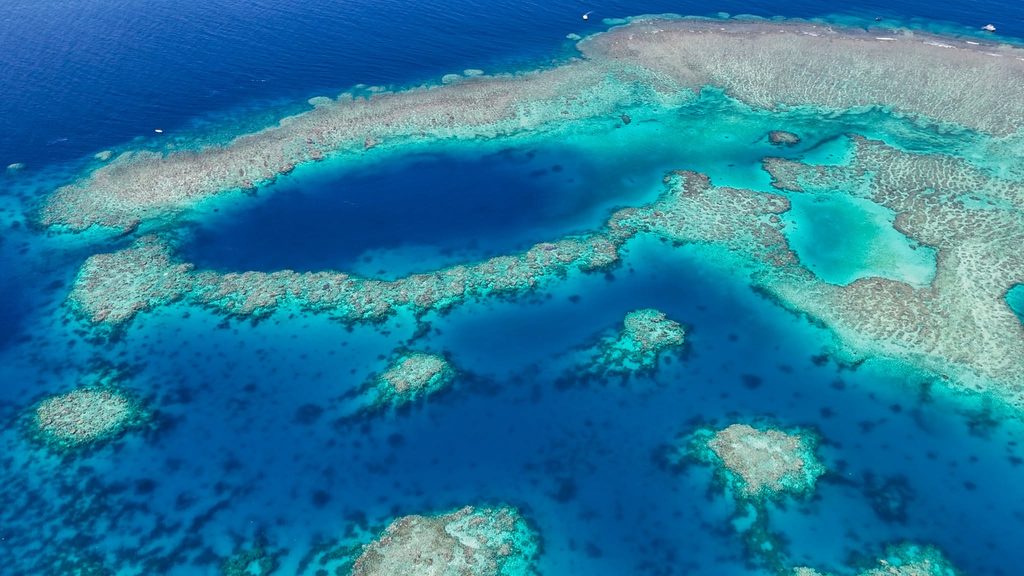
There were also recollections of successful fishing trips through the reefs of Bua Bay aboard the plantation launch with Sir Maynard Hedstrom, Suva businessmen and colonial administrators conducting inspection tours through the provinces.
The hallway at Delanasau had even been fitted with racks to hold their deep-sea fishing rods.
And there were the cyclone and flood seasons, when the plantation could be entirely cut off for weeks at a time, followed always by the exhausting work of clearing and rebuilding afterwards.
For LNA and Hilda, Delanasau was no longer simply a plantation.
It had become a lifetime of memories slowly being packed away.