THE 2025 Pacific Islands Literacy and Numeracy Assessment (PILNA) report provides critical data on how children across 15 Pacific countries are performing in reading and mathematics.
The assessment also contributes to Sustainable Development Goal Indicator 4.1.1, which tracks the proportion of children achieving minimum proficiency in reading and mathematics.
SPC’s Educational Quality and Assessment Programme large-scale assessments team leader Torika Taoi said PILNA had become a key benchmark for evidence-based education planning in the Pacific.
“The release of these results is not the end of the journey. It marks the beginning of the next phase of our work; partnering with countries to interpret and use their data, turning evidence into action,” Ms Taoi said.
She said PILNA’s success reflected strong partnerships between the Pacific Community (SPC), Pacific education systems and development partners, including New Zealand’s Ministry of Foreign Affairs and Trade (MFAT), Australia’s Department of Foreign Affairs and Trade (DFAT), and the Australian Council for Educational Research (ACER).
Australian High Commission’s counsellor for human development Emmeline Cammack said the report provided critical evidence for education reform.
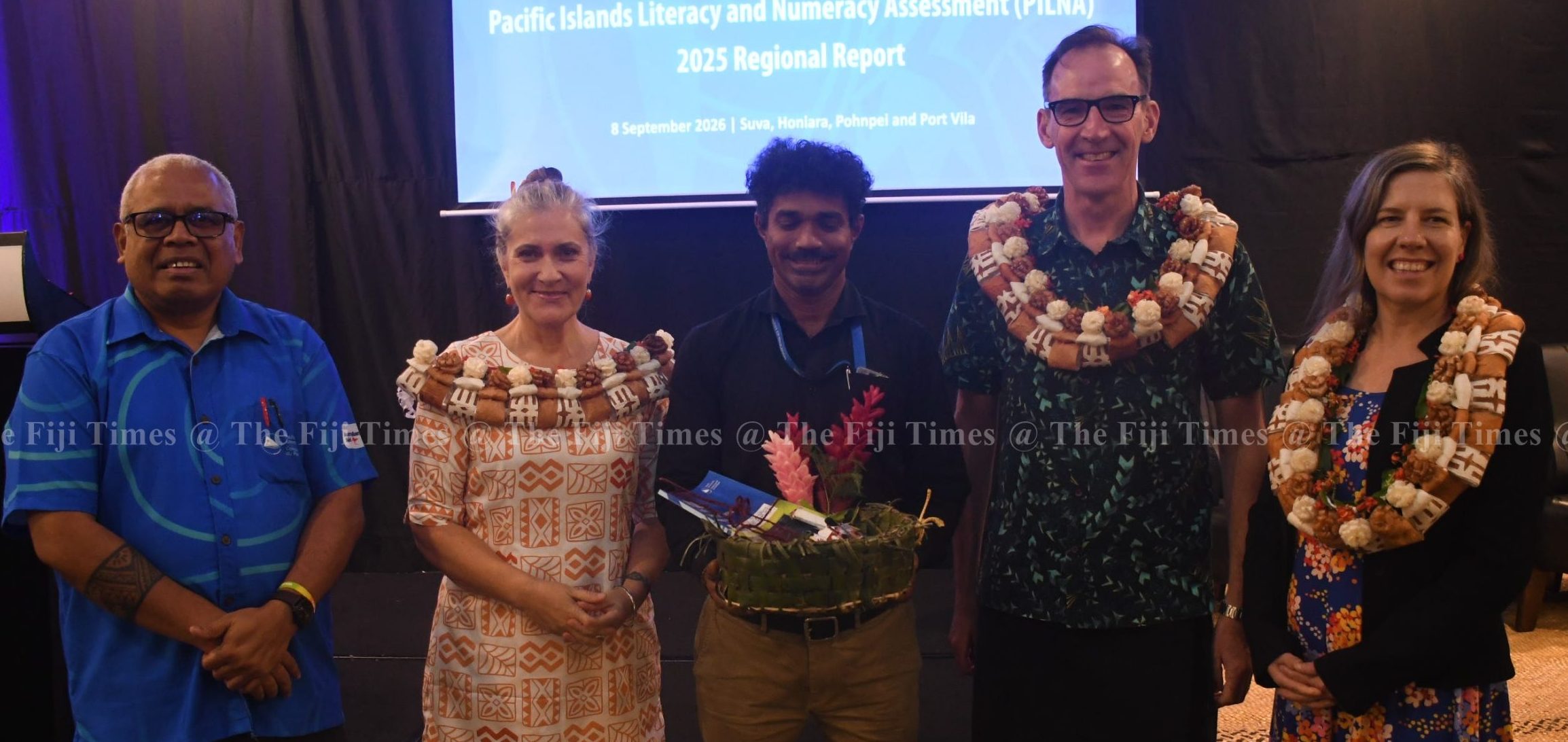
Speaking during the launch at the Grand Pacific Hotel in Suva yesterday, Ms Cammack said the findings would help inform discussions on how education systems across the Pacific could respond to learning challenges and improve student outcomes.
The launch was attended by New Zealand’s High Commissioner to Fiji Greg Andrews, Ms Cammack and SPC Suva regional office’s officer-in-charge Karen Mapusua.