
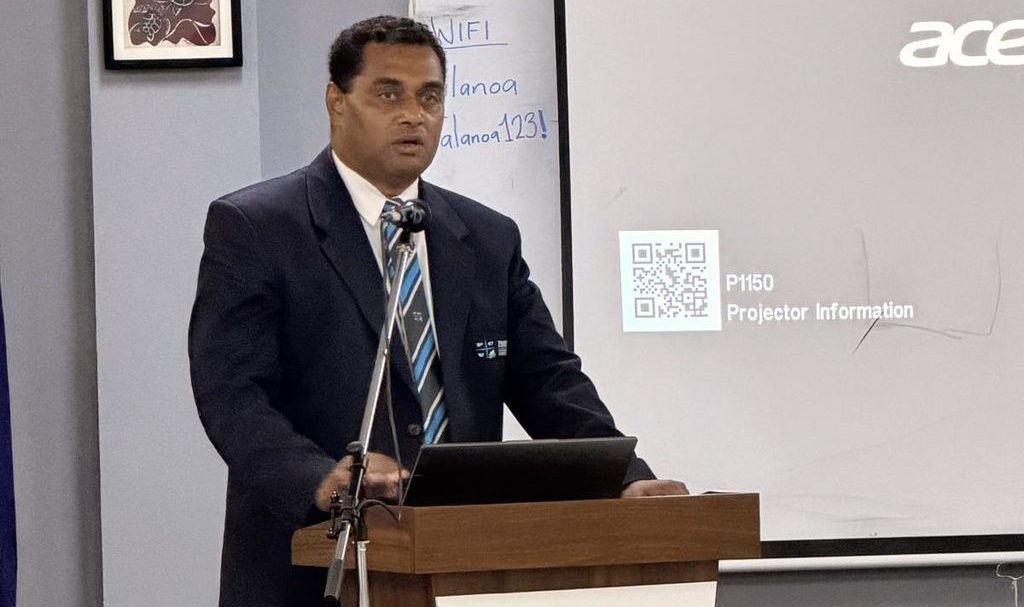
EACH day, Reverend Dr Marika Bale steps into a space where beliefs, cultures, and ideas collide.
He describes this as “both challenging and enriching,” shaped by university students and colleagues from diverse traditions.
What once felt familiar in his village and parish life is now “a different atmosphere altogether,” marked by deeper questioning and higher expectations.
Yet within this complexity, he finds purpose.
Mr Bale, chaplain at Pasifika Communities University in Nasese and a Methodist minister who hails from Gau, says the experience has “really grounded me on my faith.
Rather than certainty, he embraces curiosity, allowing different understandings of God to shape his own. In guiding students, he too is transformed, each encounter pushing him “to the edge, to a position of getting to know more about God.”
For Mr Bale, history is not just about the past, but about making voices heard.
His research “focusses on the historiography of Pacific histories of Christianity,” revealing what he calls “Eurocentric narratives” built largely on missionary records. As a result, he says, “the voices and the stories of the people…were not captured,” and indigenous contributors were often reduced to “helpers.”
This absence shapes his work. He now teaches history beyond written texts, emphasizing oral and material sources so that “stories come out”—stories long missing from dominant narratives. His aim is to challenge “dominant colonial systems and approaches” and make space for overlooked voices.
His foundation, however, lies in the village.
“I was brought up in the village, where the “matanikatuba concept” became a guiding framework in his research and writing,” he says.
It continues to shape how he understands and teaches history.
Looking at Fiji today, he points to “the lingering tension between the different races,” rooted in “persisting colonial ideologies.” These influences remain embedded in systems, including the church, through “colonial categorisation…according to race.”
In response, he calls for new ways forward and offers simple advice: “to know ourselves better.”
Grounded in identity, culture, and faith, he believes communities can face challenges like climate change and poverty together—drawing strength not from imposed systems, but from who they truly are.

