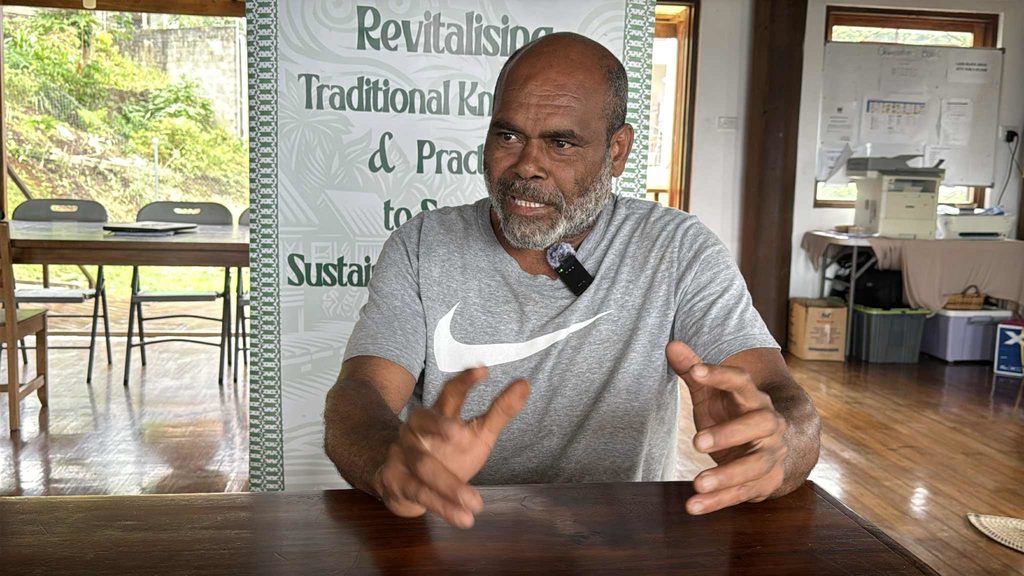
FOR 15 years, Marika Radua committed himself to studying the land as a crop researcher, travelling from research stations to village farms across the country, tracking yields and documenting varieties – all while revisiting memories of accompanying his grandfather as a child to their farm in Yaroi, Savusavu.
As he carried out his research, he observed that the quality of harvests back then were significantly different – the crops were bigger, more climate resilient and tasted better.
Determined to understand why, he quit his job and returned to his village to apply the traditional farming practices he had spent two decades documenting.
“When I realised that the knowledge I had simply needed to be put into practice, I noticed the difference when harvest time came,” he said.
His years of research in villages from Macuata to Cakaudrove also revealed the growing loss of biodiversity across Fiji.
Where the country once had 96 native varieties of dalo and 86 traditional varieties of yam, more than 50 per cent of that biodiversity was now gone, displaced by hybrids that promised quick cash, but could not match the resilience of native crops that had survived floods, droughts and generations of use.
“When trading began, some of the native varieties were lost. Farmers became all about income because they wanted something that offered quick turnaround and cash,” he said.
Mr Radua works with the Soqosoqo Vakamarama iTaukei Cakaudrove (SVTC), helping 14 villages in the province design customised farming calendars based on traditional practices, each adapted to their soil type, climate and dialects.
His work has also brought him back to iTaukei identities.
“When my name goes into the Vola ni Kawa Bula (VKB), three things are needed: fish, animal and tree or plant. There is a reason for that,” he said.
“Your fish, you’re not meant to eat or touch it — it’s meant for someone else. The same with the wood or plant — we don’t touch what’s ours because it’s meant for someone else. We talk about conservation, but it starts with the basics.
“That’s what our elders did. It’s not witchcraft – that was sustainable resource management,” he said.
It is a message he has had to defend.
“In the midst of workshops, people sometimes confront me to ask: Do you practice witchcraft?
“So I jokingly tell them ‘yes’ and then I pull out my Bible
“Moon-face planting where people plant based on the lunar calendar – people have labelled it witchcraft. But Genesis 1:14-19 tells us that after God created the sun, moon and stars, He said use them as a guide or sign of day, night, seasons, a year. Our ancestors lived by this – that’s not superstition, it’s knowledge.
“When you know your fish, your plant, your animal, you will know who you are on land and at sea.
“People no longer know who they are. When we don’t know who we are, there is no care for the things we do or how we do it. We’ve moved with the time, but in doing so, we have failed to take what we’re supposed to that keeps our identity intact.
“Our elders kept that as they went through the change in times, but we failed her.”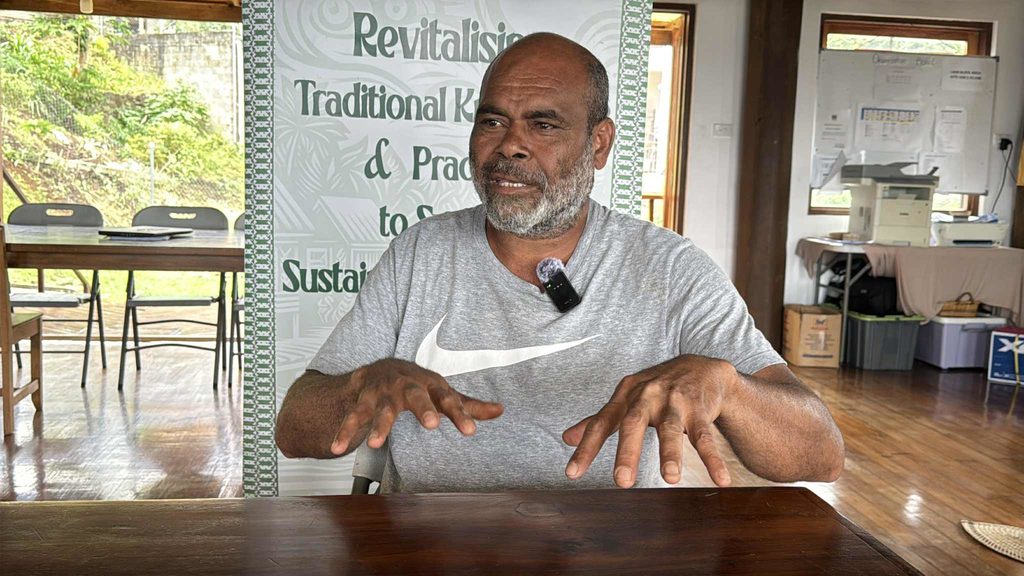
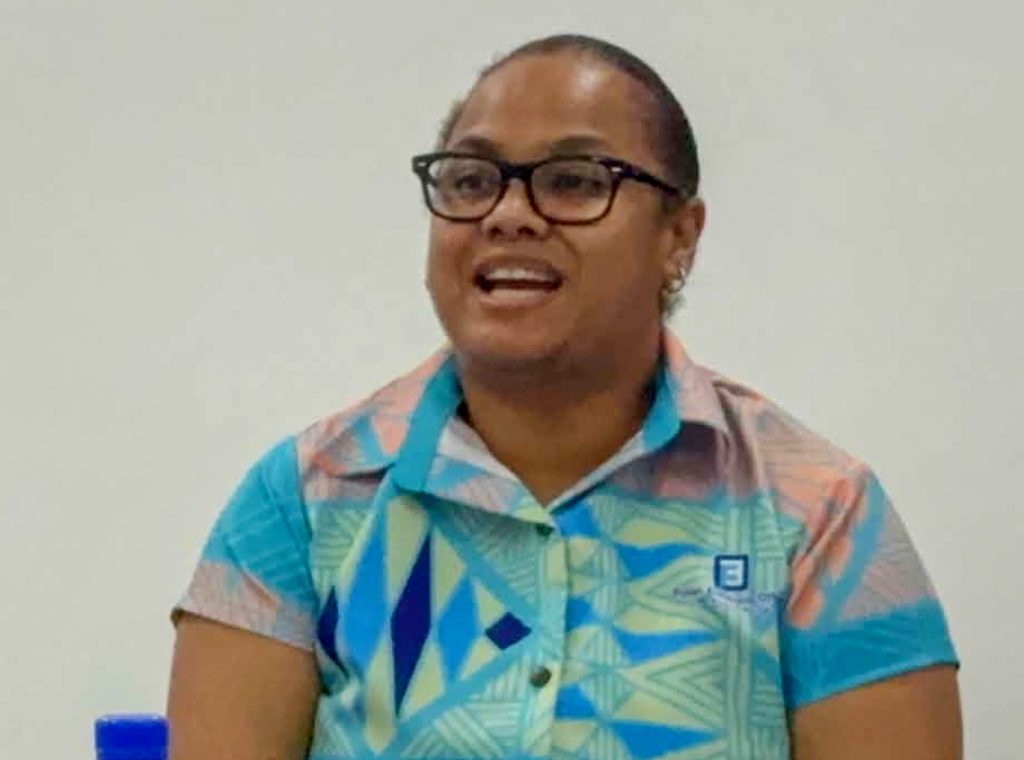
Marika Radua during an interview at the SVTC office in Savusavu. Picture: SAMANTHA RINA