
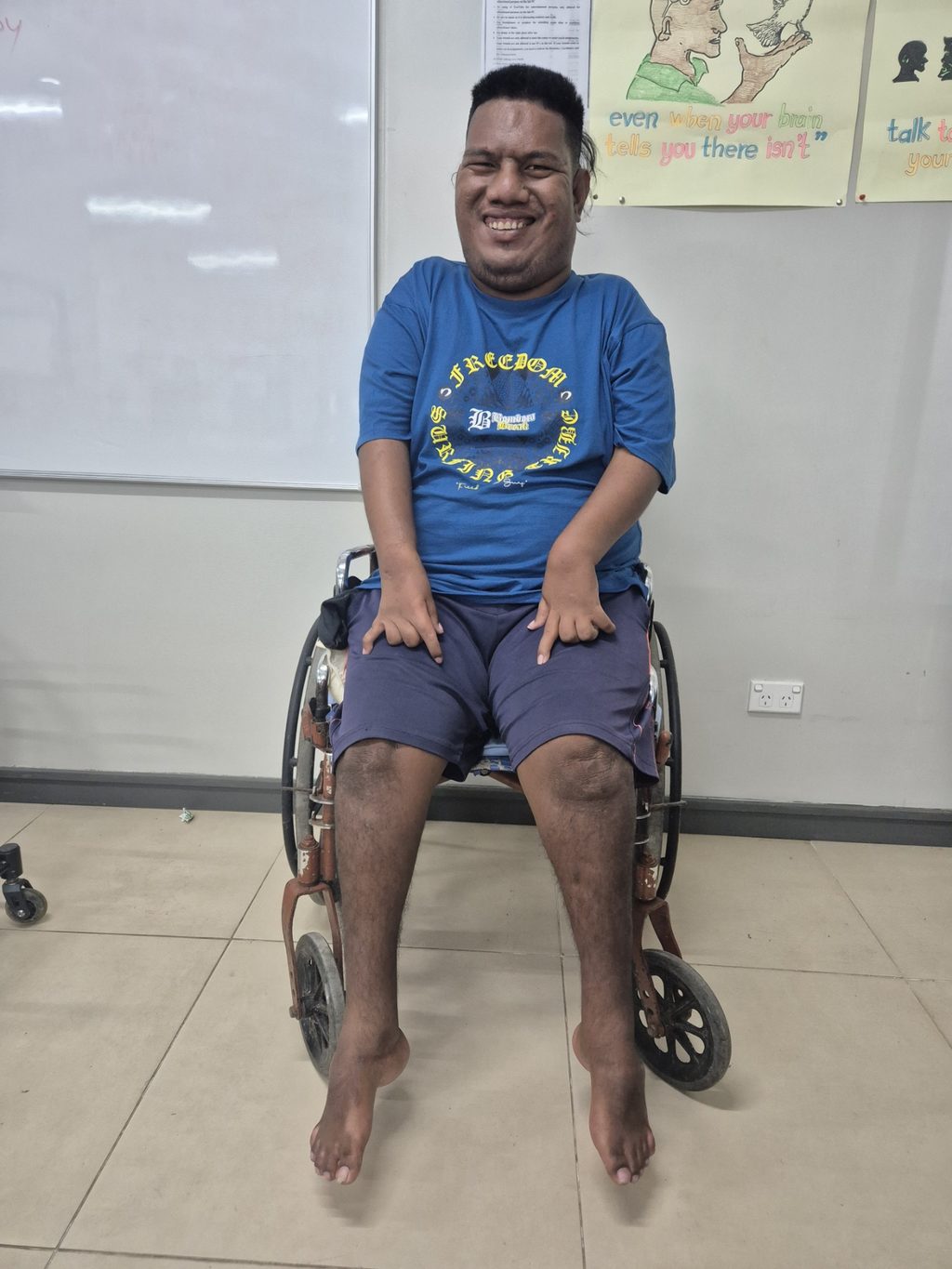
Iakobwa Kabong’s decision to pursue higher education in Fiji is more than just about earning a formal qualification, but rather the 26-year-old’s mission to prove that disability does not define a person’s future.
Originally from Christmas Island in Kiribati, Mr Kabong has become the Fiji National University Disability Centre’s first regional student since the centre was established in 2015.
Living with a physical disability affecting his hands and legs, Mr Kabong is studying for a Diploma in Information Technology at FNU’s College of Engineering and Technical Vocational Education and Training under a Kiribati government scholarship.
Despite the physical challenges he faces daily, he said education had always remained a priority.
“I am able to walk on flat surfaces, but when I encounter slopes, I rely on a wheelchair for support,” he said.
“Living with a physical disability has presented challenges, particularly when tasks take longer to complete. However, these experiences have taught me patience and resilience.”
Mr Kabong said he never allowed his disability to limit his ambitions.
The second eldest of three siblings, he completed a Certificate III in Information and Communication Technology in Kiribati before deciding to further his studies overseas.
He said he first discovered FNU’s IT program through social media and immediately became interested.
“As technology continues to evolve, our country requires qualified people who can help drive digital development.
“My goal is to gain the necessary knowledge and skills and eventually return home to contribute to this sector.”
He believes digital development is becoming increasingly important in Kiribati and hopes his studies will help him support the country’s growing need for skilled IT professionals.
FNU Disability Centre co-ordinator Fuata Faktaufon said the university remained committed to creating an inclusive learning environment for all.
“FNU is committed to ensuring that all students have equitable access to education, including those living with disabilities,” Mr Faktaufon said.
“Our centre works to create a supportive learning environment where students can fully participate in academic life and achieve their potential.”
He said students such as Mr Kabong highlighted the importance of inclusive education and the transformative power it could have across the Pacific.

