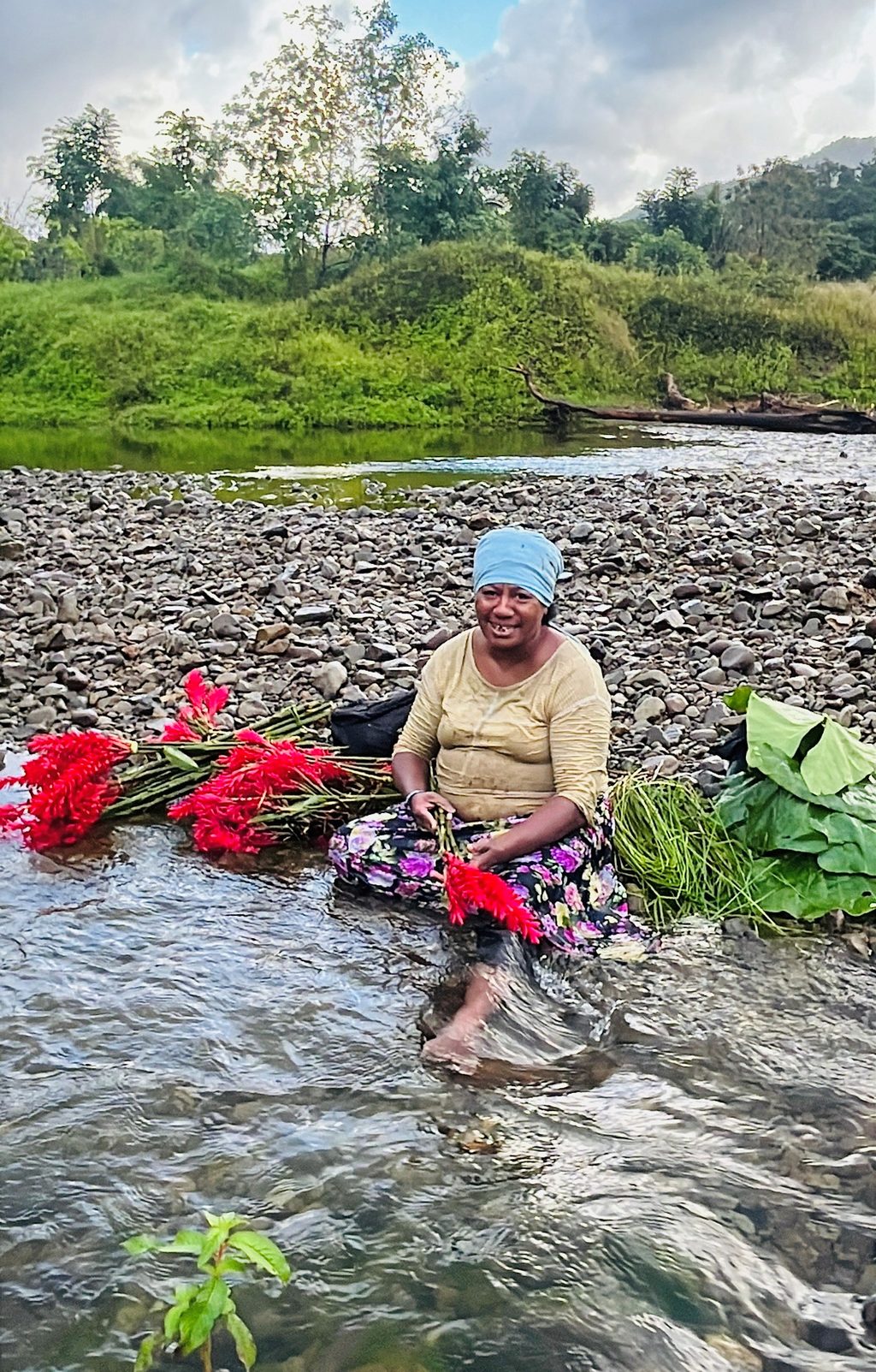
Before each trip to the Suva market, Silivia Rokorube begins her preparations at the cool river where she washes and bundles flowers and vegetables that will help provide for her family.
When The Fiji Times met the mother of two last week, she was seated quietly in the shallow water, surrounded by fresh picked flowers.
With a blue scarf on her head to shield her from the rain Rokorube carefully let the current carry away dirt and insects from her bunch.
It is a routine she repeats every week.
Originally from Nasele Village in Naitasiri, with maternal links to Nasirotu Village, Rokorube is married into Nasirotu, where she and her husband have built their life.
While her husband works on the family farm, she prepares the produce that will eventually make its way to Suva’s bustling market.
Every blossom is inspected carefully before they are brought to the market.
“I clean the flowers to remove the insects before tying them into bundles,” she said.
The flowers she sells are wild red ginger (Alpinia purpurata), which grow abundantly in Fiji’s forests.
Their striking crimson blooms are among the most eye-catching flowers at the market but preparing them takes patience and care.
Alongside the flowers, Rokorube gathers ota or edible fiddlehead ferns, another popular item among market shoppers.
She takes equal care with the delicate ferns, tying them securely into large, covered bundles to prevent the leaves from bruising or wilting after they are picked.
Her market load is completed with lemons and chillies harvested from their farm.
Once everything is ready, another part of the journey begins.
She travels to Suva by carrier, which collects vendors from the village at about 7pm.
Like many women from rural communities, Rokorube spends the night at the market, so she has the best chance of selling her produce when customers arrive the next morning.
She leaves home on Friday night, sells throughout Saturday and returns home later that afternoon.
It is a demanding routine that means sleeping in the cold and spending hours away from her family, but it is one she willingly accepts.
“The money I earn helps us buy groceries and also helps with our village obligations,” she said.
For Rokorube, every carefully washed flower, every neatly tied bundle of ota and every trip to market represents something much bigger than a day’s trade.
It is the inner determination of a village woman doing what she can for her family, turning the abundance of Fiji’s forests and farmland into an income that keeps her household going.