
THE Recycle Organics Program has signed a partnership with the Lautoka City Council on organic waste management.
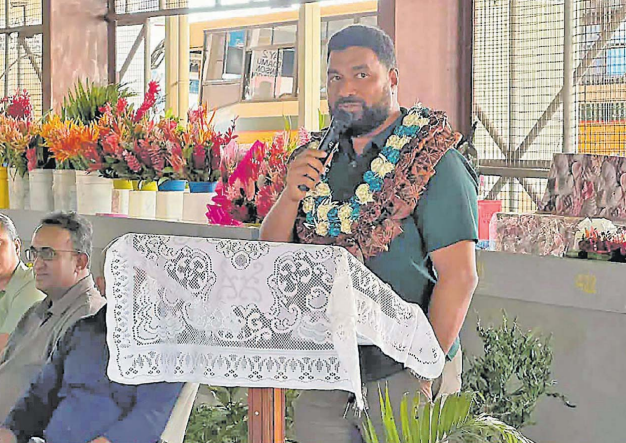
Speaking at the signing on Thursday, consultant Wayne Fuakilau said many countries around the world are facing an urgent need to reduce emissions and find innovative solutions that deliver impact quickly.
“Fiji, our country, and many like it, and here in Lautoka also face significant waste management challenges due to limited land availability for landfill and dumpsite expansion,” he said.
“And the difficulty of finding new sites for future development.”
He said the Recycle Organics Program is dedicated to addressing these challenges through international co-operation.
“Having built a platform across the Global South since 2017 that brings together governments, NGOs, the private sector, and communities across more than 25 countries.
“The program promotes opportunities to invest in the valorisation of organic waste and reduce the amount of material going to final disposal.”
Mr Fuakilau said Fiji and Samoa were the first Pacific countries, for this project.
“And for the municipality three councils were selected based on interest to partner and pilot this program.
“Savusavu Town Council, Nausori Town Council and Lautoka City Council, and we thank the Fijian Government through the Ministry of Environment and Climate Change, for submitting this project as a cabinet paper endorsed by our leaders in Parliament.
“Today, this spirit of collaboration is reflected in our work in Fiji, where we are proud to support the efforts of the Lautoka City Council to expand their composting, market waste segregation, and home composting efforts.
“As part of this support, with funding and technical assistance from Environment and Climate Change Canada, the program is providing an open-bed truck to allow for the transportation of segregated organic waste from the market on a consistent basis, as well as from other large generators.
“In addition, the council is receiving equipment and tools for the composting plant, additional wheelie bins and educational materials for the market waste segregation, and home composting kits for 100 households.”

