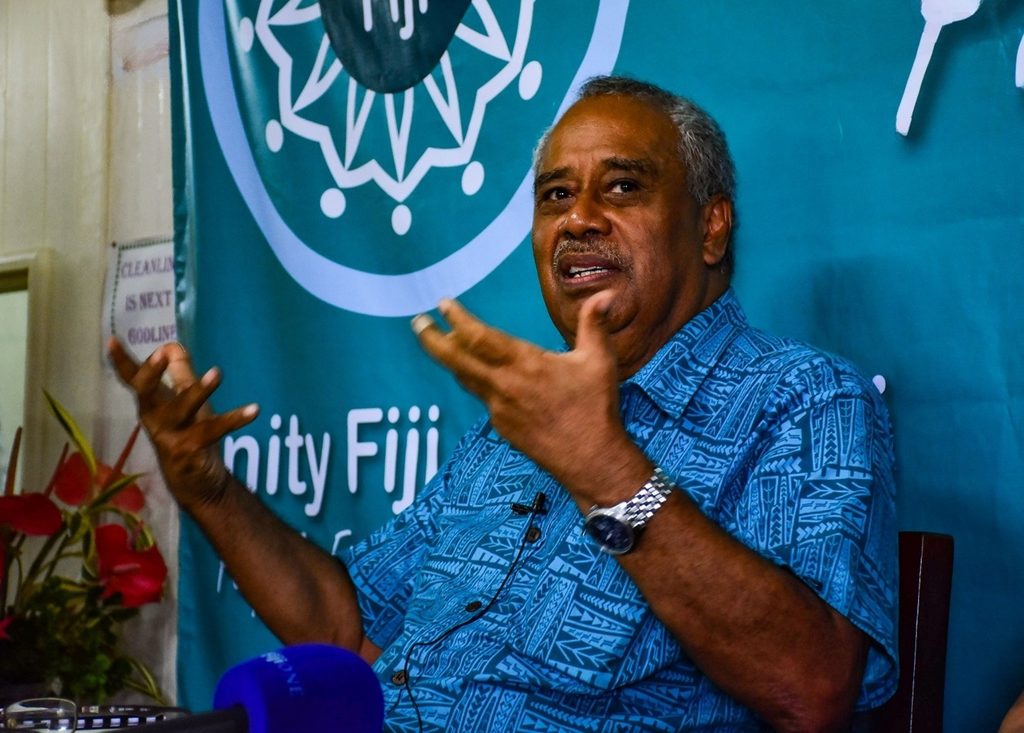
Pacific nations are confronting a dangerous shift from “crime of need to crime of greed” as transnational criminal syndicates expand sophisticated operations across the region, Fiji’s Minister for Policing Ioane Naivalurua warned today.
In a briefing note to mark the Pacific Police Ministers Meeting at Momi Bay, the minister said organised crime groups had become structurally embedded across the Blue Pacific, exploiting vast maritime borders, weak legislative coordination and uneven enforcement capabilities among Forum Island Countries.
“The Pacific has moved from crime of need to crime of greed,” Mr Naivalurua said in his ministerial briefing note.
He warned that Outlaw Motorcycle Gangs, Central and South American cartels and Asian organised crime syndicates were now operating across the Pacific through coordinated criminal systems rather than isolated incidents.
Mr Naivalurua pointed to the seizure of 2.64 tonnes of cocaine at Vatia, Fiji — the largest narcotics seizure in Pacific history — as evidence that criminal logistics infrastructure was already operating at scale across the region.
He revealed that seven semi-submersible vessels had been intercepted in Pacific waters over the past 18 months, with six found empty.
“This is not an anomaly. It is a systems diagnostic,” the briefing note stated.
The minister said criminal networks were exploiting maritime geography through interconnected activities involving illegal fishing, money laundering, cybercrime, border vulnerabilities and narcotics trafficking.
Among the emerging threats identified was the use of high-speed low-profile vessels and semi-submersibles operating below vessel monitoring system thresholds, while uninhabited islands were allegedly being used as refuelling points.
The briefing note also highlighted growing concerns over financial crime, including trade-based money laundering, exploitation of digital assets and criminal infiltration into real estate and casino industries.
Mr Naivalurua warned that cybercrime had become increasingly sophisticated, with AI-enhanced fraud across the Asia-Pacific region reportedly rising by 47 per cent between 2024 and 2025.
On the social front, he said methamphetamine injection was now occurring in Fiji, increasing the risk of an HIV epidemic if urgent interventions were not introduced.
“The Pacific window to prevent an HIV epidemic is still open — but requires decisions now,” the briefing note stated.
The minister also warned that organised criminal groups were exploiting gaps between Pacific legal systems, including uneven legislation, limited mutual legal assistance arrangements and the absence of harm reduction laws in many Pacific Island countries.
He stressed the need for stronger regional coordination, intelligence sharing and legislative reform to confront what he described as a rapidly evolving transnational threat landscape across the Pacific.