
What is in the papers today,’ was a common enough refrain in early morning conversation at work in pre-internet Fiji.
If something was in the papers, it must be true, we all believed in a touching innocence of an era now vanished beyond recall. By ‘paper,’ we meant The Fiji Times,’ the country’s premier daily print outlet of record since 1869, and the nation’s only daily for much of the 20th century.
Today’s generation hooked on Facebook, Instagram, Twitter, emails and other mysterious purveyors of information (and misinformation) will struggle to comprehend a time in Fiji’s not too distant past when The Fiji Times was the country’s sole provider of print news and our main contact with the news of the outside world.
I was first introduced to The Fiji Times in the mid-1960s at the Tabia Sanatan Dharam Primary School in Labasa when our head teacher, Subramani Goundan, now of blessed memory, would fling us a day (or week)-old copy of the paper to read at lunch or recess.
It was done not to educate us about important national and international affairs, but rather, I suspect, to improve our frightfully dodgy English vocabulary and comprehension composition skills for the dreaded Entrance examination. Such exams in those days decided destinies and destinations.
My reverence for the power and reach of the written word dates from around this period. I have lived all my life imperfectly in and around words, now fortified by Churchill’s observation that ‘Words are the only things that last forever.’ The cyberspace sometimes shakes that conviction these days.
We went to the paper both for information as well as entertainment. With radio, The Fiji Times connected us to each other and fostered a palpable sense of a common national identity. Lautoka and Labasa, Nadi and Nausori were frequently ‘on the same page,’ sometimes literally. It enabled us to laugh and grieve together as a community.
Great national events came to us via its ages though radio was more immediate but also transient: independence, coups, devastating hurricanes and floods, Labasa’s rare victories on the soccer field (this latter serious stuff still to this proud lad from LA). We were often called upon to convey the printed news to our unlettered parents and other village folk. We also went to the paper for entertainment.
For many of us of a certain vintage (now heading into dotage), the day would normally begin with a glance at Dusenbery, Hagar the Horrible, Peanuts, and Garfi eld. Wonderful characters they were, full of everyday wisdom and common-sense, puncturing pomposity with sly glee Then there was Lai’s laconic take on local goings-on.
And many of us young parents looked forward eagerly to Seona Smiles’ endearing weekly vignettes about the gentle mayhem of daily suburban life we all knew to be spot on. We enjoyed Captain Courageous’ sardonic comment on human foibles and the utterly delightful antics of the ‘Hope of the Side’ our daughter’s age.
Seona belonged to a legendary paper’s included the ever-quirky Robert Keith- Reid of the ‘Rotfi an’ fame (Republic of the Fiji Islanders, in case you did not know it). The Fiji Times was and has long been the archive of the nation’s memory. Nothing of public importance escaped the notice of its reporters, sometimes to the regret and discomfort of the powerful.
The ‘Four Corners’ program of the early 1980s or the National Bank of Fiji debacle. the gaffes of the election campaigns, the ‘Kamasutra’ episode of the Vatuwaqa Golf Club. We were amused. The Fiji Times remains indispensable to any understanding of our recent past.
We will have to turn to its pages to understand the transformations over the years which shaped our lives: the changes which took place after the Second World War—how the radio was received in the villages … the stirring debates about the nature and purpose of independence in the 1960s, the trauma and turbulence of the postindependence years—1977 and all that … to the coups and convulsions that so damaged Fiji’s public life – the Sunday Ban, the Taukei Movement, George Speight and the mayhem he unleashed. They are with us even today.
For my own research on the history of contemporary Fiji, I have perused each and every issue of The Fiji Times from 1939 to 1980; and I have a fat bound volume of handwritten notes to prove it.
If you wanted to know about Sairusi Bogibogi, Sakeasi Butadroka, the Bula Tale party or even the Western United Front, or the ‘Back to May 14’ movement of 1987, you will have to go to the Fiji Times. There is nothing else.
The Fiji Times connected us to each other, but it also introduced us to the transformative currents of the modern world: to Africa in the throes of decolonisation (to warn us of the perils of hasty dependence), to the endless conflicts in the Middle East, the meltdown in Southeast Asia, the Soviet menace and the Domino effect, about Niel Armstrong and his moon landing.
The desire to remain connected, to know about the world around us, acquired all those long years ago, has remained with me. The old Fiji Times was unabashedly a champion of status quo, an unapologetic supporter of the government of the day. ‘Make haste slowly,’ if at all, could easily have been the motto of the newspaper. It was no friend of those who wanted an end to colonial rule.
This was no surprise as the paper’s long-time editor, Leonard Usher, was a leading, if unobtrusive, member of the Fiji establishment.
Things changed after independence when Fiji faced a host of new challenges of nation building after 96 years of colonial rule, and when the insidious politics of race and racial fears dominated political discourse. Talk of ‘Blood Will Flow’ and of people being deported for their political views was heard often enough whenever contentious issues entered the public domain.
These could not be swept under the carpet, hidden from view, or blamed on someone else. They were problems of our own making. important reason for the paper’s changed, more inclusive attitude was the appointment of its locally born editor Vijendra Kumar. He brought to the paper more nuanced understanding national politics.
Under his stewardship, more local journalists came on board, and local writers found an outlet for their columns. The paper began to reflect a wide cross section of the nation’s opinion, not only of its privileged elite or political pandit.’
There was occasional grumbling from politicians and powerful individuals about ‘unfair’ coverage – or no coverage at all– and retribution was threatened. its enormous credit, the government never thought of curtailing press freedom or of ‘regulating’ the media.
No one seriously questioned its role as the expression of public opinion, however unpalatable it might be to the political hierarchs.
There was no vindictive withdrawal of advertising funds from the paper. This liberal attitude to the media is now all but eclipsed from view. The newspaper’s role as the upholder of liberal democratic values came to the fore as the country hurtled from one crisis to another. The headline, in big bold letters on 15 May 1987 was ‘COUP.’
It was bad news, no ifs and no buts. In the weeks and months that followed, the paper became the forum for intense debate. We all vented our frustrations and fulminations through its pages.
In truth, The Fiji Times became our ally in the struggle to retrieve the country from the precipice. This courageous stance in the cause of freedom of speech came at a huge cost. Its editor, Vijendra Kumar, was hounded out of office into exile, with his honour and integrity intact. And many local reporters lost heart and left for good. Some retrieved their careers in the foreign lands where they settled but most did not. We lost more than we realized at the time.
Their departure was part of the larger exodus from the country. Fortunately, The Fiji Times returned to its role as the venue of national conversation in the 1990s. Political parties opportunistically used its pages to advertise their messages. Reading them closely even today is essential to any understanding the origins of our contemporary situation.
People in power now will bristle at any suggestion that the media environment in Fiji is coercive.
But the truth is the truth, bitter and unpalatable thought it might be. Controlling the media is one of the first things that authoritarian regimes do the world over.
Controlling news is ultimately about controlling minds. It is an article of faith with me that a free media is vital for a free and vibrant democracy.
The right to know is a fundamental human right. It is a right that must be zealously guarded. ‘Responsible’ reporting is nothing more than a code word for acquiescence and compliance.
A democracy dies without the oxygen of free speech and free press. Defending freedom in an unfree environment is never easy. It is no secret that this paper and its reporters have faced all kinds of harassment and intimidation for doing nothing more than their duty.
It is to its everlasting credit that The Fiji Times continues to publish opinion columns and other news that go against the grain and question the official narrative.
That is as it should be, and may it long continue. ‘Keep the bastards honest,’ as the Australian Democrats used to say. The paper’s social contract with the citizens of Fiji to tell the truth, to honour the Fourth Estate’s noble commitment to ‘Speaking truth to Power’ should command our respect and complete support.
Those in power themselves are poorer for not wanting a free and unfettered media. Debate and dissent are an integral part of a free society.
The old adage holds ‘Where the public’s right to know is threatened, and when the rights of free speech and free press are at risk, all the other liberties we hold are endangered.’
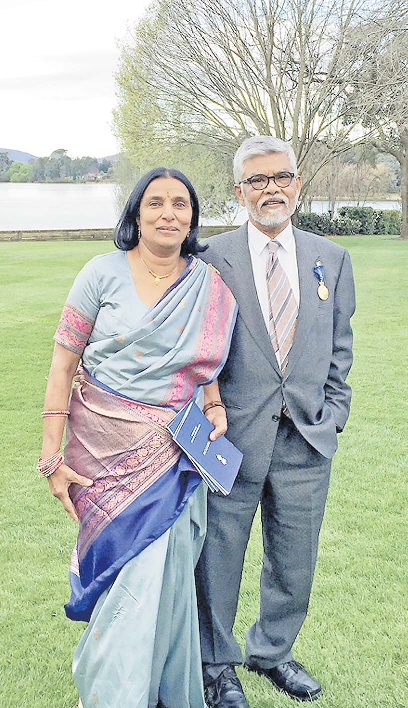
Fiji-born Professor Brij Lal is the author, most recently, of Levelling Wind: Remembering Fiji (ANU 2019) and Girmitiyas: Making of their Memory-Keepers (New Delhi, 2021). He and his wife Padma are banned from Fiji for life.

