
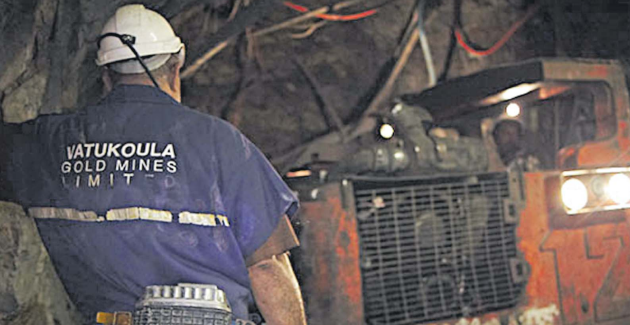
For 33 years, Vatukoula stood as one of the world’s most brutal reminders that gold can shine and still leave people in darkness. What began as a strike in February 1991 over low pay, unsafe working conditions and degraded company housing became a generational injustice: Workers grew old, many died, children became parents, and the dispute remained largely unresolved until compensation was finally pushed through in 2024. The gold mine produced wealth, but not for the men and families who lived beside it.
The first rupture
ON February 27 1991, roughly 368 miners withdrew their labour at Fiji’s oldest gold mine, Emperor Gold Mining Company, at Vatukoula. Their grievance was not ideological or abstract; it was the daily reality of underground work paid at poverty-level rates, dangerous conditions, and the humiliation of feeling expendable in a mine that had already produced millions of ounces of gold. Workers cited inadequate wages, poor health and safety, and harsh employment conditions, but the deeper complaint was moral: The people who risked their lives under the earth believed they were being denied a fair share of the value they created.
Poverty in a goldfield
The figures still sting. One underground miner, Misake Tahaka, was paid $1.50 an hour, seven days a week — about F$84 a week before tax — for punishing work below ground. Another miner recalled earning F$1.18 an hour, while ore-sorting women earned as little as F$1.15 an hour under State-controlled rates. These numbers matter because they strip away the mythology of gold. Vatukoula was never simply a mine; it was a place where wealth existed in the ground while the workforce lived on the edge of subsistence, in company housing that many described as overcrowded and unsanitary.
Evictions and force
The dispute escalated quickly. On March 4 1991, riot police were sent in to remove strikers and enforce eviction orders obtained by the Emperor Gold Mines. That decision transformed a labour dispute into a housing crisis and a human crisis. Men who had built their adult lives around the mine were not only locked out of work; they were pushed out of homes tied to employment, with families thrown into uncertainty. The company’s legal and police-backed response hardened the dispute and deepened bitterness, because it told workers that the institution they served would rather expel them than bargain with them.
Illegal strike, lasting pain
A court injunction declared the strike illegal. That ruling gave the company leverage, but it did not answer the underlying complaint about pay, safety, or dignity. What followed was a long period in which labour law, police action, and corporate power converged against the workers. The dispute was no longer just about salaries. It became about whether miners could retain their right to organise, whether the company town could survive the loss of jobs, and whether the state would protect workers or stand back while the mine’s owners dictated terms.
Union fight
The miners were not without leadership. Joseva Sadreu later became president of the Fiji Mine Workers Union, and the Fiji Trades Union Congress, under general secretary Felix Anthony, remained an important support structure as the years dragged on. The union’s role mattered because long disputes are often won or lost not in one dramatic moment, but in persistence. The Vatukoula workers needed advocates who could keep the grievance alive while the public, the media, and the state were tempted to move on. In that sense, the FTUC helped transform the dispute from a local stoppage into a national moral test.
The ownership maze
One of the reasons Vatukoula never resolved quickly was that the mine kept changing hands. Emperor Mines Ltd, the ASX-listed parent, operated through its Fijian subsidiary, but later ownership transitions brought in Durban Roodepoort Deep, Westech Gold, River Diamonds, Vatukoula Gold Mines Plc, and ultimately Chinese-linked entities through Zhongrun-related structures. Each transaction complicated responsibility. For workers, this looked like liability evasion disguised as business restructuring. As ownership changed, the original 1991 grievances remained in place, but each new corporate arrangement created fresh distance between decision-makers and the men who had actually suffered the dispute.
Gold and excuses
Companies repeatedly argued that Vatukoula was hard to operate profitably because of gold prices and capital requirements. That may explain parts of the business case, but it does not erase the human one. In 1991, gold averaged about US$362 ($F801) an ounce (today it is around $US4500 per ounce ($F9966)) yet the mine’s workers were still being paid at levels that made their own labour seem cheap in the extreme. The deeper issue was not whether gold could support corporate profit; it was whether the enterprise could support the lives of the people who made it possible. The answer, for decades, was no.
Families undone
Vatukoula was a company town, and that made the damage broader than a strike site. When jobs disappeared, the whole social structure began to fracture.
Families lost income, children lost stability, and housing that had once been part of a predictable working life became a source of vulnerability. Many were forced back to villages or into makeshift arrangements far from the mine that had shaped their lives. By the time a settlement finally arrived, 190 original strikers had died, and the dispute had passed from the workers to their widows, children, and grandchildren.
The long wait
Time was the real enemy. The strike that began in 1991 was still being discussed decades later, and in the meantime whole family lines advanced: children married, grandchildren were born, and some workers died before any settlement reached them. The mine’s 2006 closure added another wound, taking away work from around 1760 employees and their families and leaving a community built around one employer with few alternatives. What should have been a labour dispute of months became an inheritance of grief.
Housing as a wound
The housing issue at Vatukoula deserves to be treated as central, not incidental. Company housing was supposed to be part of an orderly industrial settlement, but once the strike hardened, that housing became another instrument of pressure. Evictions turned work disputes into family displacement. The loss of housing meant more than the loss of a roof; it meant the breaking of a whole social ecosystem in which work, school, proximity, and community had once been tightly linked. When the company structure failed, the town itself hollowed out.
What the numbers said
The scale of the dispute is one reason it remains historically exceptional. Vatukoula had produced more than 6.9 million ounces of gold over decades, yet the workers’ complaint was still about low wages and unsafe conditions.
That contradiction sits at the heart of the saga: The mine was rich, the owners were mobile, but the workers were trapped. The company could point to losses, closures, and market conditions, but those arguments did not erase the fact that many of the men underground had spent their working lives in conditions that left them poor, injured, and eventually forgotten.
Legal dead ends
Legal action did not deliver closure. The strike’s illegality, the injunctions, and the company’s courtroom leverage all worked against the workers early on, while the long wait for any meaningful remedy made justice look more theoretical than real.
The 1995 commission process and later human-rights scrutiny acknowledged the seriousness of what had happened, but formal acknowledgement was not the same as compensation. Vatukoula became a case study in how a labour dispute can outlive the legal frameworks meant to settle it.
Settlement at last
The breakthrough came only in 2024, when the government announced a $9.2 million settlement for 368 workers, each entitled to $25,000 in phased payments.
Prime Minister Sitiveni Rabuka publicly acknowledged the distress caused, and by mid-2026 most beneficiaries had received their entitlement, though some claims continued through probate and estate processes. The payout was an important act of recognition, but it also carried a sad message: The people who waited longest were the least likely to enjoy the full benefit themselves.
What Vatukoula means
Vatukoula is not merely a local grievance finally settled. It is a warning about what happens when labour is undervalued, when company-town dependence is allowed to harden into vulnerability, and when disputes are left to rot across generations.
The Vatukoula mine story is compelling precisely because it brings together gold, power, dignity, housing, family, and time in one place.
All that glittered was not gold; for the miners of Vatukoula, it was a long, expensive silence that took 33 years to begin to break.
n DR SUSHIL K SHARMA is a former Associate Professor of Meteorology, Fiji National University, and Operational Meteorologist and Manager, Climate Research and Services Division, Fiji Meteorological Services. The views expressed herein are his alone.

