
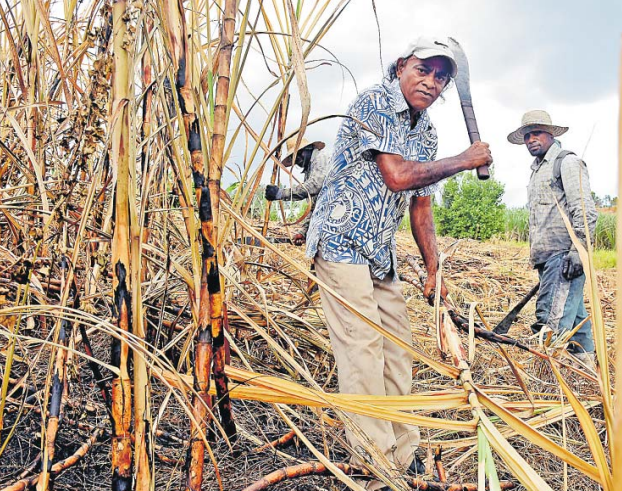
The Sugar Cane Growers Council was established under the Sugar Industry Act No. 8 of 1984 with one explicit mandate: Represent Fiji’s cane farmers. Forty-two years later, that mandate lies in institutional ruins. The last genuinely elected growers’ council sat in 2004. Grower representatives were terminated in 2009. Election provisions were repealed from the Act in 2015. Twenty consecutive years without a democratically elected farmer voice — not through accident, but through deliberate institutional engineering by the Bainimarama regime and the governments that followed.
Designed for farmers, captured by State
The SCGC’s founding architecture was democratic by design. The council comprised 38 members elected directly by farmers and eight nominated by government, with elections every three years. In March 1992, the National Farmers Union swept 33 of 38 elected seats. By 1998, the NFU held 22 — still a commanding majority. During this period the council carried genuine institutional authority: Negotiating on behalf of over 15,000 growers, intervening in land lease policy, making submissions to the Great Council of Chiefs on ALTA, and providing farmers a democratic counterweight to the commercial power of the Fiji Sugar Corporation. That counterweight was precisely what the 2006 military coup set out to destroy.
The coup against democracy
On December 27, 2006 — 22 days after seizing power — Commodore Voreqe Bainimarama suspended SCGC CEO Jagannath Sami, Chairman Vijendra Autar and the entire elected council. Stated justifications included abuse of office, misuse of funds and irregularities in Board elections. Mr Bainimarama simultaneously revoked the appointments of eight council members installed by deposed prime minister Laisenia Qarase. Mr Sami publicly protested his suspension through Radio New Zealand International on December 29, 2006. By March 31, 2007, he had been replaced by Jai Gawander — a former Fiji Labour Party parliamentarian who had contested the Lautoka City Indian Communal Constituency in the 2006 general election mere months earlier. Fiji’s independent farmer body had been replaced with a political appointment before the first crushing season of the coup began.
The Sundresh Chetty years
The deeper institutional capture came through longevity. Sundresh Chetty served the SCGC for 26 years in various positions and 11 consecutive years as CEO. When he retired on January 1, 2020, his farewell statement contained no reference to farmer welfare, no grower advocacy milestones and no acknowledgement of the democratic deficit hollowing out the institution he led. Instead, Chetty thanked Prime Minister and Minister for Sugar Voreqe Bainimarama and Permanent Secretary for Sugar Yogesh Karan for their co-operation and guidance. Following the 2018 general election, the SCGC publicly welcomed the FijiFirst result and praised Bainimarama government subsidy programs. An organisation designed as FSC’s adversary in price negotiations had been converted through compliant leadership into its institutional ally.
Twenty years without a vote
The political neutering was not left to administration alone — it was embedded into law. In 2009, grower representatives were formally terminated from the council’s governance structure. In 2015, election provisions were repealed from the Sugar Industry Act entirely, making democratic restoration impossible without parliamentary action. Throughout this period, farmers continued paying mandatory SCGC levies — compulsory deductions taken from cane proceeds season after season, funding an institution that no longer represented them. SCGC CEO Vimal Dutt himself confirmed in March 2025 that the last growers’ election was held in 2004 — a 20-year democratic vacuum during which the institution collected farmer funds while farmer voices were constitutionally silenced. This was not administrative neglect. It was legislative architecture.
Neutralising the farmer political base
To understand why the SCGC was targeted so comprehensively requires understanding what the Bainimarama regime feared most. The National Farmers Union had dominated elected grower positions for over a decade. Mahendra Chaudhry, as NFU leader and Fiji Labour Party Prime Minister, had built the union into the primary political expression of Indo-Fijian farmer interests. A genuinely democratic SCGC would have continued returning NFU-aligned councillors — giving Chaudhry’s movement an institutional base independent of parliamentary representation. By suspending Sami, installing compliant appointees and repealing election provisions, Bainimarama did not merely neutralise a farmers’ organisation. He amputated the farmer class’s most significant non-parliamentary political instrument. The Master Award governing cane pricing was subsequently watered down because no legitimate grower body remained to resist it.
FSC unchecked, farmers unprotected
The consequences of SCGC capture extended directly into the commercial relationship between growers and the Fiji Sugar Corporation. An independent, elected SCGC would have challenged Abdul Khan’s $840,000 annual salary and $10,000 monthly rent payment at Denarau, during the corporation’s accumulation of $443 million in debt, opposed the abandonment of the rail network that transferred crushing-season freight costs onto sugar cane farmers, and resisted the progressive erosion of farmer returns. Instead, the SCGC under Sundresh Chetty functioned as a farmer stakeholder “rubber stamp” — photographed alongside commissioners and ministers at industry ceremonies, representing optics rather than farmer interests. When Sugar Industry Tribunal Registrar Tim Brown wrote to the writer in May 2026, seeking to improve miller and grower income, it confirmed the framework designed to protect farmers had failed them for two full decades.
Rabuka’s restoration left incomplete
The democratic deficit did not end with Bainimarama’s December 2022 removal from power. The Rabuka government passed the Sugar Industry Amendment Bill 2024, reinstating legal provisions for grower elections. In March 2025, CEO Vimal Dutt confirmed about 10,500 active registered cane growers were preparing for the first election since 2004. Yet Dutt himself remains a ministry planted appointment — his reappointment to the Sugar Research Institute of Fiji board confirmed by former failed sugar minister Charan Jeath Singh, in January 2024, through no disclosed competitive process. The new SCGC Chairman, Jinendra Singh of Veisaru Ba, was similarly a ministerial appointment. Thus, the voice of the grower remains muzzled and unrepresented to date in any board or stakeholder forum. As of the 2026 crushing season, those promised elections of the SCGC CEO and grower representatives, had not been conducted. The legal architecture has been partially restored. The democratic reality has not followed.
A democratic debt unpaid
Fiji’s 10,500 active cane growers have paid compulsory levies into the SCGC for 20 consecutive years without casting a single democratic vote over how it was led, what positions it took, or whose interests it served. A ministerially appointed chairman and unelected CEO managing a process toward elections that remain perpetually forthcoming cannot repay that debt. The farmers were not passive. When the Bainimarama government circulated a proposed new Sugar Industry Act — consulting communities from Ba to Tavua to Labasa — farmer resistance at the final committee stage was so overwhelming the Bill was shelved. Farmers without an elected SCGC still found their voice when the legislative threat became direct enough. That capacity for organised resistance is exactly what the SCGC was designed to institutionalise — and what 20 years of political engineering suppressed.
Reinstate the board, end the conflict
The abolition of the Sugar Board was the most consequential and least discussed act of the Bainimarama era. That Sugar Board was the independent oversight authority governing the commercial relationship between miller and grower. Its dissolution left FSC as buyer, seller, processor, and primary beneficiary of industry proceeds simultaneously — with no body to constrain its conduct. FSC is a direct party in the distribution of cane proceeds; operating without independent oversight is institutionalised conflict of interest. Any Master Award amendments made during the period of SCGC incapacitation — without the informed consent of elected grower representatives — carry no legitimate authority and must be fully reverted to the original Master Award. The institution meant to protect farmers was dissolved while the institution that profits from them was left entirely unchecked.
The farmers hold the power
The FSC’s treatment of farmers as captive suppliers has reached institutional contempt. The commercial reality the corporation appears to have forgotten: If Fiji’s 10,500 growers walked away from sugar tomorrow, they could pivot to vegetables, root crops, and diversified agriculture within a single season. The FSC, without cane, is expensive machinery with nothing to crush. The incoming government after the 2026-2027 general election must make full structural normalisation its first legislative priority — reinstated Sugar Board, elected SCGC, independently SCGC appointed CEO and a fully renegotiated or reversion to the original Master Award. The farmers built this industry. It is time the industry’s institutions were built to serve them.
DR SUSHIL K SHARMA is a former Associate Professor of Meteorology, Fiji National University, and Operational Meteorologist and Manager, Climate Research and Services Division, Fiji Meteorological Services. The views expressed are those of the author and do not represent the views of this newspaper.

