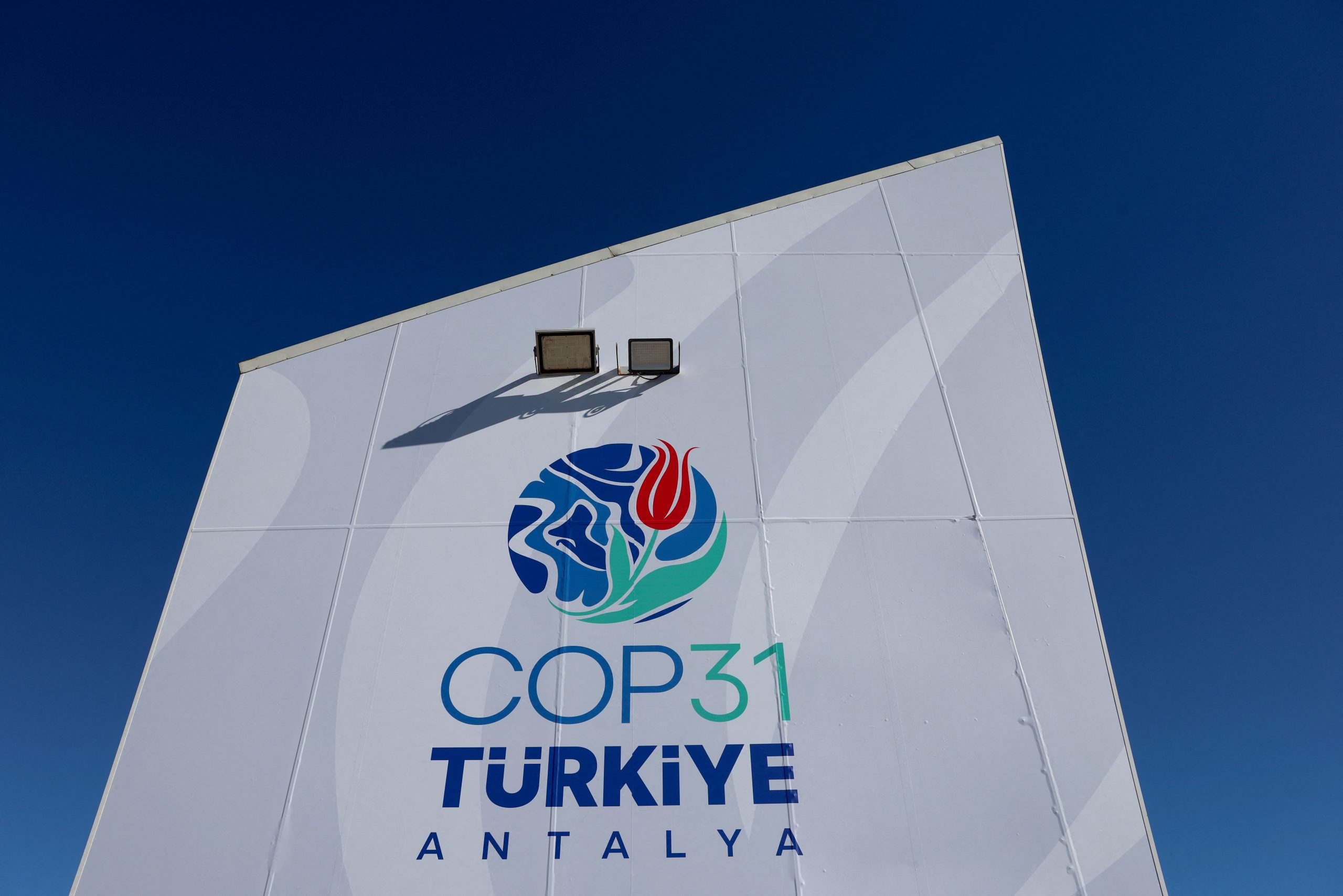
I AM writing this later than I intended. With COP31 starting tomorrow, I thought it would be timely to journal down some reflections from CBD COP17 that concluded last week in Yerevan, Armenia.
I also hope that my personal reflections restores some level of trust in the multilateral process that continues to face its fair share of challenges.
When a COP closes, the world reads the headlines. Some call it a talkshow, some understand the process, some choose to ignore it completely, while all the negotiators spend days or weeks trying to unpack the decisions that are adopted.
What rarely reaches the public is the work of those who carry those decisions to the finish line. Many come from small ministries with small teams. They spend months preparing briefs, consulting their capitals and reading every text in the brackets. Then they sit in rooms through the night defending a single paragraph that truly matters to the people back home and will affect their national policy. Decisions like how much goes directly to the communities and what methods were used to calculate them, and through what mechanisms will they access them.
For Fiji, the road to Yerevan began well before October. At SBI 7 in Nairobi, Fiji was entrusted with co-chairing the contact group on planning, monitoring, reporting and review alongside the Netherlands. The Armenian presidency asked that this role continue into COP17. As chair of the Pacific small island developing states, Fiji also carried the positions of 14 parties into every room.
We went to Yerevan adamant that there would be no COP17.2, which apparently was a trend for the previous two COPs. For us, a resumed session would have meant further cost and time that small delegations cannot afford, and lost momentum at the midpoint of the global biodiversity framework. Every discussion had to be concluded in Yerevan.
The final few nights tested that resolve. When the gavel came down on the PMRR and financial mechanism decisions, the work we had carried from Nairobi, I was not in the plenary hall.
I was in another room chairing the discussion on digital sequence information. My co-chair was looking for me in the room while I was in another room with the presidency team and a group of parties trying to bridge a decision text, which would have been acceptable to all parties.
That is the nature of this work. The decision belongs to the parties, and the role of a chairs and co-chairs is to bridge the divide without crossing redlines!
We came back to the plenary after 6 hours with smiles on our face only to find out that the debate on modus operandi was still ongoing!
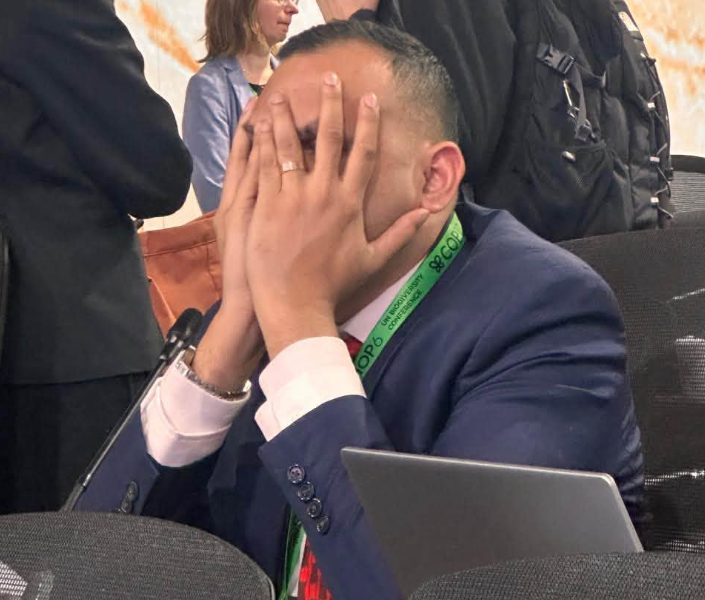
It was 6am and we were all exhausted. Three groups of Parties were deadlocked at the back of the plenary hall. My PEO Mere K Bainimarama and SEO Josh Waqanivalu had tears in their eyes when asking about our approach because we all knew how much this mattered to our IPLCs. We also were firm as PSIDS on our own redlines because the decision determined how indigenous peoples and local communities can access support from the Cali fund, but more importantly, the budget for future work remained attached to it.
So again, my PEO and I walked slowly to the back, sat on a corner with our laptop and pulled out past decisions to develop a bridging proposal with our colleagues from Brazil.
We then found ourselves in the middle of a verbal boxing match asking if our proposed bridging language would be acceptable! Phone calls had to be made to capitals because it was a very sensitive issue while we sat by a corner praying ! The outcome was accepted with some tweaks but the biggest learning from all of this was trust!
Trust is what we will carry into COP31. In this work, it is built slowly. It comes from keeping your word in a contact group, from representing every view fairly when you hold the pen, and from being honest about what your own capital can and cannot accept. In Yerevan, I saw parties with every reason to hold their positions choose to trust a bridging text, the chairs and one another. The Armenian presidency extended that same trust to Fiji, and I remain humbled by it.
I also think of the colleagues who never appear in a photograph from the plenary hall: the Pacific delegates who covered several contact groups at once because our teams are small, and the officers back home who kept our ministry running and answered messages at hours no one should be awake. Their names will not appear in any decision text, yet those decisions exist because of them.
I thank my co-chair, Sanne Kruid, for her partnership and patience from Nairobi to Yerevan. I thank the Pacific delegations and our ministers who carried our voice at the highest level.
I thank the Armenian presidency for its leadership and humility, and the CBD secretariat for its support through every late night.
COP17 may have not resolved every challenge. Finance remains difficult, and implementation will be the real test. In Yerevan, however, parties finished most of what we started, and that should give us some confidence as we walk into Antalya.
n Dr Sivendra Michael is the Permanent Secretary for Ministry of Environment and Climate Change. The views expressed in this article are not necessarily the views of The Fiji Times.