MY earliest memories of patriotism are sweaty ones. At Arya Samaj Primary School in Lautoka, we stood under the unforgiving Fiji sun, shirts sticking to our backs, waiting for the anthem.
I did not understand independence, colonialism or the complexity of the country I had inherited. I only knew that when the anthem played, you stood straight and sang.
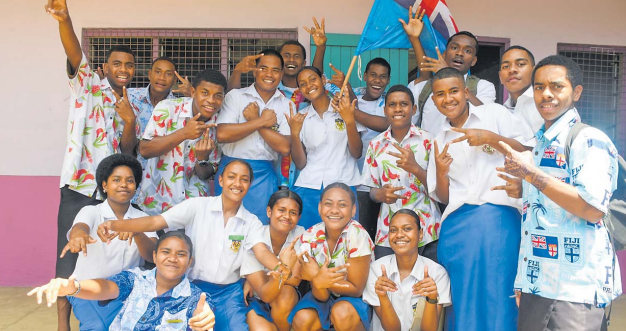
Years later at Tilak High School, we sang it in the shaded hall, and I never imagined that one day I would hear those same words thousands of kilometres away and struggle to hold back tears.
That happened recently in Tokyo. I had gone to watch Fiji play Japan in the Pacific Nations Cup final, dressed more Fijian than I usually dress in Fiji: sulu, bula shirt, flower crown, the whole thing.
The stadium was overwhelmingly behind Japan, and I suddenly felt how far from home I was.
Then Fiji came onto the field, we rose, and the anthem began.
Suddenly I was no longer a man living in Japan; I was a boy from Lautoka again, carrying a country I had not realised had become so heavy inside me.
Perhaps you have to leave Fiji to understand loving it. I left in December 2011 for New Zealand, and life has since carried me through classrooms, airports and temporary homes until I somehow ended up teaching children in Tokyo.
I have spent years explaining that Fiji is more than beaches, resorts and postcards.
Fiji follows you through curry frying in somebody’s kitchen, Fiji Hindi escaping your mouth unexpectedly, rugby, music and family stories.
Migration changes your address much more easily than it changes your belonging.
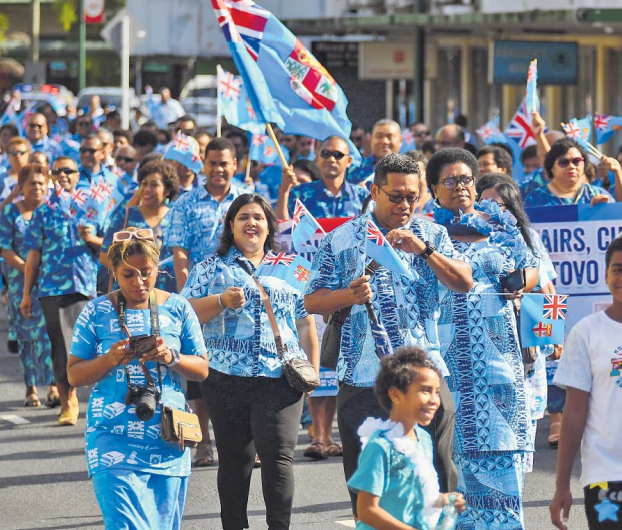
On October 10, Fiji turns 56 as an independent nation, and I do not want to write another birthday card.
I love Fiji too much for that. We should celebrate what these islands have survived: Colonial rule; Girmit; coups; cyclones; and the relentless departure of our own people.
But patriotism cannot mean wrapping ourselves in blue and assuming survival is guaranteed because Fiji has endured before.
Sometimes loving a country means fearing what could happen if we refuse to confront what divides and empties it.
I carry Girmit in my understanding of Fiji. My ancestors belong to the story of Indians brought across oceans under indenture beginning in 1879, people who suffered, worked and built homes in islands they had never imagined seeing.
That history matters to me, but it does not make somebody else’s smaller. Girmit cannot be used to dismiss the indigenous experience of colonisation, land and identity, just as indigenous rights should never require Indo-Fijians to behave like permanent guests in the only homeland generations of their families have known.
Fiji becomes weaker every time our histories are presented as competitors.
We have done this for too long. Race remains one of the easiest buttons to press in Fiji politics because fear mobilises faster than hope.
Whisper that one community threatens another’s rights, land or power and neighbours who shared schools, food and rugby fields begin looking at one another differently.
Political careers have benefited from those anxieties. Every time someone gains power by convincing one Fiji community to fear another, the country itself loses.
I do not believe remembering the past means continuously reopening it until it bleeds. We must teach Girmit, colonialism and our coups honestly, but memory should give us wisdom rather than instructions about whom to hate.
I want Fiji’s children to know what happened without inheriting our prejudices.
They should understand why indigenous rights matter and why equal citizenship matters, without being told these principles are enemies.
A nation must decide whether history is its foundation or its chain.
And while we argue, the ocean is coming closer. Climate change is not an abstract conference topic, it is salt entering soil, retreating shorelines and communities wondering whether ancestral land can still sustain them.
We debate who truly belongs to Fiji while climate change threatens the Fiji to which we all claim belonging. That irony should shame us.
The sea does not care whether the house it reaches belongs to an iTaukei family or an Indo-Fijian one.
There is another disappearance happening more quietly: People are leaving. I cannot criticise this from a moral pedestal because I am one of them.
I left Fiji, built a career overseas, and discovered what countless Fijians do — sometimes leaving offers opportunities staying cannot. Teachers, nurses, tradespeople and professionals leave until migration becomes so normal that success itself begins to look like departure.
A country cannot keep exporting experienced people and expect its schools, hospitals and institutions to remain untouched.
Those of us overseas have responsibilities too. We can become embarrassingly sentimental from abroad — posting sunsets, becoming fiercely patriotic during rugby and telling everyone how much we miss the food.
I recognise that contradiction because I participate in it. But if Fiji gave us identity, education and the confidence to move into the world, our relationship cannot end with nostalgia.
We should mentor, invest, share expertise, support communities and find concrete ways to return some of what Fiji gave us.
That same question of identity is why I believe Fiji deserves an honest conversation about its flag.
I know the current flag carries enormous emotional meaning, and I have watched it rise with a pride difficult to explain. Yet we became independent in 1970, later became a republic, and still carry the Union Jack prominently on the symbol meant to represent us.
Asking whether Fiji can eventually choose a symbol born entirely from our own identity is not an attempt to erase history.
Any change must belong to the people, because a flag meant to unite us cannot be imposed on us.
None of these issues exists separately. Climate change, migration, racial division, political opportunism and national identity all return to the same question: What kind of Fiji are we trying to leave behind?
I think of my nephews and the children I teach and wonder what Fiji will mean to them.
Will it be a living country they feel connected to, or merely somewhere their parents and grandparents came from?
A nation does not disappear only when land sinks beneath water. Sometimes it disappears when its people stop believing their future belongs there.
When I think of Fiji Day now, I return to those school assemblies.
I see the boy under the Lautoka sun at Arya Samaj Primary, then the teenager singing beneath the Tilak High School hall roof, neither knowing how far life would take him.
One day that boy would stand in a stadium in Tokyo with tears in his eyes because a few notes of music had collapsed thousands of kilometres into nothing.
He would learn that home is sometimes most visible when you are standing very far away from it. And he would understand that loving Fiji means asking more of it, and more of ourselves.
So on this Fiji Day, I do not want us simply to celebrate ourselves.
I want us to choose each other: iTaukei and Indo-Fijian, those who stayed and those who left, those carrying old wounds and those impatient to build something new.
Honour Girmit, protect indigenous identity, remember our coups, confront climate change, stop using race as political currency, create reasons for our young people to remain, ask the diaspora to give something meaningful back, and have the courage to imagine national symbols that belong entirely to us.
Fiji has survived things that should have broken a much larger country, but survival should never become our only ambition.
When the anthem rises again on October 10, I hope we sing not merely because Fiji belongs to us, but because we finally understand that its future depends on whether we are willing to belong to one another.
ASHNEEL JAYNESH PRASAD is a Fiji-born New Zealand citizen working as a teacher in Shinagawa-ku, Tokyo, Japan