
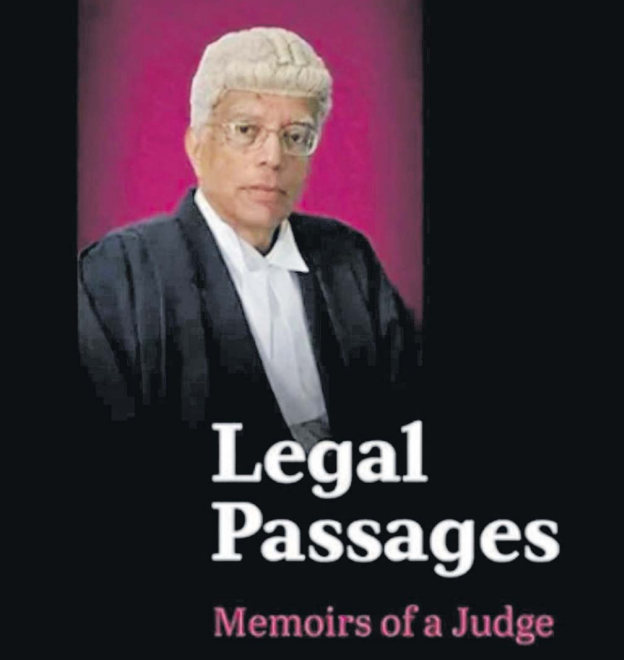
The Fiji Times article, Former Fiji Judge recalls AG’s anger over court ruling, noting that “A judge could not merely claim to be independent but must show he is independent by demonstrating high self-esteem and delivering judgments plainly made without fear, favour or prejudice”, (FT 11/05/2026).
Similarly, many Hollywood and Bollywood courtroom dramas and movies have captured the public’s attention with their fiery courtroom battles and portrayal of expected professional standards.
Popular Netflix series Maamla Legal Hai is making news of its absurd and humorous legal situations in the lives of lawyers and judges.
These situations are worth analysing, as are the means adopted by the legal practitioners to find a rational and legal approach.
In this episode, the dos and don’ts are illustrated, where a judge’s smile toward his former colleague, a lawyer, is interpreted as a sign of friendliness, which in turn raises concerns about his partiality.
Legal ethics and the practice of law are taught during the LLB, where the factual scenarios arise during the practice and the duties of the lawyers to their clients, court and the public.
Personally, it was an enlightening journey for me to learn these challenges during my Bachelor of Law, having recently graduated from the University of South Pacific.
Legal professionals also encounter challenges that often overshadow academic topics. The op-ed discusses the humorous legal situation that is related to moral and ethical legal principles faced by legal professionals.
ETHICS can be defined as a system of moral principles that have historical roots of generating from religion, philosophies and cultures. Moral philosophy defines how individuals and society make decisions.
It is believed justice is in fairness and equity. Law and ethics are not considered the same thing, as law defines what is permissible, whereas ethics speaks of the principles of right or wrong. Legal ethics are based on the conceptual foundation of “autonomy, community and morality”.
After the 1972 Watergate Scandal, legal ethics were taught widely in law schools to adopt the best legal ethical practices.
Questions that are posed to learning law graduates to ponder that if something is lawful, it does not mean it is ethical (abortion in some countries; environmental pollution with legal limits), and the fact that something is unlawful does not mean it is ethical (euthanasia and civil disobedience). But on many occasions, both coincide.
Legal ethics explain the intersection of ethics and the practice of lawyers, and it explains the principles of conduct that lawyers and legal practitioners are expected to observe. The profession relies on the honesty and integrity of the legal practitioner.
Legal ethics usually reflects on the modus operandi of the legal system, under which the legal practitioners operate to uphold the integrity of the legal system.
One of the key purposes of legal ethics is to have an obligation to serve the court and administer justice while maintaining honour and dignity of the legal profession.
It takes ages to construct a reputation, but you can destroy it in a matter of moments.
Legal ethics or
natural instinct
Maamla Legal Hai’ Season 2 highlights a similar situation where the new judge is judged based on his smile at a colleague, and the courtroom gesture leads to legal ethical melodrama.
It is based on the thought: Can the judge ever afford to smile, joke or look human without being accused of partiality and bias?
In this episode, the freshly sworn judge’s friendly smile to his former bar colleague was interpreted as a sign of favouritism.
Although the scene reflected comedy, it showcased real-world tension. Judges are supposed to be unbiased yet human, and their body language is monitored continuously by the parties, attorneys, and even the public gallery.
In real courts, occasionally judges react with subtle humour, like gently mocking an over-the-top argument that might serve to lighten the tense situation (defusing aggression) in the court without undermining authority. There are some red lines in this smile, too.
In this episode, the “smiling judge scenario,” the question is not whether the judge smiles, but whether there is an impression of bias.
The legal code of judicial behaviour demands that judges must avoid not just real partiality, but also the impression of impropriety. If a judge is perceived to often get nods, smiles, or jokes from the court, others may justifiably feel at a disadvantage, even if the judge is absolutely fair in fact.
Thus, the judge demonstrates ethical best practices by maintaining a neutral demeanour. (Maintain a courteous tone and facial expression to all parties); transparent corrections (if the slip occurs, the self-corrections to reinforce impartiality from the bench); and procedural equality (equal time to speak and present their case to uphold justice).
The protagonist judge resolves this complex situation by requesting the former lawyer to take exception in his court to show his impartiality and high morals.
After this ploy became unsuccessful to safeguard his image, this new judge tried to be courteous with all former fellow lawyers.
This smiling behaviour did not impact the judgment, and the new judge unsettled everyone with his rational judgments and was able to uphold justice and transparency.
Some may dispute the procedures utilised, perhaps because of legal ethics, which require judges and lawyers to maintain some norms of impartiality.
Others may wonder if the judge has to keep a poker face and conceal all normal human feelings. These questions are open to debate; it is a matter of perception or bias.
Conclusion
The episode touches upon many real-world legal and ethical issues in a comic setting, making it entertaining to watch, but also informative on the intricacies of the legal profession.
This episode demonstrates the distinction between the semblance of bias and genuine bias, explores issues of judicial temperament and etiquette, considers the place of humour in unbiased decision making and underlines that reputation management is seen as a judicial obligation.
Sometimes in the legal field, every smile can be treated like a judicial precedent, and the judges have to tackle it in everyday scenarios without undermining justice.
As in the legal profession, strong emphasis is paid to professional standards and responsibilities governed by the law. This may help to strengthen the trust the public has in the legal profession.
DR SAKUL KUNDRA is an associate professor and Head of Department of Social Science, School of Arts and Humanities, at the College of Humanities, Education, and Law, Fiji National University. The views expressed are his own and not those of this newspaper or his employer.

