
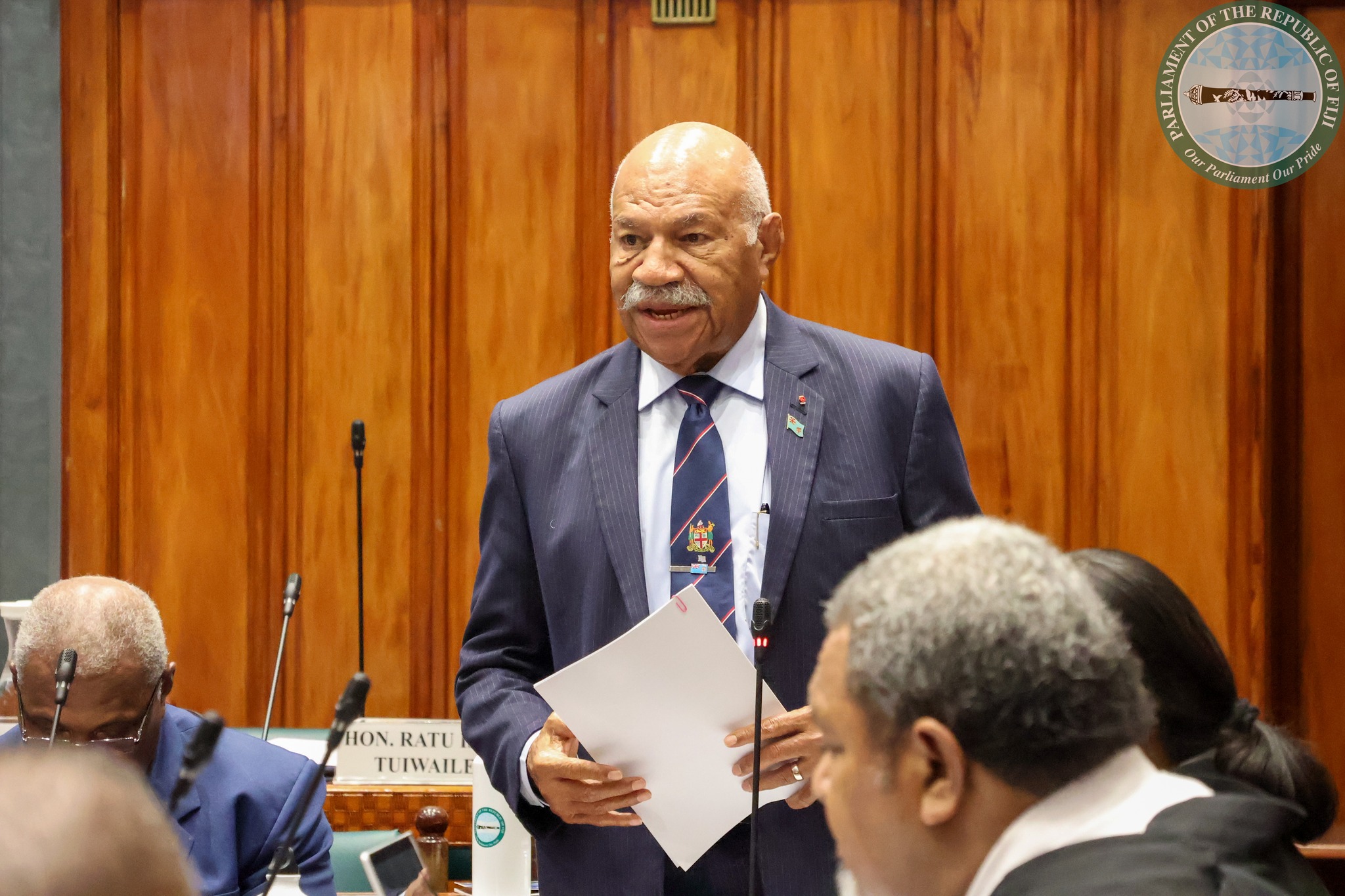
Prime Minister Sitiveni Rabuka says civil servants have worked too hard to have their pay cut to offset costs from rising fuel prices.
Mr Rabuka made the comment after journalists asked whether Government was considering salary reductions as part of its response to the financial pressure caused by increasing fuel prices.
He clarified that the matter was only raised as an area that could be looked at and was not something currently under consideration by Government.
“We have not considered it, because they (journalists) asked,” Mr Rabuka said.
“That is an area that could be looked at. But I do not feel that it would be the right approach.”
Mr Rabuka said there were other measures Government is already considering before looking at the salaries of civil servants.
“They’ve worked so hard. And I do not believe it is a good option.”
He has since assured that no such move would occur in the near future.
From April 2, Government began restricting the use of government vehicles through a Ministry of Finance circular, including carpooling, virtual meetings where possible, limits on after-hours use, bans on private use and home garaging, and requirements for vehicles to be switched off when idle.
Then from April 8, Mr Rabuka announced wider cost-cutting measures including proposed 20 per cent pay cut for ministers, assistant ministers and MPs, a stop to overseas travel for ministers, permanent secretaries and civil servants, a freeze on new civil service positions and job evaluations, suspension of overtime payments with time-off-in-lieu instead, and a hold on new capital projects without signed contracts.
Later that month, Cabinet approved the redeployment of $56million within the existing 2025–2026 Budget, reportedly from delayed projects to fund fuel-related support instead of using new borrowing.
Than on May 6, Government tightened overseas travel further, saying only, “fully funded” and “essential travel” linked to national interest, statutory obligations or critical service delivery would be approved.
By May 28, Finance Minister Esrom Immanuel said the next budget would continue to review and reprioritise non-essential and lower-priority expenditure while protecting health, education, social protection and critical infrastructure.

