
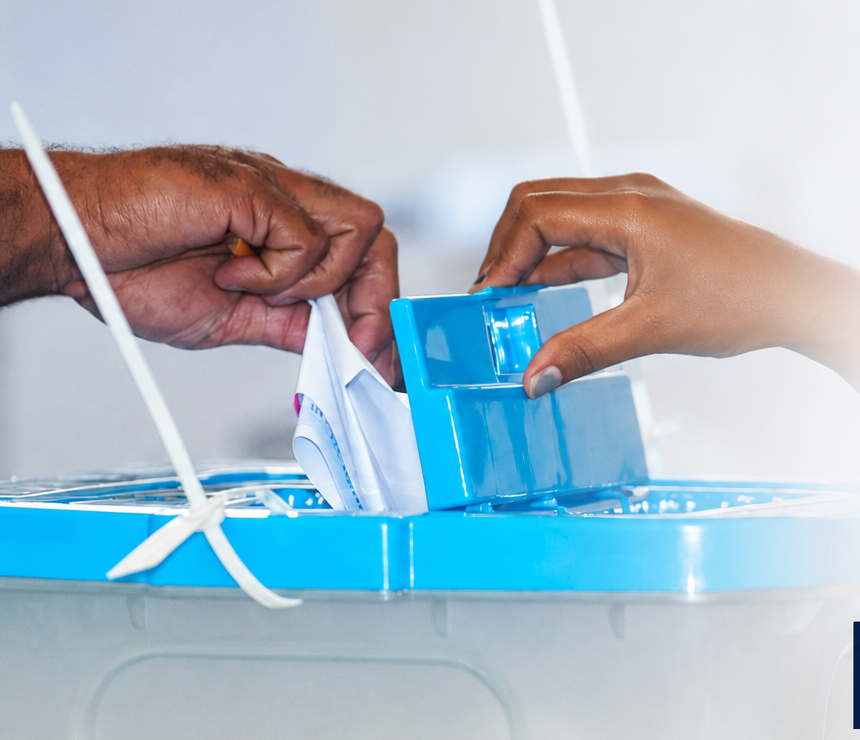
WITH Fiji heading towards a busy political calendar, Government faces the complex task of advancing constitutional reforms, electoral legislation and other key policy initiatives while preparing for the next general election, expected in late 2026 or early 2027.
Prime Minister Sitiveni Rabuka has maintained that the Government’s ambitious legislative agenda — including constitutional review, a referendum bill and electoral law reforms — will not delay the election unless Parliament formally decides otherwise. At the same time, municipal elections have been deferred, new political parties are emerging, and debate continues over governance, electoral systems and national security.
To examine the constitutional, political and institutional implications of these developments, The Fiji Times spoke with Distinguished Professor Steven Ratuva, Political Sociologist, University of Canterbury, who shared his views on the challenges ahead, the risks of compressed reform timelines, coalition politics, local democracy and the importance of long-term planning.
FT: Prime Minister Rabuka recently noted that while the legislative schedule — including the 2013 Constitution review, the Referendum Bill and electoral law amendments — is heavy, it will not delay the election unless Parliament formally votes to do so. From an institutional standpoint, how feasible is it for Fiji to successfully execute these major constitutional and legislative reforms so close to the late 2026/early 2027 election window without causing administrative friction or legal uncertainty for voters?
A: It’s quite a challenge to fit in so many major reform projects into a very small timeframe as this can be messy, inefficient and costly, financially and politically. The constitutional review process, for instance, should have taken place much earlier because five months is not enough and there is a danger of rushing the process to beat the deadline rather than complete the process thoroughly. The internationally agreed period for constitutional review by legal scholars is around 18 months and the aim should be for long term prosperity, security, stability and good governance of the country for our future generations. It should not be used merely to satisfy short term political interests of parties, so they can tick their manifesto boxes, for re-election purposes.
The new draft constitution still needs to be subjected to parliamentary scrutiny for legitimacy purposes. Constitutionally it has to go through three rounds of reading by Parliament and a vote to secure two thirds (66 per cent) of the votes and this process alone might take up to three months. If it survives Parliament then it goes to a referendum which requires a simple majority of 50 per cent plus 1. The challenge is that Fiji does not have any experience in referendum, which is often in the form of a simple question such as “Do you endorse the constitution” with a “Yes” or “No” option. To ensure that people know what they are voting for, we need a significant amount of time to socialise the contents of the new draft with voters and this might take a few months. So altogether, we are looking at least up to 12 months to do a proper job. But if the Government wants things done before the elections, the only way is to look for ways to cut corners and do short-cuts to speed things up, but this will undermine the credibility of the process.
This is a Catch-22 situation because, we really should not delay the election beyond the constitutionally required period because it makes us look really bad in the eyes of the world. There should have been proper and decisive planning from the start to avoid this scenario.
Also, if we are not careful, the referendum could go wrong like what happened in Nauru in 2010. I was sent to Nauru in Dec 2010 by UNDP to review the constitutional reform process, which 70 per cent of voters rejected in a referendum in early 2010. Amongst the few reasons for the failure of the constitutional referendum were voters’ anger and distrust in the system and government, which was embroiled in corruption, scandals, poor governance and economic mismanagement. The challenge for Fiji is, with layers of similar issues playing out in the media and shaping voters’ consciousness, how can we avoid a similar fate?
FT: The Government decided to postpone local government and municipal elections until after the national general election to manage national budgets and prevent voter burnout. In your view, does delaying local democracy to prioritise the national polls risk weakening grassroots governance, or is it a pragmatically sound move given Fiji’s current economic and political climate?
A: Yes it does undermine local democracy at the municipal level, but the planning from the beginning was poor. As a political rule of thump, never have two nationally significant elections in a year because of limited resources, voter fatigue and nullification of the significance and impact of elections on each other. The local election must precede the national election by a year at least or during mid-term to avoid clashes.
FT: PM Rabuka welcomed the emergence of new political factions, stating his People’s Alliance party is ready for the competition. Considering the fragile nature of coalition governments in Fiji’s recent history, how do you foresee these new political players impacting vote fragmentation and the stability of any future coalition government post-2026?
A: The new political configuration will depend on the nature of the electoral system to be used — is it the proportional representation (PR) system under the 2013 Constitution or is it the multi-constituency and diverse representation system proposed by the Fatiaki-Narsey Electoral Review Team or a new system recommended by the Constitutional Review Commission? Whatever system we use, we are most probably still going to have a coalition of parties because of the fragmentation of voters across the political spectrum. Despite attempts to multi-racialise the electoral eco-system, we are still going to see a concentration of ethnic-based votes around certain parties.
FT: The Prime Minister affirmed that even if a State of Emergency is declared to combat Fiji’s ongoing drug crisis, the general election will still proceed. Historically and sociologically speaking, what are the democratic risks of holding a national election under a State of Emergency framework, and how might it impact voter freedom and international perceptions of the election’s integrity?
A: The issue of State of Emergency should be out of the question. It’s a bad reflection on the country and the government’s inability to address social, economic and security issues. We are telling the world that we have given up hope in our ability to govern as a democratic state. There are innovative ways of addressing the drugs issue by getting our bright minds and experts together to provide diverse approaches across the social, scientific, economic, cultural and technical fields for preventive measures to work together with law enforcement. We are too one dimensional by putting all our eggs in the law enforcement basket only and that puts too much pressure on our police and military.
FT: Lastly, by explicitly stating that any delay to the election due to legislative backlogs would require a formal vote in Parliament, the PM has put the onus on the legislature. What is your assessment of this statement? Do you view it as a strict adherence to democratic checks and balances, or does it leave a strategic back door open for the ruling coalition to legally extend its term if key reforms are not finished on time?
A: In a way, any decision to delay the election timeframe by Parliament would be tantamount to amending the relevant constitutional provision. Thus it’s not very straight forward as it may need 66 per cent of the votes, not a simple majority.
If it does not pass like the bill on constitutional review, then we have no choice but just to go ahead with the election within the 2013 (Constitution) time-frame.
All these dilemmas should provide valuable lessons for the next government. There should be proper planning at the beginning across the four years with the national interest as being utmost, not short-term political party agenda that will clog up the system and which the whole country and our innocent citizens will have to pay for later in terms of consequences. In addition, political parties in a future coalition should stop making predatory demands for themselves but should focus on contributing to national prosperity, security and wellbeing.

