
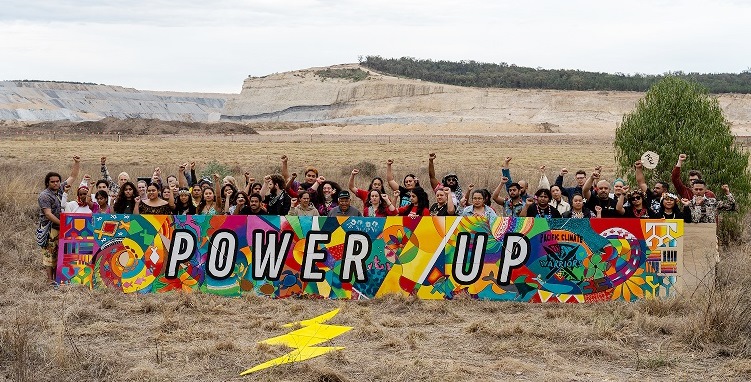
A renewable energy transition for eight Pacific Island Countries (PICs) including Fiji would cost less than a billion US dollars, says a report commissioned by the Fossil Fuel Non-Proliferation Treaty Initiative (FFNPTI).
Titled Ki Mua: Towards a Just Transition for the Pacific — the report said cost would be one seventh the amount of money that Australia gave to the fossil fuel industry in handouts and tax breaks in 2022-23 and less than 0.5 per cent of the windfall profits the world’s top five fossil fuel companies made last year alone.
The Ki Mua report was unveiled at the 52nd Pacific Islands Forum Leaders Meeting in the Cook Islands which is currently underway in Rarotonga.
“This report demonstrates how the energy transition can be a win-win for the Pacific, if it is implemented through a holistic approach to economic development, characterised by economic diversification, poverty eradication, decentralised renewable energy systems, and the retraining and redeployment of fossil fuel workers,” said Dr Nikola Čašule, lead author of the report.
“In the past year, Australia has handed out 7 billion USD to the fossil fuel industry. That’s seven times the amount of money it would take to fund a renewable energy transition for eight Pacific countries,” said Auimatagi Joe Moeono-Kolio, chief advisor Pacific for FFNPTI.
“If Australia wants to host COP31 as a “Pacific COP”, then the first step is to start caring for Pacific peoples and stand with us instead of blocking the Pacific’s efforts as it has done for decades.”
“The Pacific’s supposed neighbour, Australia, is the world’s third largest exporter of fossil fuels and now looks to partner with the Pacific to host COP31,” said Joseph Sikulu, 350.0rg’s Pacific Regional managing director.
“If Australia and New Zealand are to have meaningful climate engagement with the Pacific at this Pacific Islands Forum, there is a responsibility to end the region’s reliance on fossil fuels and resource the finance mechanisms that will help support a just and equitable energy transition for the Pacific.”
In a press statement FFNPTI said the report’s conclusion underscored the immense value of a global phase-out of fossil fuels and highlighted the significant benefits the transition could hold for the Pacific region.
Key findings highlighted in the report included the fact that the 15 largest greenhouse gas emitting nations were responsible for 71.88 per cent of all annual global emissions, while the 14 PICs were responsible for just a fraction of a percentage of emissions.
The report also said the upfront estimated cost of replacing all existing fossil fuel electricity generation in the eight PICs —Papua New Guinea, Fiji, Solomon Islands, Vanuatu, Samoa, Kiribati, Federated States of Micronesia, and Tuvalu—ranged from USD$691 million to just over USD$1 billion, depending on the specific technology mix.
The Ki Mua report said full decarbonisation of Pacific economies would lead to benefits quite apart from the obvious climate mitigation gains, including in the areas of public health, energy accessibility and economic development, disaster resilience, political independence, and global climate mitigation advocacy.

