
Food pack operations will not address the root causes of poverty, says Saint Mina’s Children’s Home manager Dr Lydia Moussa.
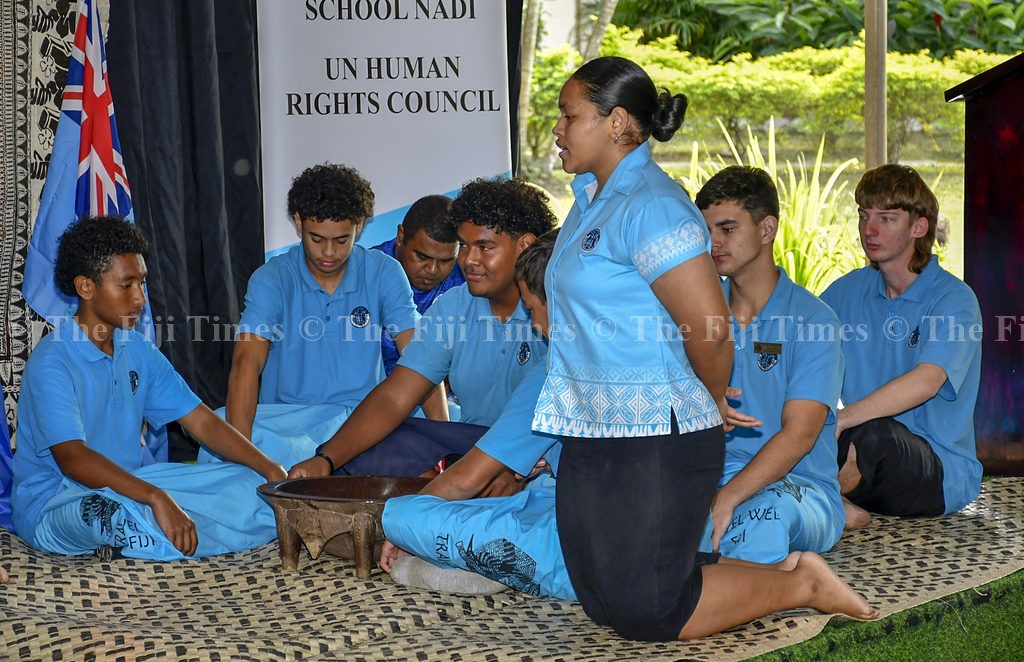
Speaking at the opening ceremony of the International School Nadi Model United Nations (ISN-MUN) Conference 2026, Dr Moussa said when people continue to give food freely, they were building dependent communities.
“Instead of giving a fish, we need to give a fishing rod, so that communities become empowered to become more self-sustainable and take control of their own futures,” she said.
“This is why we started our Sow and Reap Initiative at Saint Mina Children’s Home, where youth above 15 get to learn weaving, jewellery making, art, braiding and many other hands-on skills and start earning from their work across different resorts and markets.
“We now have youth saving up for their first car, their own laptops, their university degrees all while building their confidence, their financial acumen, entrepreneurship skills, communication, and customer service skills and so much more.”
She said when people are asked to give to charity, they need to ask deeper questions to figure out whether their giving was simply masking a surface symptom or tackling an underlying root cause.
“Are you giving a fish or a fishing rod?
“When we are discussing challenges like climate change, a problem might be that a village is threatened by rising sea levels. Simple solution: Build a seawall.
“But as a systems thinker, you will realise that a seawall may protect homes, but what happens if it changes coastal currents, damages coral reefs, affects fish breeding grounds, reduces tourism, or limits access to traditional fishing areas? Families may become economically worse off even though their homes are protected.”
Dr Moussa added environmental decisions must consider ecological, economic, cultural, and social systems together.

