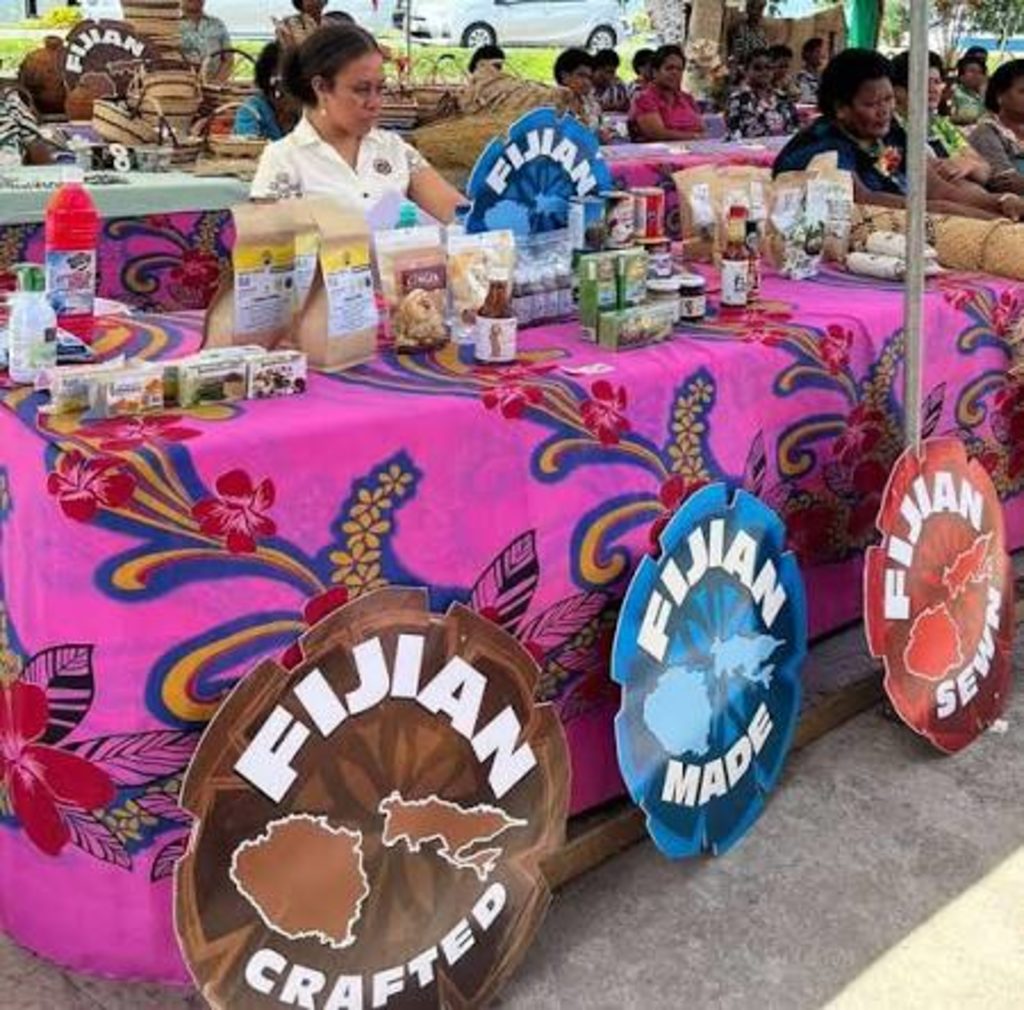
A Fijian Made product represents more than a label.
Behind it is a local business investing in production, employing people and purchasing goods and services from other businesses. For agricultural products, it can also represent income for growers and stronger connections between farms, processors, retailers and exporters.
The Fijian Made — Buy Fijian program was established to promote locally produced goods and services in Fiji and abroad. It provides businesses with recognised certification and gives consumers a way to identify products connected to the domestic economy.
The program has strong potential, but it should be viewed as more than a promotional campaign.
Fijian Made should be an important part of Fiji’s wider economic strategy, connecting domestic production with investment, trade, agriculture, manufacturing, MSME development and export promotion.
Strengthening Fiji’s productive economy
The need to strengthen domestic production is reflected in Fiji’s trade position.
Fiji Bureau of Statistics data shows that in 2025, the country imported goods valued at approximately $7.38 billion while total exports were about $2.53bn. This resulted in a merchandise trade deficit of approximately $4.85bn.
Not all imports can or should be replaced. Businesses depend on imported fuel, machinery, raw materials and other inputs that Fiji may not produce locally.
However, the size of the deficit reinforces the importance of growing exports and increasing domestic production where Fiji has the capacity to compete. This requires a coordinated approach. Trade policy should support the development of productive industries, while investment and industry policies help businesses build the capacity required to enter and remain in overseas markets.
The Fijian Made program provides a practical platform around which these priorities can be organised.
Connecting Fijian Made with trade
Trade agreements can create opportunities by reducing barriers, improving cooperation and providing access to larger markets.
For these opportunities to produce meaningful results, trade must work both ways.
Fijian businesses should gain practical opportunities to sell into overseas markets, while local manufacturers and growers must be able to continue competing and investing within their own economy.
Market access alone does not guarantee exports. A business must still produce at the quality, quantity and price expected by overseas buyers.
Standards, certification, biosecurity requirements, rules of origin and freight costs can determine whether an export opportunity is commercially viable. Businesses may also need assistance to expand production and establish reliable supply arrangements. These wider requirements should form part of Fiji’s approach to every trade agreement.
Considering PACER Plus
This is particularly relevant as Fiji reviews its position on the Pacific Agreement on Closer Economic Relations Plus, commonly known as PACER Plus.
PACER Plus entered into force on December 13, 2020 and currently has 10 parties. Fiji is not among them, while the National Development Plan provides for the agreement to be reviewed and reconsidered.
Australia and New Zealand remain important trade and development partners for Fiji.
These relationships extend beyond merchandise trade and include investment, tourism, education, workforce development and regional cooperation.
The question is how PACER Plus would add to these existing relationships and deliver measurable benefits for Fijian businesses and workers.
FCEF remains to be convinced the agreement, in its present form, would provide sufficient benefits for Fiji’s industry sector. The ongoing review provides an opportunity to examine the evidence carefully, consult affected industries and identify what Fiji would need from the agreement.
Trade must deliver mutual benefits
Fijian manufacturers and growers operate with comparatively small production volumes and face high costs for electricity, freight, finance, labour, machinery and imported raw materials. They may be competing against overseas producers operating at a significantly larger scale.
Reducing tariffs without sufficient consideration of these differences could increase pressure on industries that support local employment, investment and supply chains.
This does not mean Fiji should avoid competition or regional trade.
Competition can encourage productivity, innovation and better value for consumers. It does mean the pace and structure of trade liberalisation should reflect Fiji’s economic circumstances and productive capacity.
A balanced assessment should consider the likely effects on imports, exports, Government revenue, domestic investment, employment and the long-term sustainability of affected industries. It should also identify the adjustment support that businesses and workers may require.
The value of an agreement should ultimately be measured by whether it helps Fiji produce and export more, rather than only by whether it increases the movement of goods across our borders.
If Fiji proceeds
Should Fiji ultimately proceed with PACER Plus, the Fijian Made program should be incorporated into the country’s negotiating and implementation framework.
This should include identifying priority products with realistic export potential and assessing how tariff reductions may affect local manufacturers and growers.
Businesses will require practical assistance with standards, certification, biosecurity and export compliance.
Fiji should also retain appropriate policy space, within its trade commitments, to support viable industries as they strengthen their productivity and competitiveness.
The framework should promote certified Fijian Made products in participating markets and monitor the agreement’s effects on investment, employment, imports, exports and local value addition.
Australia and New Zealand can play an important role in helping Fijian businesses overcome the practical barriers that currently limit their participation in these markets.
This would help ensure that PACER Plus supports Fiji’s productive development and creates opportunities that extend to manufacturers, growers, exporters and MSMEs.
Building from a stronger foundation
Fiji’s approach to trade should begin with a clear understanding of what the country wants to produce, which industries it can develop and where its businesses can compete.
Strengthening the Fijian Made – Buy Fijian program is an important part of that work.
By embedding the program within Fiji’s foreign affairs, trade and commerce priorities, Fiji can connect regional market access with local production, investment and employment.
If PACER Plus proceeds, it should reinforce this direction.
Successful trade policy should help more Fijian products reach local and overseas consumers while enabling businesses behind those products to grow.
That is how trade can contribute to a stronger and more resilient Fijian economy.
FCEF acknowledges the Business Strategy Council – a council under FCEF – for their technical input into this article.