GOOD vision is essential for a child’s learning, development and overall well-being. However, some children experience a condition known as amblyopia, commonly referred to as “lazy eye”. Although the name may suggest an eye that is not working hard enough, amblyopia is actually a vision development disorder that requires early detection and appropriate treatment.
For parents and caregivers in Fiji, understanding this condition is important because timely eye examinations can make a significant difference to a child’s vision and future quality of life.
What is amblyopia?
Amblyopia occurs when the vision in one eye, or occasionally both eyes, does not develop normally during early childhood. It happens when the brain favours one eye over the other or receives consistently unclear images from the eyes. Over time, the brain relies more heavily on the stronger eye and may not develop normal visual processing for the weaker eye.
Amblyopia usually develops during infancy or early childhood, when the visual system is still developing. If left untreated, it can lead to permanently reduced vision in the affected eye.
Importantly, amblyopia is not simply a problem with the eye itself. It involves the way the brain and the eyes work together.
What causes lazy eye?
There are three common causes of amblyopia.
1. Refractive errors: Significant differences in prescription between the two eyes, or uncorrected long-sightedness, short-sightedness or astigmatism, can cause blurred vision and interfere with normal visual development.
2. Squint (strabismus): When the eyes do not point in the same direction, the brain may suppress the image from one eye to avoid double vision. This can lead to amblyopia.
3. Obstruction of vision: Conditions such as a congenital cataract or a drooping eyelid that blocks the pupil can prevent clear images from reaching the brain, affecting visual development.
What signs should parents look for?
One of the greatest challenges with amblyopia is that children may not realise their vision is abnormal. If one eye sees well, they may continue their daily activities without obvious difficulty.
Parents should look out for a child who frequently closes one eye, tilts their head to see, struggles to judge distances, has a noticeable eye turn or experiences difficulty with reading and other visual tasks.
However, many children show no obvious symptoms. This is why routine eye examinations are essential, even when a child appears to see normally.
Why is early detection important?
The brain’s visual system develops rapidly in the early years of life. Amblyopia is generally easier to treat when identified early, although older children may also benefit from treatment.
If left untreated, reduced vision may persist into adulthood. Poor vision in one eye can also affect depth perception and may leave a person more vulnerable if the stronger eye is injured or develops disease.
In Fiji, parents and caregivers should prioritise children’s eye health alongside other routine health checks. Teachers can also play an important role by identifying children who struggle to see the board or complete classroom activities.
How is amblyopia treated?
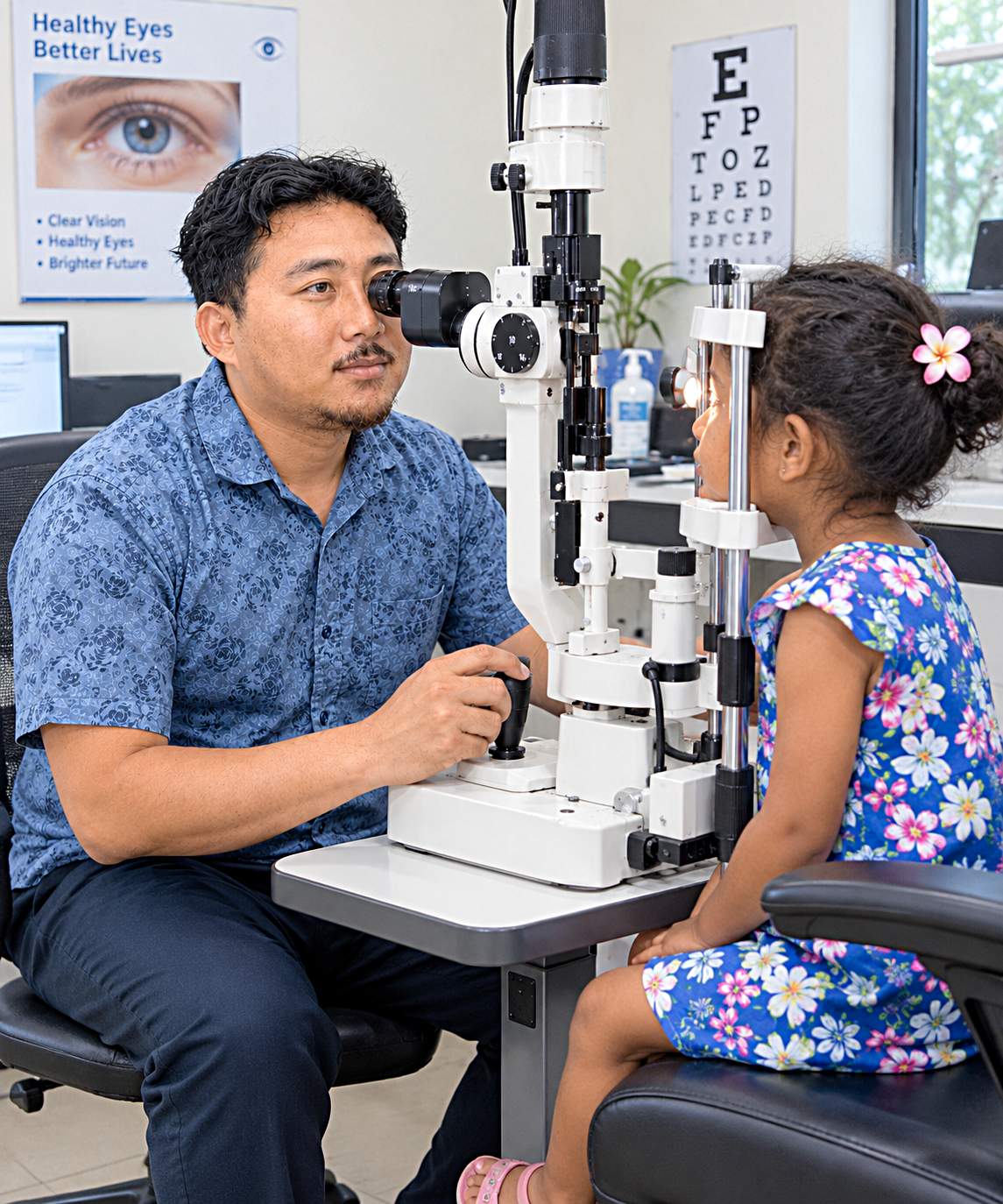
Treatment depends on the underlying cause and the child’s age and visual needs. An optometrist will assess the child’s vision, examine eye alignment and determine whether glasses or further assessment is required.
Treatment may include:
• Prescription glasses: Correcting refractive errors can improve vision and may be sufficient for some children.
• Patching: Covering the stronger eye for a prescribed period encourages the brain to use the weaker eye.
• Atropine eye drops: In selected cases, drops prescribed by an appropriate eye-care professional can temporarily blur vision in the stronger eye to encourage use of the weaker eye.
• Referral for specialist care: Conditions such as cataracts or significant eye misalignment may require assessment and treatment by an ophthalmologist.
Parents should follow the treatment plan carefully and attend regular follow-up appointments. Treatment should never be started without professional guidance, as the approach and duration must be tailored to each child.
A clear vision for children
Amblyopia is a treatable childhood vision condition, but the opportunity for the best possible outcome depends on timely diagnosis, appropriate treatment and consistent follow-up.
Parents should not wait for their children to complain of poor eyesight before seeking an eye examination. Schools, families and health professionals can work together to improve awareness and ensure children receive the eye care they need.
Healthy vision supports healthy learning. By identifying amblyopia early, we can help give Fiji’s children a clearer view of the world and a stronger foundation for their future.