
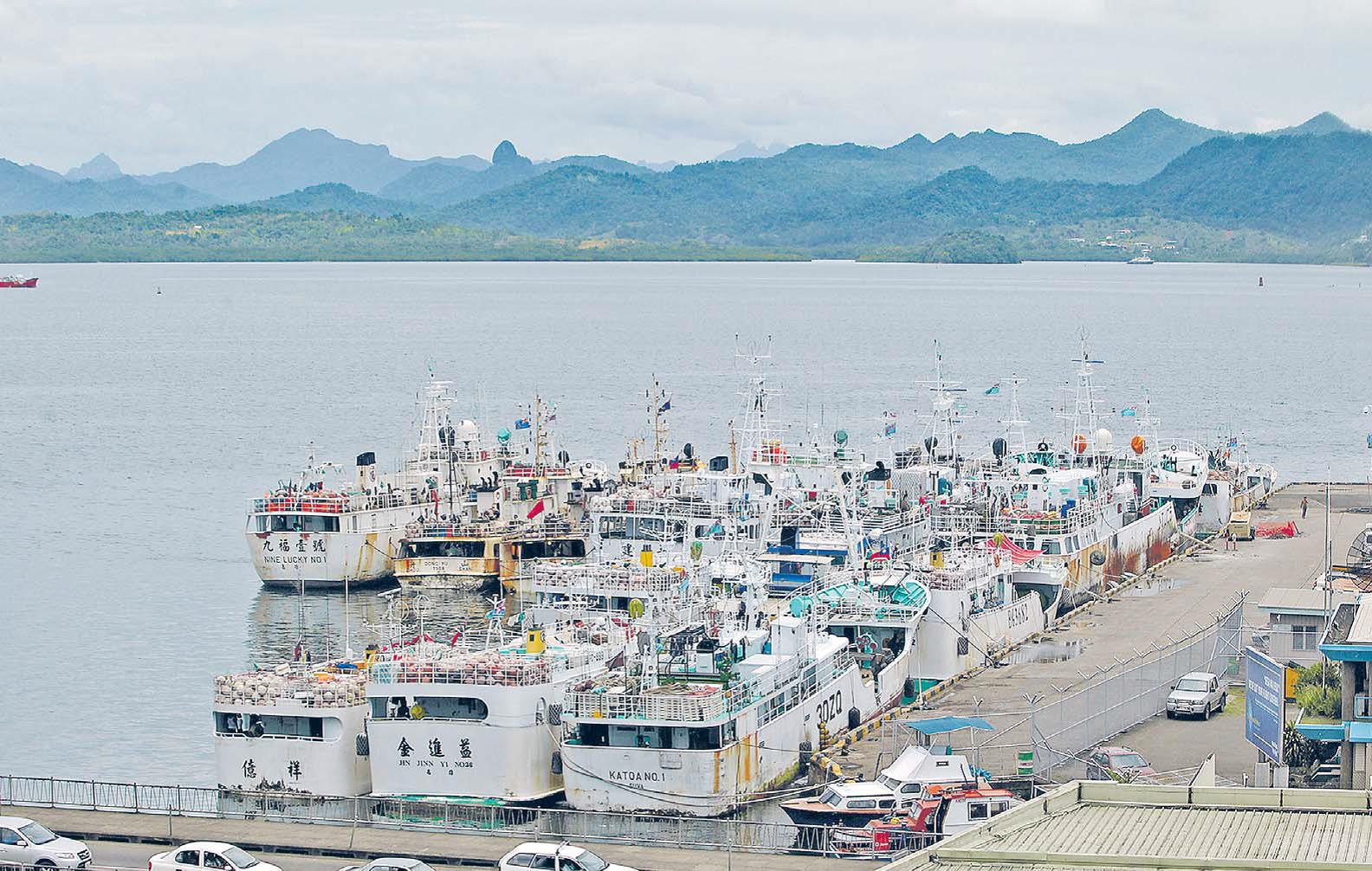
From 2010 to 2017 there has been a 40 per cent decline in vessel arrivals in the country — this is for foreign and local-based vessels.
According to the Ministry of Fisheries in 2005, the licence cap was at 120, which is the maximum number of licences Fiji can allow within its waters.
This is not only for the exclusive economic zone (EEZ) but also for the archipelagic waters and territorial seas and distinction was done according to vessel size and citizenship of shareholding structure.
In 2008, the licence cap was reduced to 90 because of resource sustainability.
This was later deducted to 60 based on the bio-economic survey (science and economic analysis) used to develop Fiji’s tuna management and development plan.
The current licence cap is at 60 for Fiji waters.
Minister for Fisheries Semi Koroilavesau said Fiji was a member of the Western and Central Pacific Fisheries Convention and it followed strict management measures to ensure illegal, unreported and unregulated (IUU) fishing was combated in Fiji.
Under the convention, Fiji, as a sovereign flag and port state, exercises its power to ensure the monitoring of vessel movements in its waters.
The use of vessel monitoring systems (VMS) allows Fiji and other commission members to monitor the movement of vessels within different zones, including the EEZ.
“These systems use mobile transceiver units that are installed on vessels to poll vessel position, speed and activity,” Mr Koroilavesau said.
“Vessels entering Fiji’s zones (waters) can be monitored from three different sites. These sites include the surveillance centre house at the regional surveillance centre in FFA (Forum Fisheries Agency), the Fiji Naval surveillance office and the Fiji Fisheries VMS office.”
In addition to those mandatory vessel requirements, all vessels planning to enter or exit Fiji waters have a mandatory reporting requirement of an entry and exit notification, which is done 48 hours before the entry or exit.
“As an international fishing port state and while practising the ‘rights of innocent passage’ there is no limit to the amount of vessels that call into Fiji’s ports,” Mr Koroilavesau said.
“This, however, does not apply when the Ministry of Fisheries refuses entry to a vessel because of its activities on IUU.
“If a vessel has been identified to have conducted an IUU activity, Fiji, as a responsible port state, can either deny entry or allow for entry with the understanding that the vessel will be thoroughly investigated.”
“The criteria of visiting Fiji’s ports requires early notification to enter Fiji waters. “This allows for background checks to be conducted on the vessel,” he said.
“Prior to berthing, a mandatory boarding exercise is conducted on all vessels to determine fishing activities, crew size, total catch and documentation are all in order.”
The ministry gets informed about commercial fishing vessels fishing illegally on Fiji’s EEZ through the regional surveillance centre based at the FFA.
“They are tasked to conduct assessment on vessel movement and provide amber alerts to countries where a high risk vessel is likely to enter. Also, the ministry gets informed through the posting of IUU listing and reports gathered during background checks on vessels of interest.
“The Fiji Navy and the fisheries VMS and enforcement officers also conduct prior checks and assess vessel status which allows for other parties to be informed.”
He said also through regional co-operation and information sharing of commission and FFA members that the ministry gets informed about illegal fishing.
“Depending on where the vessel is flagged, the common practice is that once a vessel has been identifi ed to have fished illegally, all countries will
cease all licensing arrangement held with the vessel.
“Therefore, it will not fi sh within any member EEZ and it will also depend on the seriousness of the offence. In some cases, vessels are often
seized by the state and sold off to recover cost.
“This means that if the vessel does fish in an FFA member’s EEZ, it will be operated by a new owner, crew with no affiliation with the previous
owner and crew,” Mr Koroilavesau said.
He said most IUU listed vessels were banned until their cases were cleared or if the vessel served a maximum time of suspension that was
served by legal bodies.

