Library Books
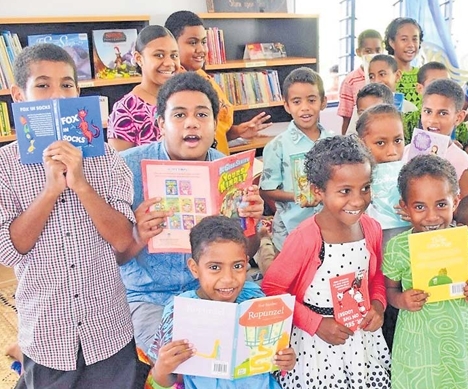
During their primary school days, my children were dropped off at the Western Regional Library for half day on Saturdays and half day of each week day during school term holidays. Previous year, to refresh her memories, one of them visited the library, a popular land mark in Lautoka, which once provided an abundance of books. Book shelves empty and partly empty unfortunately indicated that parents or children hardly valued the library. This generated a conversation with the librarian who expressed her concern how children were glued to mobile phones for video games. Furthermore, many Fijian parents always communicate with their young children in English; a misconception that speaking in English would mold them into intelligent students. I spoke to a toddler in vernacular whose mom responded that he did not know how to speak in Hindi at all but only in English. Only reading and writing in English will broaden children’s knowledge to excel in this compulsory language where all school curriculums up to tertiary level are in English language. SARITA LAL Malolo St, Lautoka
Down memory lane!
As I flipped through the pages of my diary, a colourful and bright memory stood out. On September 15, 2018, our bold editor-in-chief, Fred Wesley, scooped the top award at the PANPA Awards at the Hilton in Sydney. The PANPA Awards recognise and celebrate news media advertising and marketing campaigns, as well as the industry’s creative, sales and marketing teams in Australia, New Zealand, the South Pacific and Asia. Hence, it was a moment of pride and ecstasy as Wesley walked away with the News Media Executive of the Year award. Wesley was emotional as he carried the hopes and aspirations of the people’s newspaper. In his address, he shared these lines, “The Fiji Times is turning 150 years old next year (2019). We have had to live through tough times since 2009. This certainly is a positive reflection of the work being churned out in The Fiji Times newsroom. This is for The Fiji Times family and all our readers around the world.” I hope Wesley remembers that moment that lifted hearts up and brought out smiles! Rajnesh Ishwar Lingam Nadawa, Nasinu
Embracing reality
The declaration of a national HIV crisis by authorities is a heart breaker as many will be wondering how our beautiful country reached such a stage. Whatever ones views, it is what is it and let’s proactively engage at all levels. Within the households, as parents and guardians, we must talk openly and honestly with children about HIV and decisions they make on a daily basis including friends they associate with. Sexual education is a topic parents will need to dicuss with children in a respectful manner and continually. We cannot shy away from this sensitive topi if we love our children and want the best for them in an environment where HIV is a crisis. Adults should be encouraged to engage in HIV tests and act responsibility. As communities, let us show compassion and love towards those living with HIV. It is what it is and as a nation, let’s embrace reality. Floyd Robinson Micronesia
Fix the vanua
HIV has finally been declared a national emergency. It is reported that 1 in 60 adults suffer from this disease. I believe that is an underestimation. Can someone tell us what percentage of the sufferers are vulagi and what percentage are others? There are calls from politicians that communities, faith-based organisations and the vanua should work together to solve this problem. When was the last time communities, faith-based organisations and the vanua solved any problem in Fiji? I believe they are the cause of all the problems in Fiji in the first place, including drugs, domestic violence, child abuse and crime. Simply because people in the faith-based organisations and the vanua are not the best role models with all the issues surrounding them. And if anyone thinks that the GCC has any solutions, they should get their head checked, seriously. It is the vanua that needs to be fixed. Who else is there who will point this out? Jan Nissar Sydney, NSW, Australia
Listen to the numbers
Editor Fred Wesley has it in a nutshell.(FT 16/09) Emergency, action and get back to basics. In Australia, they are looking to virtual elimination of HIV by 2030. Of the 30,000 cases diagnosed, 95 per cent are being treated and 98 per cent of them have an undetectable viral load which means they can enjoy a normal life style. So antiretroviral treatment (ART) is a proven winner. Self testing blood kits are available. Understanding how HIV spreads is also instructive with possibly too much emphasis on injecting drug use. The Australian figures are 54 per cent from sexual contact between men, 27 per cent from heterosexual contact, 8 per cent from men and injecting drugs and 3 per cent from drug use only. This national emergency can be beaten, if government takes action. Terry Hulme Eastwood, NSW, Australia
To fund or not to fund
That is the question. Thirty elderly residents at Father Law Home in Lami are reportedly facing an uncertain future, and I read that there’s only about two months of funding left for providing normal care services to the residents. At around $25,000 needed per month and over $250,000 per year as claimed by Home manager Joeli, I believe the Home is not asking for a lot of money. Seriously, $250k a year needed, and a meagre $30k from Government each year? We are unable to look after our kids (look at the drug problem, indiscipline and disrespect and other ills) and neither can we look after our elderly. Yes, it’s the responsibility of people to look after their ageing parents, but too late to talk about that. These age-care homes are noble places where caregivers have devoted their souls to the ageing souls. The heart melts watching them at work. More of my tax money is needed by them. Trying to think of where the spare money would be available, it clicked. The 2026 Hibiscus net earnings could be diverted to Father Law Home. Hibiscus is not paying for the total annihilation of half of Albert Park grass, so giving money to the Home may get some of the grass murder forgiven. Donald Singh Nausori
Vehicle dump
Is Fiji becoming a dumping ground for low cost, substandard used vehicles? Should Fijians be concerned about the safety and quality of these second hand vehicles? Does the Government have a proactive plan for the future to counter severe traffic congestion? Au taro la mudou! Wise Muavono Balawa, Lautoka
Important topics
That memory loss from his wonderland wonders why writers write about FNPF pending pension payments which is of least important to be published in this prestigious column yet he saw it important enough to give his response to my letter. Thanks for giving my letters the importance they deserve. Dear PM we are hoping for the best from you. Let’s see how blessed we are. Kirti Patel Lautoka
Champion of workers
The labour movement has lost one of its strongest voices. The passing away of Agni Deo Singh has shaken many hearts and the nation as a whole. He stood with the workers in every strike, every negotiation, every fight for fairness. We honour your service, comrade. His legacy remains amongst us but his absence would be highly felt by many. May you rest in peace and power. Condolences to the family, friends, and union family. Till we meet again sir. Yashneel Kumar Paipai, Lautoka
Nursing station at Galoa
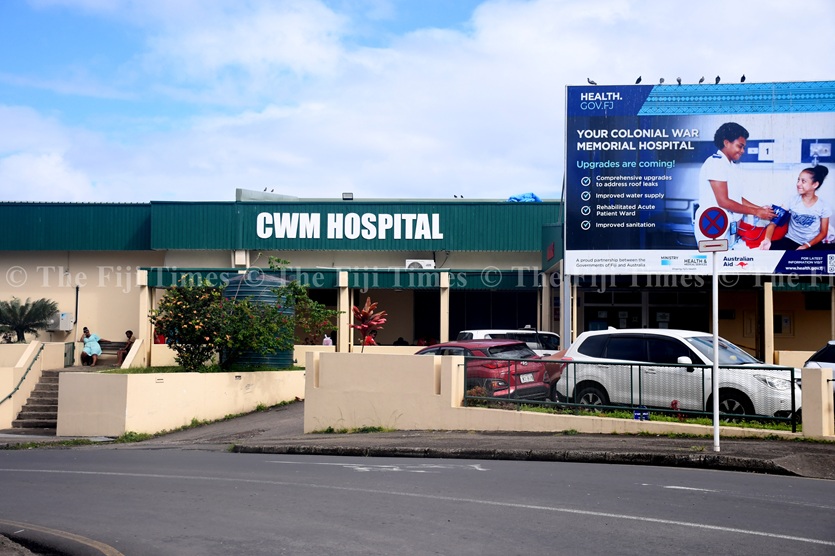
I write regarding the health crisis in our rural areas, in light of Professor Eddie McCaig’s comments on CWM Hospital. While Suva struggles, rural stations are at breaking point. I wish to highlight the Galoa Nursing Station in the tikina of Batiwai, Serua Province. As a villager, this is the reality on the ground: This station serves Galoa, Talenaua, Nakorovou, Culanuku, Wainiyabia, Qarasarau, Lepanoni Tubarua, Nuku, Nakaulevu area, and even patients from Navua. Approximately 3000 people visit every month and it’s quite huge. This number keeps on increasing due to developments in the greater Navua Town (recently upgraded) area. Also those working in hotels, teachers and school students contribute to the numbers that visit the station. Yet we have only two staff – one nursing practitioner and one nurse. They are expected to attend to clinic patients, school visits, home visits, and emergencies. It is impossible. We have already written to the Ministry (of Health) to upgrade Galoa to a health centre so more human resources can be posted. We also urgently requested a birth unit and a mortuary. Why? Because the current units at Navua Hospital are not working well, and our mothers and families in Serua have nowhere else to go. When CWMH has seven theatres not working, and rural stations like Galoa have only two nurses for 3000 people, our health system is failing both ends.
The ministry’s labour market analysis must prioritise places like Galoa.
We need immediate upgrade to Health Centre status;
We need more nurses, a doctor, and support staff; and,
We need a functioning birth unit and mortuary for Serua.
Our people in tikina Batiwai deserve the same standard of care. We cannot wait another 10 years. Mikaele Leawere Galoa Village, Tikina Batiwai, Serua
Arresting Fiji’s tailspin
We must thank the Editor–in–Chief of The Fiji Times for sounding two consecutive national alarms — first on the crisis in our health system (Aspen/CWMH, September 15, 2026), and then on the HIV and drug emergency (September 16, 2026). These warnings are not routine editorials; they are urgent calls to action that Fiji’s leaders can no longer afford to ignore. The truth is stark. Fiji is sliding down a precipice. Crime is rising, murders are reported with disturbing frequency, gender–based violence scars our communities, and daylight robberies erode public trust. Coupled with the HIV epidemic — now declared a national emergency, with one in every 60 adults infected — and the surge in illicit drug use among our youth, the socio–economic case for Fiji as a safe, proud, and prestigious nation is collapsing. Tourists will not choose a destination where insecurity, poor health services, and social decay dominate headlines. The editorial rightly points to complacency and neglect. For too long, Fiji has relied on talk–fests and piecemeal responses. What is needed now is urgent, root–cause intervention. That means decisive measures to limit drug trafficking and consumption, rapid expansion of HIV prevention and treatment, and a complete overhaul of our health infrastructure. If this requires severe, even drastic actions, then so be it — the survival of our people and the credibility of our nation are at stake. Fiji must also look outward. Our closest partners, Australia and New Zealand, are not distant observers. Through security treaties and regional cooperation, they are positioned to provide bilateral assistance — technical, medical, and enforcement — that can help arrest this tailspin. Already, New Zealand has issued travel advisories warning its citizens about flu outbreaks and safety concerns in Fiji. This is a red flag: when our neighbours caution their travellers, the world listens, and our image suffers. The cumulative impact of HIV, drugs, crime, and a failing health system is not just a domestic tragedy; it is an international reputational crisis. Fiji risks losing its place in the world as a safe, welcoming destination. Arresting this decline requires honesty, urgency, and sustained action. The Fiji Times has done its duty by warning the nation. It is now for our leaders to prove that they can act — not tomorrow, not after another committee, but today. DR SUSHIL K SHARMA Lautoka