
Who makes a country
I BELIEVE that it is the people of any country that makes the country what it is.
That is certainly true for Japan. After the devastation of World War II and two atomic bombs, Japan today is unquestionably the most advanced, the cleanest and the most developed country in the universe. The people are the friendliest, the most humble and respectful people in the world.
With high population density there are hardly any traffic jams. That is because of the excellent public transport and railway systems. I just can’t get enough of the Shinkansen — the bullet trains. All this has been achieved in a short eighty years after the war.
And then we have Fiji. Certainly, the people of Fiji are responsible for what Fiji is today.
Fiji is now undoubtedly the freest country in the world under this Government.
Everyone is free to make the law as they go, they are free to dump rubbish where and when they want. Fijians and their leaders are free to say the stupidest things with great pride and arrogance.
But one thing remains unchanged, Fijians are the most blessed people in the universe.
JAN NISSAR Osaka, Japan
Indian youth protest
THE Cockroach Janata Party’s mass protest movement against the Modi government in India appears to be gaining momentum by the day.
Through the public statements of well-known Indian film personalities and rights advocates such as Shabana Azmi, Naseeruddin Shah, and Diljit Dosanjh, I have gained some insight into what they say is driving so many Indian youths onto the streets in support of the movement.
What I would now like to know is this: what is the view of Rakesh Chand Sharma, whom many regard as the self-appointed unofficial spokesman for the Modi government in Fiji, on the mass protests taking place in India and among sections of the Indian diaspora?
Has he expressed any opinion on these developments, and if so, what is his position?
RAJEND NAIDU Sydney, Australia
That’s strange
WE read in the news in Fiji that the Fiji Independent Commission Against Corruption has discontinued its criminal case against suspended Director of Public Prosecutions Christopher Pryde after informing the court it was unable to serve him with legal documents in New Zealand.
That’s rather strange.
It would have been understandable if Christopher Pryde was in Timbuktu.
Nazi war criminal Adolf Eichmann, one of the principal architects of the holocaust, hid in Argentina under the alias Ricardo Klement but the Israeli was able to capture him.
RAJEND NAIDU Sydney, Australia
Centennial celebration
I WRITE to warmly acknowledge the Fiji Muslim League (FML) on the occasion of its centenary celebrations, and express my deepest appreciation for the League’s century of service to our nation.
The launch of the celebrations, led by national president Haji Basheer Ahmed and attended by Malaysia’s High Commissioner to Fiji, Nor’ Azam Mohd Idrus, was a powerful reminder of how faith, education and community service have shaped the organisation’s legacy.
For 100 years, the Fiji Muslim League has stood as a pillar of cultural preservation, academic excellence, and social upliftment. Its schools have not only produced high achievers in mathematics, science, technology and languages, but — as Mr Ahmed rightly emphasised — have nurtured honesty, compassion, discipline and service. These values have strengthened our national fabric and helped shape generations of responsible citizens.
As a nation, we celebrate the League’s unwavering commitment to ensuring that no living member of the community feels forgotten or left behind. This ethos has guided its welfare programs, youth development initiatives, and its outreach to the poor, the displaced and the vulnerable. The League’s charitable work has touched countless families, and its quiet acts of service have brought dignity and hope to many.
I also wish to personally acknowledge the mothers, women and children whose dedication has sustained the organisation through decades of change. Their prayers, perseverance and leadership — often behind the scenes — have been instrumental in spreading values of peace, stability and unity across Fiji. They are the heartbeat of the League’s mission.
As our elders slowly pass on, it is encouraging to see younger generations stepping forward to take up the reins of leadership. Their energy, innovation and commitment will carry the League into its next century, especially as it adapts to new challenges such as artificial intelligence, technological change, climate pressures and evolving educational needs.
The Fiji Muslim League has contributed immensely to education, language, culture, social cohesion and national unity. It has set an example of what solidarity and service can achieve. As we mark this milestone, we collectively wish the League another 100 years of excellence, compassion and nation building.
May the values that guided its founders continue to illuminate its path forward.
DR SUSHIL K SHARMA Lautoka
Heartbreak at Home
THE McDonald’s Fijian Drua Women went down at home to the New South Wales Waratahs 34-17.
The Drua played back-to-back finals in 2022 and 2023 away from home and won both, beating the Waratahs and Reds 32-26 and 38-30.
The Drua lost to the Waratahs 42-29 in round one and while we couldn’t defend our home turf, the Waratahs, who beat the Western Force 33-22 in the semi-final, went home smiling.
Basic errors let the hosts down as the visitors capitalised. Our girls put up a brave effort but failed to beat the Waratahs.
To the Drua, we are proud of you all.
With the resources we had, a home final was a huge achievement. It’s not the end of the world. There’s always a next time, girls. Vinaka vakalevu, Fijian Drua!
RAJNESH LINGAM, Nadawa
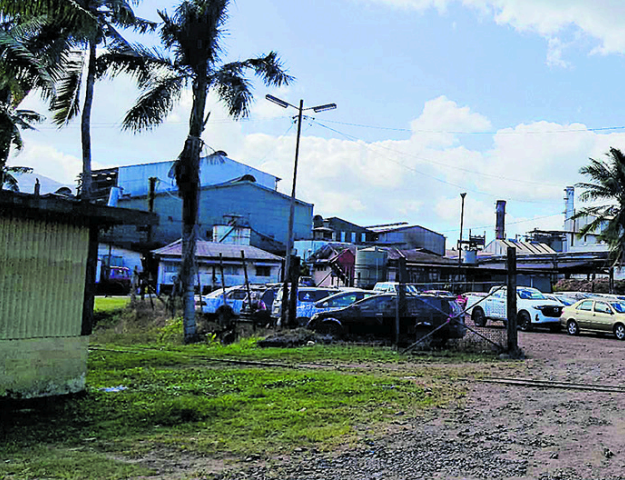
Fiji Sugar Corporation
I REFER to the story — PM: FSC sale an option (FT, 25/7/26)
Would selling the Fiji Sugar Corporation to CSR Australia be an option?
What an irony that would be — to have our former colonial-era sugar company return to bail out Fiji’s struggling sugar industry.
It also raises a broader question: what role did the 1987 Rabuka military coup play in setting the sugar sector on its long downward spiral?
RAJEND NAIDU Sydney, Australia
Electoral system
DIALOGUE Fiji makes a compelling case that Fiji’s current Open List Proportional Representation (OLPR) system accurately converts votes into parliamentary seats.
On paper, the mathematics appears impressive. The numbers suggest that almost every vote translates proportionately into representation.
But perhaps the real question isn’t whether the electoral system is mathematically efficient.
The real question is whether it strengthens democracy and better serves the interests of its “customers” — the people at the local level.
Democracy is far more than percentages and algorithms. It’s about accountability, accessibility and trust between the people and those elected to represent them.
Under the present system, many ordinary Fijians have no genuine local Member of Parliament to whom they can turn to when roads deteriorate, schools struggle, hospitals lack resources or communities face pressing local concerns about basic services and amenities.
Members of Parliament represent the nation as a whole. But too often no one is directly answerable to a particular community or constituency.
That creates a serious democratic disconnect and gap in the system.
An electoral system can be statistically perfect yet still leave citizens feeling politically disconnected and unrepresented. In other words, the people don’t have a “voice” directly representing them in the Parliament.
The proposed Proportional Open List Constituency System may not produce the same mathematical precision as OLPR, but perhaps that’s not its primary purpose. If it strengthens the relationship between elected representatives and the communities they serve, encourages greater accountability and gives voters a stronger sense that someone is responsible for their local constituency concerns, then those are democratic gains that cannot be measured by percentages alone.
No electoral system is flawless. Every model involves trade-offs.
The challenge for Fiji is to determine what we value most. Is our highest priority achieving mathematical proportionality, or building a Parliament that’s both representative and genuinely connected to the people?
As Fiji considers constitutional reform, we should resist the temptation to judge electoral systems solely based on statistical accuracy. The health of a democracy is measured not only by how fairly votes are counted, but by how effectively elected representatives serve the needs of the people who entrusted them with those votes.
Ultimately, democracy isn’t just about counting votes.
It’s about making every vote count long after election day so that people feel they’re being truly represented by their own elected parliamentarian.
After all, a parliament exists to give the people a voice, make fair laws and ensure the government serves the people, not itself.
COLIN DEOKI Melbourne, Australia
When the truth matters
I AGREE with Colin Deoki that “public trust depends on accuracy, integrity and fairness” in reporting (FT 25/7/26 ).
We are informed by the committee to protect journalists that “… Israel continues to block foreign journalists from entering Gaza”.
Why is that?
Is that for silencing and censorship of truth telling on the part of international journalists on what the Israeli military was actually doing in Gaza?
RAJEND NAIDU Sydney, Australia
Messi wins hearts!
ARGENTINA’S wonder boy, Lionel Messi, was heartbroken as the whistle marked the end of the 2026 World Cup final which Spain won.
I could feel his pain as he sat on the field reminiscing about what would have been a glorious and colourful end to his ageing career.
Hate him or love him, Messi has done wonders in his football career and has millions of followers, my daughter Mahika Lingam being one of them.
The 39-year-old football scoring sensation created history by playing in his sixth World Cup (WC) and topped that up by grabbing a hat-trick against Algeria.
Making his debut at the World Cup in Germany in 2006, ‘La Pulga’ inspired Argentina to victory over France in the 2022 WC final. Messi has more major team and individual trophies than any other player in the history of international football.
He collected the Golden Ball Award in 2014 and 2022. In the World Cup, Messi scored eight goals and extended his career goals in the WC to 21. Messi is such an influential footballer.
His leadership ability makes him a special and outstanding player. Argentina’s ‘little master’ will be remembered by the football fraternity in the years to come.
RAJNESH ISHWAR LINGAM Nadawa, Nasinu

