Usurpation of pensions
I refer to the OpEd by Azeem Sahu Khan in the FT 16/10/26: 20-21 and his reference to the usurpation of power.
The paragraph on p.21, Column 3 sets out the constitutional context plainly: Mr Sayed-Khaiyum was appointed Attorney-General on January 8, 2007, by the interim government installed after the coup of December 5, 2006. On April 9, 2009, the Fiji Court of Appeal ruled that this government was unlawful. The very next day, the 1997 Constitution was abrogated, all judicial appointments were revoked, and the same Prime Minister and Cabinet were reinstated. Mr Sayed-Khaiyum continued as Attorney-General.
From that point, Fiji was governed under Public Emergency Regulations, renewed month after month. Government censors were placed in newsrooms, journalists were detained, public meetings were restricted, and for five and a half years until the September 2014 election, Fiji was ruled by decree. Those decrees were, as the paragraph states, instruments of usurpation.
Among those decrees were Decree 51 and Decree 52, which stripped pensioners of their rightful entitlements. These decrees fall squarely within that same usurpation of power.
When the Coalition Government was voted into office, pensioners placed their hopes in it to finally address this injustice. Professor Biman Prasad, then Deputy Prime Minister, recognised the issue and initiated steps toward a remedy; steps that required sustained political commitment. Sadly, that commitment has not been maintained by his successor that would see a conclusion in 2026. This matter is in the Government’s court.
Meanwhile, the legal minds within FNPF continue to hide behind the legacy of usurpation, claiming that government inaction is the barrier. They have not taken meaningful steps to inform the Government of the injustice or to advocate for the pensioners whose interests they are legally and morally bound to protect. By remaining silent, they effectively uphold the usurpation rather than challenge it. Their $700m cost is being challenged by the data obtained by Prof Wadan Narsey and Jackson Mar (RiP) but the FNPF refuses to come to the table for discussion.
In the meantime, pensioners are dying, most recently our dear friend and supporter, Dewan Chand, a neighbour of the Prime Minister. Every passing year reduces our numbers, and with each death, the injustice becomes easier for institutions to ignore.
Usurpation wins and is a dangerous path, when no one has the courage to take up the mantle for pensioners, who are now dismissed as a “legacy”. But some of us are still here. We are still alive. And we will fight to the end.
Elizabeth Reade Fong Suva Point
Usurpation issue
FORMER attorney-general and minister of everything in the post-coup Bainimarama military regime Aiyaz Sayed-Khaiyum accused PM Rabuka of usurping powers over the referundum process (FT 9/10/26).
He conveniently forgets that his installation in power and his subsequent arbitrary exercise of power through rule by decree were acts of usurpation.
But we, the people, have not forgotten.
The lingering trauma of that reign of political repression remains embedded in our memory.
History must be remembered to draw lessons from the past for future good governance.
Rajend Naidu Calgary, Canada
A-G’s resignation
WELL thank you acting A-G for your prompt resignation. Do not worry. You might get your post back.
It is all in the game.
Sukha Singh Labasa
So busy?
I HAVE lost all trust in our ruling Government and all parliamentarians.
How busy are these current ministers and parliamentarians in Fiji that they cannot reply on messenger or acknowledge an email sent to them? Sa vacava tu na nomuni osooso.
If I can email the president, prime minister and foreign affairs of this small country when my visa was going to expire and I have been put on flight risk they replied within one hour.
My immigration visa extension request was extended after the three offices contacted Immigration here. They looked after six million plus population, yet they have time to see my request and attend to it. How busy are our ministers and their private secretary and others?
Vote wisely Fijians. Vote for those who care, don’t vote for the party, vote for the people you know will deliver the job they are elected for.
Email sent to MOH in June has not been acknowledged until yesterday. Even after they were visited personally.
Email sent on Friday last week still no reply until yesterday.
I’ve contacted almost all current ministers and some Opposition Members excluding one who replied. All I want to know is yes or no for an answer. Sa vacava tu na nomu osooso?
Tagi Vonolagi Vuci Rd, Nausori
White means business!
TO members of the Fiji Water Flying Fijians, our new head coach Jake White means business. After his appointment, he has not wasted time and knows that he has a mammoth task ahead of him as the Flying Fijians face Japan’s Brave Blossoms next week on their home turf.
This is a historic Centennial Test at the Chichibunomiya Rugby Stadium in Tokyo, next Saturday. Japan beat Fiji 20-15 to reclaim the Asahi Super Dry Pacific Nations Cup, so the Brave Blossoms will be a tough nut to crack at home.
After that Test, White will guide Fiji to their three remaining tough games in the Nations Championship against France, Ireland and Italy.
All will be played in the Northern Hemisphere in front of passionate fans who will not be too friendly. White has proved himself with South Africa. Can he do it with Fiji? Time will tell, but he needs our support, resources and the players.
The Fiji Rugby Union must provide him with the necessary help!
Rajnesh Ishwar Lingam Nadawa, Nasinu
Effects of social media on youths
MY topic focuses on the effects of social media on college students and the need for responsible use.
Social media supports communication, sharing of study materials, and access to helpful information. These benefits make learning easier and more collaborative for students. However, excessive use can weaken concentration, disrupt sleep, and reduce productivity. Students must strengthen digital discipline and prioritise academic responsibilities.
Responsible online behaviour is essential to protect learning, maintain focus, and support long–term academic success.
Talei Moko Dilkusha Rd, Nausori
Rest in peace
JONE Vakarisi, six months and no arrests. Shame!
Christopher Griffin Perth, Australia
Immunity, buds and diseases
With immunity provisions still protecting past and future coupists, treasonists and usurpers, we are engaging in wishful thinking, meaningless talk of reconciliation, national development and modernisation.
Nipping the disease in the bud doesn’t seem to be our strategy, and that, by choice. There’s still time.
Donald Singh Nausori
Food poisoning
Lately, in the mushroom poisoning case in Australia, a person has been jailed for three life sentences for three deaths. Now, BBC reports that a person has been charged for lacing the curry of a colleague using snail poison in Australia. Sounds bizarre!
Rakesh Chand Sharma Nadi
Road safety
The best notable news on roads in The Fiji Times, I believe, is “159 driving licences cancelled this year”.
We are always advised to refrain from driving under the influence of alcohol or drugs. If not, face the music.
Life is precious.
Be wise and think twice before you drive.
Tahir Ali Hamilton, New Zealand
Road works
If some of our stretches of road could talk. I believe they would be saying enough patching me, remove my old skin and reseal me.
Juki Fong Chew Nadawa, Nasinu
Protest marches
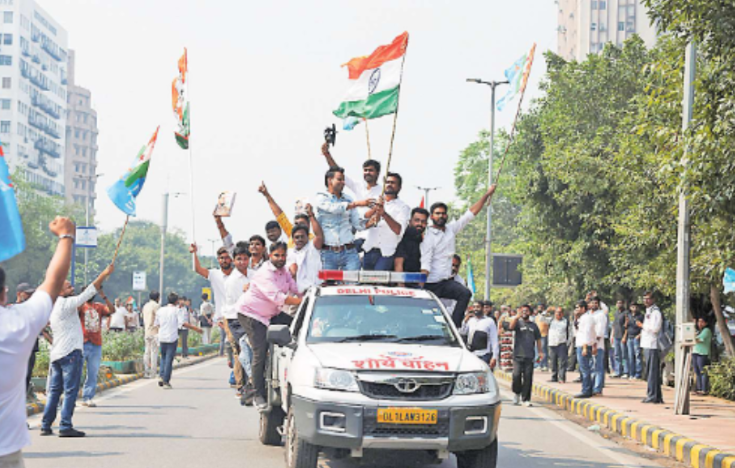
The President of the United States of America was not able to bully France and India. Coincidentally, both the countries are facing instability through protest marches. This is a good case study for political writers of this LTE column.
BHARAT MORRIS Gold Coast, Australia
Women’s representation
Women make up half of our Pacific population yet hold very few parliamentary seats. Article 1 of the UDHR says all people are born equal in dignity and rights, but equality means little without participation. Temporary special measures, like elected reserved seats with a sunset clause, can fast track fairer political representation. Our Pacific should act now, because decisions affect everyone.
I hope that this letter will be taken seriously and not fall on deaf ears.
Tulia Liku Nakasi
Termites hit Labasa!
THE unwelcome visitors have now spread across many parts of Labasa in just two years.
Every day, they seem to target new homes, leaving residents struggling to cope with this growing problem.
In some of the worst-affected settlements, residents have resorted to switching off their lights at night in an attempt to reduce the attraction of these flying termites.
Although completely eliminating them may be difficult, there are steps we can take to reduce their impact.
Turning off unnecessary outdoor lights, keeping doors and windows closed, and installing insect screens can help prevent these insects from entering our homes.
The question remains: How long must Labasa residents continue to live with this unwelcome invasion?
RODNEY CLARENCE RAJ Naleba, Labasa
Better response from FNPF
Vijay Naidu says “I believe the compulsory misappropriation [of the pensioners monthly pension] was sanctioned by an illegal regime [the Bainimarama military government] and our hope that the 2022 democratically elected Government [the Rabuka Coalition Government] will address the issue for all affected pensioners and their beneficiaries has increasingly faded away” (FT 16/10/26).
It no doubt has.
I wonder how many of the affected pensioners [the victims of the cruel decree legislating the misappropriation of their pension] had voted for the Rabuka Coalition Government with the hope of change they had promised now feel betrayed?
Rajend Naidu Calgary, Canada
Constitution consultations
THIRTY days seems insufficient and irrational,
if one wants
a meaningful and effective public participation,
for discussions on a new constitution.
Better to do it after,
the upcoming General Elections,
undertaken under,
the provision of the current Constitution.
Extend the current consultations,
for another six months or even more.
That’s important for the discussions,
on an effective and meaningful mother of all our laws!
Edward Blakelock Admirals Circle, Pacific Harbour
Sigatoka Sand Dunes
As a citizen who has previously lived by and visited the Sigatoka Sand Dunes on multiple occasions, I am saddened by the possibility of mining activities being allowed in the area. This is one of Fiji’s unique heritages and beauties. Few Pacific Island nations are fortunate enough to possess such a remarkable heritage site. I would encourage citizens to visit and explore the Sand dunes. The scenery is breath taking and there is a special atmosphere that is difficult to describe but can only be experienced.
The dunes is cultural. It is closely connected to the stories, traditions and identities of local communities, including some families who have lived in the area for generations. They are also home to a rich diversity of plants, animals and other microorganisms whose survival depends on the delicate balance of surrounding ecosystems. Beyond its environmental values, the dunes support nearby communities which rely on the ocean and creeks for fishing and sustenance. Their importance extends far beyond economics. No dollar value can truly replace what would be lost if this natural heritage were compromised. With the utmost respect to decision-makers, I believe the Sigatoka Sand Dunes are an irreplaceable part of Fiji’s identity and heritage. They should be protected and preserved for future generations at all costs.
Floyd Robinson Micronesia
Bledisloe Cup thriller!
The All Blacks, having held the Bledisloe Cup since 2003, extended their winning run to 24 years, after defeating the Wallabies 50-19 in Bledisloe Cup test one at their Fortress, Eden Park. Last year, the hosts fended off a late Wallabies comeback to win 33-24. In the return match at a wet Optus Stadium, the All Blacks won 28-14 to secure the clean sweep. Last Saturday night, the mighty All Blacks piled on 50 points in an emphatic win, locking away the Bledisloe Cup for the 24th consecutive season, outclassing the Les Kiss coached Wallabies. The All Blacks are now unbeaten in 54 consecutive matches at Eden Park, dating back to the 18-all draw against the Springboks in 1994. The Wallabies face the All Blacks at home and hope to turn things around. The All Blacks after the three-in-a-row loss to the Springboks, were good in defence and at winning the aerial battles last Saturday. As an All Blacks fan, it was encouraging to see such big improvements, and I am sure the boys will continue with the momentum to beat the Wallabies at home.
Rajnesh Ishwar Lingam Nadawa, Nasinu
Significant dates
Apart from December 24, 2026 being Christmas Eve, it has also recently become a significant date for a number of other events:
- The normal 4-year term of our Parliament expires on this date.
Given its expiration, the current Parliament is formally dissolved (by a presidential proclamation on the advice of the Prime Minister.) However, the Prime Minister and his ministers continue in office to govern the nation – but only in a caretaker capacity in accordance with the caretaker convention – for a temporary period until a new Prime Minister is appointed after a General Elections.
- Parliament’s formal dissolution on this date, begins a mandated maximum 51 days constitutional process towards a General Elections, beginning with the issue of a Writ for a General Election, within 7 days from the expiration date (dissolution).
- The FEO says that December 24 is also the last date for the issue of the Writ.
However, as mentioned above, sec. 59 (2) of our current Constitution, says otherwise.
- Apparently, I believe Government is aiming for the approval of the Constitution Amendment Bill 2026 – including the amended/ new Constitution – by this last day of Parliament sitting and the end of its term.
The approved Bill and the new Constitution will then be referred to the Electoral Commission for it to conduct a Referendum for all registered voters to vote on the Bill and the Constitution. If after the Referendum is conducted and two thirds vote in favour of the Bill, the President must assent to the Bill. The ensuing Constitution Amendment Act 2026, then comes into force on the date prescribed in the Act.
The prescribed date is presumably March 31, 2028. This future date is aimed at providing time for “legal certainty during the transition from the 2013 Constitution”.
Then again, there is a legal challenge in process “that will invariably throw the cat among the pigeons”.
Edward Blakelock Admirals Circle, Pacific Harbour
Kangaroos light up RLWC!
In front of a record 41,255 fans at the Allianz Stadium in Sydney, the mighty Kangaroos held on to their nerves to produce some moments of magic, two length-of-the-field intercept tries and a Reece Walsh screamer to come from behind twice to beat New Zealand 24-22 in their opening match of this year’s Rugby League World Cup tournament. In a breathtaking and pulsating battle where the NZ Kiwis were dominant and the Kangaroos were second best, the hosts, inspired by a passionate crowd, extended their RLWC winning streak to 19 matches. Jahrome Hughes was precise with his kicking game, and that put the Kangaroos back three under constant pressure. The acrobatic try that NZ’s Casey McLean scored in the corner in the third me brought the NZ fans to their feet. It was beautiful as he balanced his weight in the air. With four minutes to go, the home fans were gifted with a blistering try to the man-of-the-match Jack Bostock. Kangaroos skipper Isaah Yeo also played man-of-the-match. The Kangaroos and NZ Kiwis play the Fiji Bati and Cook Islands later, while the Bati and Cook Islands face off tomorrow, in a must-win game!
Rajnesh Ishwar Lingam Nadawa, Nasinu
Rugby League World Cup
Our Fiji Bati and Bulikula enter the 2026 Rugby League World Cup competition as underdogs with lower ratings by the rugby pundits. In a way this is to our benefit, leaving ideal opportunities to launch some upset matches along the way. I wish the Fiji Bati all the best as they take on the Cook Islands, while our Bulikula face the formidable challenge of New Zealand. Of the two teams, I am particularly excited about the prospects of our women. I believe the Bulikula may hold a slight edge in their performances and would not be surprised to see a few new stars emerge on the world stage. Regardless of the results, both teams carry the hopes and pride of Fiji. Let us rally behind our men and women as they proudly represent our nation at the 2026 Rugby League World Cup and inspire the next generation of Fijian players.
Floyd Robinson Micronesia
Those debates
The debate over Christianity and Fiji’s Constitution raises an important question: are we confusing the recognition of foundational values with the establishment of a religious state?
The inclusion of foundational values in Fiji’s Constitution doesn’t, in itself, make Fiji a Christian state. Nor does acknowledging the historical influence of Christianity on our laws and democratic traditions mean that the State must be governed according to one religion.
Many principles underpinning modern democracies, including justice, compassion, human dignity, equality, honesty and care for the vulnerable, all have deep roots in Biblical teachings and principles. These values have influenced legal and ethical traditions across many western societies, although they’ve also been shaped by other religious, philosophical and humanist traditions.
The distinction is crucial. A nation can uphold values consistent with the teachings of Jesus without declaring itself a Christian state. Indeed, the true test of those values isn’t the religious label a country adopts, but how it treats its people, particularly minorities and those who’re vulnerable or disadvantaged.
Fiji is a multi-faith, multi-ethnic nation. Its constitutional framework must protect the freedom of Christians to practise their faith, just as it must protect Muslims, Hindus, Sikhs, people of other beliefs and those who profess no religion. Religious freedom means little if it is guaranteed only to the majority.
This is where I believe the NFP and others participating in this debate need to clarify their understanding of the constitutional context. Are we discussing the importance of Christian values in public life, or advocating a Christian state? These are fundamentally different propositions, with very different implications for equality, religious freedom and national unity.
Jesus taught love of neighbour, compassion and humility. These teachings should inspire us to build a society where people of every faith are treated with dignity and respect, rather than become a basis for dividing citizens into those who belong and those who don’t.
Fiji doesn’t need to diminish Christianity to protect religious freedom, nor does it need to become a Christian state to uphold values that Christianity has helped nurture.
The strength of our nation lies in ensuring that no Fijian is made to feel like a lesser citizen because of their faith or lack of it.
Surely, that’s a constitutional principle worthy of defending.
Colin Deoki Australia
Proposed residential lots
An EIA should be conducted as it is proper,
for the 63 residential lot proposed,
at the Trent Jones- designed golf course in Pacific Harbour,
before it is commenced.
While some may say,
this is much “ado about nothing”,
there’s a lot more at stake –
water supply; wastewater; drainage and other environmental things.
Appropriate prior consultations,
were apparently not-existent,
for such an important residential lot allocation,
affecting the residents and the environment.
One could say without any doubt,
that the current approval is only conditional and transitional,
until that Assessment is carried out,
which makes its findings legal and final!
Edward Blakelock Admirals Circle, Pacific Harbour
A concerning matter
The urgency of addressing the misuse of government vehicles necessitates that the Government promptly establish a robust and efficient framework to empower citizens in reporting such instances. This mechanism is essential to counteract a persistent and increasingly rampant issue that has generated widespread public frustration and discontent.
This concern has become a dominant topic in public discourse, frequently surfacing in community forums and gatherings. Citizens are left questioning the systemic neglect of government resources, particularly the lackadaisical attitudes toward official vehicles.
The core of the problem is uncomplicated yet profound.
Currently, there exists no cohesive or well-enforced system capable of addressing such misuse effectively.
The issue is exacerbated by the behaviours of certain drivers, who, unburdened by ownership responsibilities or the financial implications of fuel consumption, often exhibit careless attitudes toward vehicle maintenance and operational conduct. Moreover, the challenge is compounded by the absence of adequate monitoring systems, which makes identifying and documenting violations an arduous task.
To tackle these critical challenges, a dual approach combining preventive measures and corrective actions is imperative. The Government must initiate a comprehensive educational campaign aimed at fostering a sense of accountability and professionalism among drivers. This effort should be complemented by increasing public awareness of their rights and responsibilities in reporting misuse. Simultaneously, there is a pressing need to develop a credible, user-friendly, and transparent mechanism for reporting violations. Such a system would ensure that public complaints are taken seriously, addressed promptly, and managed in a manner free from intimidation or bias.
By implementing these systemic reforms, the Government stands to significantly enhance accountability and restore public trust in its management of state-owned assets. These measures would not only curb misuse but also reinforce public confidence in responsible governance.
Suresh Chand Nadi
A suggestion
Attention should be given to implementing solar streetlights along Nadi Back Rd and Denarau Rd, both of which are heavily frequented by locals and tourists. These roads are critical in supporting the tourism industry, and investing in solar-powered lighting represents a practical and cost-efficient solution. Such lights require minimal maintenance compared to traditional energy-powered options, making them an ideal choice. With abundant sunlight available year-round, this is an opportunity worth capitalizing on. Extending the initiative to include streetlights within the town itself would further reduce maintenance costs while improving infrastructure. The Fiji Roads Authority (FRA) and Nadi Town Council should seriously consider these upgrades as they align with modernizing the local landscape to meet evolving needs. Additionally, crash barriers are urgently needed along Nadi Back Road to enhance protection in the event of accidents. This road could benefit from a straightforward expansion by covering the drains on both sides, increasing its width and facilitating safer travel for everyone. By adopting these measures, we can enhance the safety, functionality, and sustainability of key roads while fostering growth and accessibility for both residents and visitors.
Suresh Chand Nadi
Vessel at Suva Point
WORK to remove the first three derelict vessels from Suva Harbour began early this year after the Derelict Vessel Removal Project Governance Committee approved the next phase of the long-awaited clean-up initiative.
The vessels are the first of 17 identified derelict vessels earmarked for removal under the Captain Johnathan Smith Fund, marking a significant milestone in efforts to restore Fiji’s busiest harbour
However, currently lying silently and probably not identified at Suva Point is the vessel, Solander XIV. I believe the vessel remains in a deteriorating state at the shoreline.
The vessel shows visible structural stress and corrosion, which poses a serious risk of marine pollution. Potential leakage of fuel residues, lubricants, or other hazardous materials from the vessel could contaminate the surrounding marine environment, endanger fisheries, and affect the health and safety of nearby communities.
I believe leaving a vessel in such a condition contravenes basic maritime safety and environmental protection standards.
The Maritime Safety Authority of Fiji needs to investigate this matter urgently and take appropriate action in assessing the pollution risk posed by the abandoned vessel with the view to remove or safely disposal of the vessel in compliance with environmental regulations.
I believe the owners have a duty of care and the relevant authority must hold them responsible and accountable for the vessel’s abandonment.
This issue requires immediate attention to prevent further environmental degradation and uphold Fiji’s statutory obligations under maritime and environmental laws.
The derelict has been there for a couple of years.
Satish Nakched Suva
An observation
OVER three years have passed since the water leakage at the Narewa/ Queens Rd junction roundabout was effectively addressed and repaired by WAF. During the process, workers had to collapse a section of the roundabout to access the damaged pipeline.
Fortunately, the repair work was completed successfully within a day.
However, even now, the collapsed wall remains unrepaired, leaving the area in a state of disarray. Alarmingly, the entire section appears neglected and worn out due to persistent lack of maintenance. Moreover, the same neglect extends to the other end of town. For quite some time, these areas have suffered from insufficient road markings. Critical features like triangles and roundabouts are indistinguishable.
Additionally, there’s a clear absence of proper road signage. As a result, no one would recognise these as the town’s entrance. Despite all these glaring issues, there’s talk of declaring Nadi a city. It is crucial that this matter be addressed without delay and the area cleaned up, especially since it serves as an entrance to the town.
Leaving such issues unresolved for so long not only detracts from the town’s appeal but also creates a negative impression for visitors and residents alike.
Suresh Chand Nadi
Prayer, nightclubs and practical solutions
THE Methodist Church president’s proposal to close all nightclubs by 11pm so parents can spend more time with their children sounds like a noble suggestion, but rather questionable in practice (fijivillage.com).
Does he seriously believe that striking midnight off the clock will suddenly turn irresponsible drinkers into responsible parents? Those determined to drink will simply take the party home, while others, as usual, will relocate to beaches, parks, residential streets and roadside drains, effectively turning public spaces into makeshift nightclubs. I know this may sound racist, but this behaviour is quite common within a particular community. They simply do not seem to know when to stop.
If the ultimate objective is to eliminate nightlife, why stop at an 11pm curfew? Why not ban nightclubs altogether, shut down every pub and grog joint and declare Fiji a sober nation by decree?
Of course, that would be equally ridiculous. The problem is not simply what time nightclubs close, but what happens when alcohol-fuelled behaviour spills into public spaces and authorities overtly fail to enforce the law.
Lautoka residents know this only too well. Early morning walkers like myself are routinely confronted by intoxicated individuals demanding money, shouting obscenities, urinating on shop fronts and occasionally settling their differences with fists and brawls.
Ordinary citizens should not have to negotiate a drunken obstacle course just to enjoy a morning walk. This drunken spectacle has become a daily nuisance indeed.
Instead of prescribing a subjective closing time and hoping for a social miracle, perhaps the Church President should be calling for tougher enforcement against public drinking, illegal alcohol sales, disorderly conduct and those who repeatedly disturb the peace.
The church president has also proposed a National day of prayer. Fiji, after all, is no stranger to intense “praying and fasting” whenever the nation faces difficulties.
Yet, despite the numerous prayers, the country continues to grapple with financial hardship, social problems, violent crime and mounting economic pressures.
Perhaps we should pause and ask ourselves whether we have been placing too much faith in prayer as a substitute for practical action.
Fasting and praying may offer spiritual comfort and bring communities together, but it cannot replace effective policymaking, responsible leadership, economic planning or law enforcement.
Fiji can continue to fast and pray till the cows come home, but the fact remains that this will not address the underlying causes of our social problems. What we need is decisive leadership and practical solutions for economic stability and progress.
And lastly, perhaps the Methodist Church leader should arrange a one-on-one counselling session with our politicians and advise them to keep their “naughty” videos off public forums.
Please: “Thou shalt not upload!”
Amen?
Nishant Singh Lautoka
Love our youth, not blame them
I AM writing because I believe Fiji is facing an issue that we cannot continue to ignore: the growing impact of drugs on our young people, our families, our communities and our country.
Recent reports show just how serious the situation has become. Drug-related incidents in Fiji’s schools increased to 3143 cases in 2025, involving both primary and secondary students. Authorities have also reported that people aged 18–35 made up 56 per cent of those arrested in drug-related cases between January and August 2026.
These numbers should concern every Fijian. Drugs do not only affect the individual who uses them. They can affect families, education, employment, community safety and the wider economy. When young people are pulled away from education and opportunities, Fiji loses some of the very people who should eventually contribute their talents, skills and ideas to our country’s future.
But while we talk about the drug problem, I believe we must also change the way we talk about our youth.
Let us not blame the youths. Let us love them.
Many young people are dealing with insecurity, loneliness, pressure, disappointment and problems that adults may not always see. This does not excuse harmful choices, but it should remind us that punishment and criticism alone cannot solve the problem.
Young people need parents, guardians, teachers, churches and communities that will listen to them, guide them and remind them that their lives have value.
On October 2, 2026, I was reminded of what is possible when young people are given a positive place to belong. “The walk with me” interfaith youth concert brought together hundreds of young people from different faiths and communities through music, friendship and fellowship. The event was designed to encourage faith, friendship, service and positive choices, and was open to young people regardless of their faith or community.
For me, the concert was more than just music. It was a reminder that our youth need places where they can feel welcomed, valued and understood. Young people from different backgrounds were able to come together and experience friendship and the message of God’s love.
As a Christian, I believe that our Heavenly Father and His Son, Jesus Christ, love every young person. That message of love should not remain inside our churches. It should be reflected in our homes, schools, communities and the way we treat one another.
To parents and guardians: please do not give up on your children. Encourage them. Talk with them. Listen to what they are going through, even when they struggle to explain it. Correct them when necessary, but also remind them that one mistake does not determine their entire future.
To our young people: you are not your mistakes. You have a future, and your life matters. Please seek people who will help you make good choices and never be afraid to ask for support when life becomes difficult.
And to Fiji as a whole, perhaps our response to drugs should not only be about asking, “What is wrong with our young people?” Perhaps we should also ask, “What can we do to make sure our young people know they are loved, supported and needed?”
The fight against drugs requires law enforcement and strong policies, but it also requires families, schools, churches and communities working together.
Fiji’s Government has itself moved toward a framework that includes prevention, treatment, rehabilitation and protection for vulnerable people affected by drug use.
Our young people are not Fiji’s problem to be discarded. They are Fiji’s future to be protected, encouraged and loved.
Let us not give up on them.
Let us listen to them.
Let us guide them.
Let us encourage them.
Let us love them.
Taniela L Rokocata Student at Church College Fiji