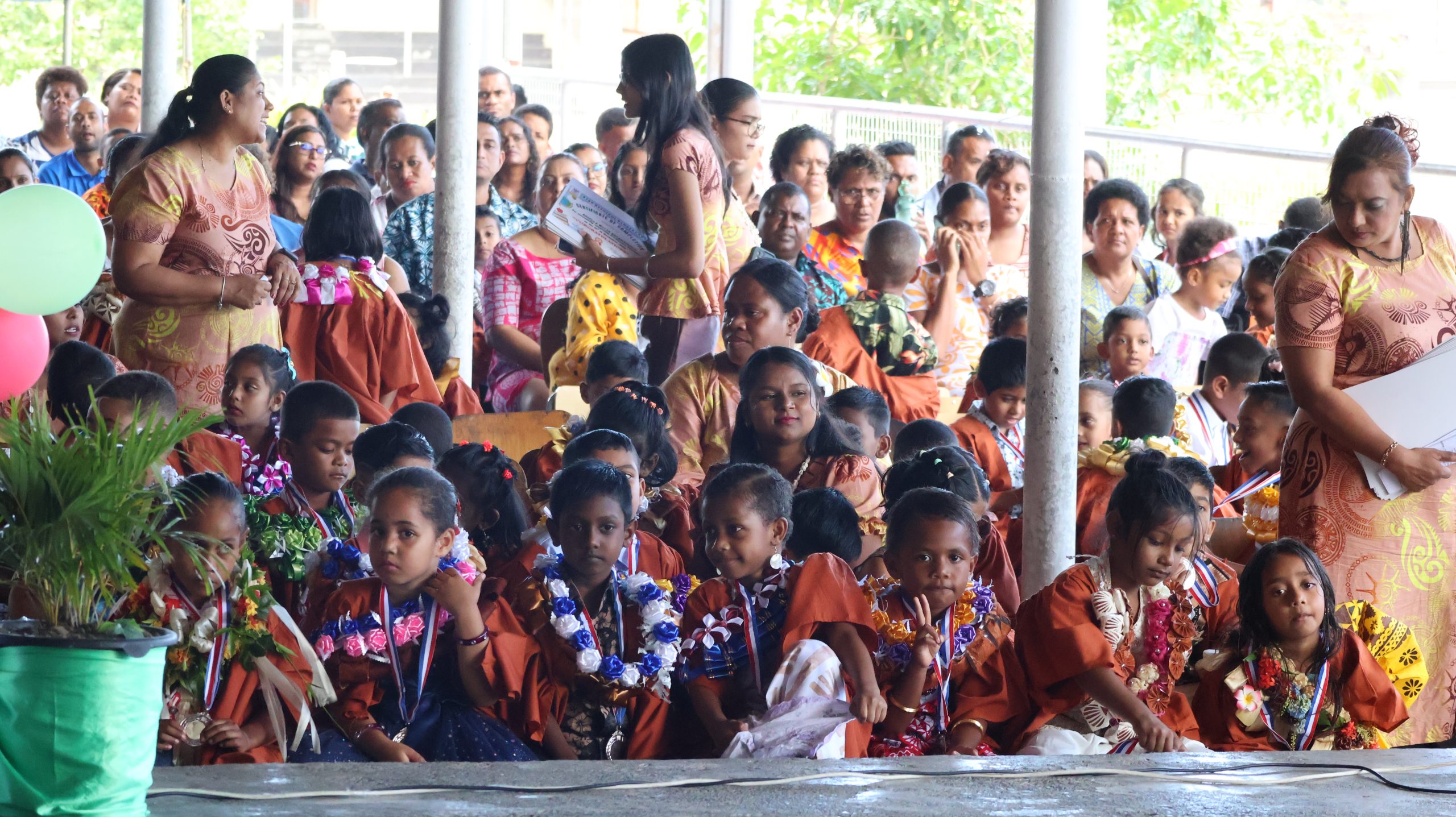
Public audience in Nadi
I salute the great minds connected with Fiji’s media industry for engaging people in Nadi in a talanoa session! The previous sessions held in the Northern and Central divisions and the one on the Old Capital attracted great participation and engagement from stakeholders who took the opportunity to express their opinions on matters they felt strongly about. These issues ranged from drugs to housing, corporal punishment, land issues, cost of living, developments, infrastructure, poverty to list a few. Participation has been great as Fijians engaged and the powers to be responded in a timely and professional manner, showing true democracy. People asked probing questions. I was surprised that those who turned up provided data and statistics, demanding answers and plans for their various municipalities. Hats off to the likes of Fred Wesley, Stanley Simpson and Vijay Narayan for hosting such an event of great magnitude — one that facilitated interaction between the government reps and the citizens. The sessions were both empowering and enlightening. Thanks to Fijivillage, I was able to catch both sessions live, and I truly felt proud of my fellow brothers and sisters for paving the way forward. These talanoa sessions have showed that we can unite to take our beloved country forward. We need the right minds and resources. Rajnesh Ishwar Lingam Nadawa, Nasinu
NFP Party
For those still calling NFP an Indian party, perhaps it’s time to revisit history! As Professor Biman Prasad and Lenora Qereqeretabua have reiterated on fijivillage’s Straight Talk on Wednesday 18/11, NFP is a party built on unity, shared leadership and multiracialism. Just look at some of the respected iTaukei chiefs and leaders who contested or served under the NFP banner: r Ratu Mosese Tuisawau; r Ro Asela Logavatu; r Ratu Glanville Lalabalavu; r Ratu Julian Toganivalu; r Ratu Osea Gavidi; r Ratu Napolioni Dawai II; and r Ratu Soso Katonivere. These names are part of NFP’s history. NFP has never been about one race. It has always been about representing people across communities. NFP history speaks for itself! Avenai Serutabua Nabukelevu Village, Serua
Authorities must act
At a time when Fiji is experiencing dry weather conditions and the public is encouraged to conserve water, it is concerning to see numerous water leaks along our roads. While authorities may face challenges such as ageing infrastructure, limited resources and repair costs, leaving leaks unattended results in unnecessary water wastage, road damage and additional expenses. On the positive side, timely repairs protect our water resources, improve supply efficiency and save public money. However, delayed action defeats the very purpose of encouraging communities to conserve water. The question is simple: If the public is being asked to save water, shouldn’t the relevant authorities lead by example? We need better monitoring, quicker responses to public complaints and timely repairs. Every drop counts, especially during dry weather. Shamal Chand Kuku Village, Nausori
Time to take action
The Nadi Chamber of Commerce, together with the Nadi Town Council, must urgently engage a qualified and experienced town planner and engineer to help transform Nadi into a properly planned and functioning urban centre. Without professional expertise, sound guidance and a clear development plan, our town will continue to fall short of its potential. These appointments, along with other essential technical support, should be treated as priorities—not matters to be delayed by further discussions and paperwork. Before we dream of Nadi becoming a city, we must first ensure it functions as a proper town. City status alone will not fix inadequate planning or deliver the improvements our community needs. That requires competent professionals, decisive leadership and a genuine commitment to action. The time for endless paperwork has passed. The people of Nadi deserve visible progress and meaningful change. The Chamber and the Council must now turn ambition into action. Stop wasting time on unnecessary meetings and start taking action. Suresh Chand Nadi
El Nino and crisis
People are starting to complain about El Nino and its effects. People cannot accept the fact that weather patterns and its effects are beyond human knowledge and control. I hope we will all learn from the disadvantages members of our communities who survived on whatever little they can have in a day. And yet they never complain. So stop complaining folks! Pita Soroaqali Tavua.
To pick or not to pick, no question
We do realise that the good stuff we pen on these pages actually get picked up by the important people, and some of our opinions are used to ask questions, answer questions at public forums, write policy, make speeches and pretty much help in governance. We do realise how important it is to maintain neutrality when providing the much needed critique to decisions, policy and matters of national importance. Political preferences must be confined to the ballot booth. Here, we go neutral. Donald Singh Nausori
Barriers, election delay
Remove barriers
The issues raised by the Bangladesh’s Minister for Labour and Employment during his meeting with Fiji’s High Commissioner in India are pertinent and needs to be promptly addressed. We cannot deny that we need foreign workers to fill up the labour shortage in various sectors of our economy to keep the businesses operational. That a growing number of foreigners are working in the retail industry illustrates that even ordinary jobs are not being filled by the locals. Bangladesh is among one of the cheapest source for highly productive and skilled workers. They have offered to supply our market demand. The dearth created by the departure of our experienced and skilled workers induced by better paying jobs overseas is likely to persist in the distant future. At the current rate the trend appears to be irreversible. Thus exacerbating our reliance on imported labour. It seems some of our laws relating to work permits may be outmoded and needs to be aligned with international best practice. We should not copy and paste the practice of other countries as they may not be relevant with our contemporary needs. Such as the requirement for workers to return to Bangladesh for the renewal of their work permits. Apart from the exorbitant travel cost it also unnecessarily places additional burden on the employers to comply with the requirements for the security bond for the work visa. Obviously, there are regulatory red tapes to be streamlined to make the system more facilitative and to enhance protection of the workers against any form of exploitation. We must not forget that foreign workers also contribute to the local economy through their spending on food, accommodation, transport and other essentials. I wonder whether our minister for Employment or Immigration has considered it imperative to travel to Bangladesh to meet their counterparts to formalise the proposed MOU on labour mobility cooperation between the two countries. They deserve better treatment because Fiji needs them. SELWA NANDAN Lautoka
Delay after delay
Deputy Prime Minister and National Federation Party leader Professor Biman Prasad’s suggestion that Fiji’s municipal elections should be deferred to ease financial pressure is deeply disappointing. Democracy should not become the government’s preferred target whenever it wants to talk about saving money. Prof Prasad says holding municipal elections, a constitutional referendum and a general election within a short period could cost Fiji $50-60 million or more. But lumping these costs together does not explain why municipal voters should be the ones asked to sacrifice their democratic rights. If this government is genuinely concerned about expenditure, I believe it should first examine its own spending: overseas trips that could be postponed or avoided, lavish functions, unnecessary vehicle use and other expenses that deserve far greater scrutiny. Cut the extravagance before cutting opportunities for public accountability. The message to citizens appears to be that the government can afford its comforts, but the country cannot afford elected municipal representatives. That is an insulting set of priorities. Concerns about ward boundaries should be addressed through proper planning, consultation and clear deadlines — not used as an open-ended excuse for postponement. Administrative problems are the government’s responsibility to resolve. Voters should not have to pay for them with further delays. Municipal elections give residents a direct say in the leadership responsible for their towns, cities, rates and local services. They are not an optional luxury to be discarded when politically convenient. Prof Prasad should explain exactly what savings the government has pursued elsewhere before asking the public to accept this proposal. Where is the same urgency to curb wasteful spending? A government serious about financial discipline would start with its own excesses. A government serious about democracy would set a firm election timetable and honour it. At every opportunity, you find an excuse to postpone the municipal election. People are fed up, and they know there’s a hidden agenda. Stop treating voters’ rights as the easiest item to cut from the budget. Suresh Chand Nadi
Officer’s action
I support the police officer’s action in disciplining those unruly students without using a cane. This is the kind of firm accountability that teachers and parents should also be reinforcing. While I have not seen the video myself, I feel the officer could have gone a step further by adding some duck walks and having the students write “I will behave when on the bus” 100 times. Edward Kumar Lautoka
Replacement time
Politicians and diapers must be changed often, and for the same reason. – Mark Twain. Sobo! Wise Muavono Balawa, Lautoka
Another angle
For some of us this week, an opportunity arose to lay down our smartphones (be it for a few minutes) and realize that there are people physically present around us. From that same opportunity arose mixed conclusions relating to the incident at the Suva Bus Stand. Anyway, let’s look at another angle. What if we were to replace the police officer with a schoolteacher? I think the teacher would by now be seating in a police station. Mohammed Imraz Janif Natabua, Lautoka
Safe driving
Shamal Chand’s comments that it is a shared responsibility of all drivers with big or small vehicles for safe driving (FT 19/11). This is to be noted by all concerned. Road safety is life safety as we all respect the road rules with patience and courtesy that matters most to save lives. Tahir Ali Hamilton, New Zealand
In shackles
I was sad to see my old friend Shazran Lateef being led out of court in handcuffs. Since this elderly man presents absolutely no possible risk of successful escape, what exactly is the point of parading him in public shackles? Have discretion and sympathy entirely vanished from our administration of justice? What say you, Human Rights and Anti-Discrimination Commission? Michael Scott KC Morris Street, Lautoka
Fijian at heart
Painful debate in The Fiji Times opinion “who gets to be Fijian” (FT1/11) confused many of us about our identity. I feel I am still Fijian at heart. So help us God to understand. You can take a Fijian out of Fiji but you can’t take Fiji out of him. Born in Fiji, bred in Fiji, worked in Fiji till retirement at the compulsory retirement age, joined our children abroad. I am a Fijian feeling home away from home. Home is where your heart is. Tahir Ali Hamilton, New Zealand
One last chance
Members of our Flying Fijians have one last chance to impress Jake White in 2026 as we complete matches in Europe by squaring off with Italy. This coach means business and for some of our boys, this weekend is a big difference as he will not hesitate to drop players in the coming months. Reputation does not substitue for performances on the field and lets not be suprised if some star players are dropped in 2027. Delivery from the base of the scrum, accuracy in lineouts and motivational levels are crucial factors against a powerful Italy team. Meanwhile, I am banking on Tailevu to create an upset against Nadroga. As they say ‘push Tailevu, push’. Looking forward to another weekend of exciting and nerve wrecking rugby. Floyd Robinson Micronesia
How much longer?
How much longer must our elderly pensioners wait for justice? How does one get a government to sit up, take notice and finally do something meaningful about the FNPF saga involving elderly pensioners who’ve been waiting far too long for restitution? How many appeals must be made? How many letters must be written? How many questions must be asked before someone in authority recognises that this isn’t simply an administrative inconvenience or an unfortunate chapter in Fiji’s history? We’re talking about people’s hard-earned retirement savings, their financial security and, in many cases, their dignity in their twilight years. For some, time is no longer a luxury they can afford. Perhaps it’s time to ask a more uncomfortable question. What if an empathetic and courageous trade union leader, supported by other concerned organisations, called for a peaceful, coordinated national protest or industrial action to demand meaningful government intervention? Would such a collective action finally get the attention of those who have the authority to act? Would it bring the FNPF issue back to the forefront of the national agenda? Or could shutting down a particular sector or region of the country cause more economic harm to ordinary Fijians, workers, businesses and families than it would to the institution or authorities being challenged? That’s a serious consideration. Any industrial action must be carefully weighed against its potential consequences. The last thing elderly pensioners need is for their plight to become the catalyst for further hardship among ordinary citizens. But equally, the potential economic inconvenience of peaceful protest should not become an excuse for government inaction. There’s something fundamentally wrong when elderly citizens who’ve spent their working lives contributing to a national retirement fund are left wondering whether they’ll ever see meaningful justice. These people aren’t asking for charity. They’re not asking for favours. They’re asking for accountability, transparency and the fair treatment they deserve. Surely, a government has a moral and public responsibility to pursue answers, establish the facts, identify those responsible and work towards an acceptable resolution. If the issue involves more than $582million and the interests of approximately 1400 elderly pensioners, as previously raised in public discussions, surely it deserves considerably more than occasional statements of concern. Perhaps the bigger question is this: If peaceful appeals, public pressure and years of waiting haven’t been enough to produce meaningful action, what legitimate avenues remain for ordinary citizens to make their voices heard? I would welcome the thoughts of trade union leaders, community organisations, politicians and, most importantly, the people directly affected. Silence should never be mistaken for acceptance. Nor should the passage of time diminish the responsibility to pursue justice. These pensioners aren’t asking for the impossible. They’re asking that their circumstances be taken seriously while they’re still here to see the outcome. Because so many of these hard-working pensioners have been called to “rest” without ever seeing their plight resolved. Justice delayed is one thing. Justice allowed to disappear through indifference is quite another. Is it time for Fiji to find a united, peaceful and effective way of demanding answers? Worth a thought. Or am I barking up the wrong tree? Colin Deoki Australia
Top letter
I would like to sincerely thank the editor and the entire Fiji Times team for recognising my contribution with the Letter of the Month award. Having written for the Letters to the Editor section since 2013, this recognition means a great deal to me. I have always held the newspaper, its editor and team in high regard and deeply appreciate the opportunity they have given me over the years to have my views and opinions published. Thank you for valuing the voice of your readers and encouraging public discussion. Kind regards and respect. Shamal Chand Kuku Village, Nausori
Talents galore in Nadroga!
Nadroga’s success is no easy feat.
After a few seasons of disappointment, the Stallions clawed their way back to the top, edging Nadi 24-22 to win the Skipper Cup they last won in 2024 after beating Suva 22-17. That same season, their U20 side beat Naitasiri 43-36 to win the U20 competition. This year, the Nadroga U20 side beat Nadi 41-39 to win the U20 title. Hence, this shows that Nadroga Rugby Union is serious about maintaining its position as Fiji’s rugby giants. After dethroning Ra 28-20, the Stallions decorated cabinet has both the Skipper Cup and Inkk Farebrother-Sullivan trophies. Nadroga’s commitment and off-season training program have paved the way for their success in local rugby. The coaching panel, that includes former half-back Solo Donu, manager Manueli Fumanu and officials deserve a pat for the hard work that was put in to restore lost glory. I have been an ardent fan of Nadroga since the glory days of Ifereimi Tawake, Fero Lasagavibau, Esala Nauga, Tiko Matawalu, Jonetani “The General” Waqa, Aisea Tuilevu, Sirilo Lala, Napolioni Vitau, Norman Ligairi, Ratu Ilaitia Kurisaru, Etika Tovilevu, Mikaele and Kele Leawere, Neumi Nanuku, Jone Daunivucu and Savenaca Batimala, and I am proud that Nadroga has maintained their form. I also salute the paramount chief of Nadroga-Navosa, turaga na ka levu Ratu Tevita Makutu for his incredible support to the Stallions. Against Ra, Nadroga made wholesale changes to the side that won the Skipper Cup and included the likes of Mosese Tawake, Leveni Tokamoto, Josua Bola, Jonacani Vucago, Timoci Nakalevu, Suliano Degei, Manasa Delavasa, Sefanaia Vuli, Kelemedi Lagi, Joeli Ratusala and Sefanaia Tokaduadua. That shows the depth that the Stallions possess. I now look forward to the tough battle against Tailevu! Rajnesh Ishwar Lingam Nadawa, Nasinu
Speed cameras
I am writing to you to express my disappointment regarding the way fixed speed cameras are deployed along the Queens Road from Nadi to Suva. I drive from Nadi to Suva each time I visit Fiji and enjoy the drive along with nice scenery. But I am disappointed about the manner in which these cameras are deployed. Whenever the speed camera sign appears and soon after that there is no clear sign indicating the speed limit. Hence, it makes it difficult to observe the speed limit by foreign drivers like us and we become easy targets for booking and paying fines. It is only fair if the speed limits are clearly indicated at the sign or soon after the sign to avoid unnecessary bookings. However, the signs are very well marked on the Kings Rd from Suva to Lautoka though. I will appreciate if this issue could be looked into to make life easier for foreign drivers like us who are not familiar with the roads in Fiji and to avoid unnecessary fines. Chandra Kishore Sydney, Australia
Constitution Amendment Bill
After reading through these few weeks of Constitution Amendment Bill submissions, I feel that there will be light at the end of the tunnel. But for many people, there will always be a tunnel at the end of the light. Rakesh Chand Sharma Nadi
Tribute to Cristiano Ronaldo
I would like to pay tribute to Cristiano Ronaldo, whose announcement of his retirement from international football at a recent press conference marks the end of an extraordinary chapter in the sport. Ronaldo’s journey began on the Portuguese island of Madeira. His talent and determination took him to Sporting CP, where he started his professional career, before joining Manchester United in 2003. He later achieved remarkable success at Real Madrid, played for Juventus, returned to Manchester United, and then joined Al-Nassr in Saudi Arabia. Since making his senior international debut for Portugal in 2003, Ronaldo has become one of football’s most celebrated players. He helped Portugal win their first major international trophy at the 2016 European Championship and the inaugural UEFA Nations League in 2019. As the highest goalscorer in men’s international football, he has set an exceptional standard for future generations. His achievements also include five Ballon d’Or awards, five UEFA Champions League titles, and numerous domestic league trophies. Beyond these honours, his discipline, relentless ambition, and ability to perform under pressure have inspired millions of young footballers worldwide. Although his departure from international football would leave a significant gap in Portugal’s team, his contribution to the game will endure. His career reminds us that talent, when combined with dedication and perseverance, can lead to extraordinary success. Suresh Chand Nadi
Immunity and deadlock
As for the amendment to the Immunity clause, why don’t we just face the facts and amend it to what it rightfully should be: Past immunity, no future immunity. All immunities lawfully granted in relation to the political events and coups of 1987, 2000 and 2006, including to persons who carried out, participated in or assisted those events, shall continue in accordance with this Constitution. However, no person who carries out, participates in, assists, supports or facilitates any future coup, unconstitutional seizure of power or unlawful overthrow of a constitutional government shall be entitled to immunity from criminal prosecution, civil liability or any other lawful proceedings arising from those actions. No Parliament, Government, President or other authority shall have the power to grant such immunity retrospectively for any future unconstitutional seizure of power. And finally, we establish a Constitutional Deadlock Resolution Mechanism within an amended 2013 Constitution or any future Constitution of Fiji so that Fiji should never again face a choice between constitutional paralysis and political instability. That where Parliament and the Supreme Court reach an exceptional and irreconcilable constitutional deadlock, and every lawful avenue has been exhausted, the matter should be able to return peacefully to the people through a strictly safeguarded referendum process. Noleen Billings Savusavu
Hidden challenges
El Niño is often discussed in terms of drought, extreme heat and water shortages. However, for Pacific Island nations like Fiji, there are other serious concerns that deserve equal attention. While families struggle with empty water tanks, dry rivers and unreliable water supplies, we must also consider the challenges facing our coastal and maritime communities. Changing ocean and weather conditions can bring rough and windy seas, making fishing and inter-island travel difficult. King tides, combined with strong swells or storm surges, can cause seawater to enter coastal villages, nearby streams, roads and low-lying residential areas. Coastal erosion, saltwater intrusion into freshwater sources, damage to marine ecosystems and disruptions to fishing activities can further threaten the livelihoods of island communities. For families who depend on the sea for food, income and transportation, these challenges can be particularly difficult. Our concern should not stop at urban water rationing. We must also ask how prepared our coastal villages, outer islands and vulnerable communities are for changing climate conditions. Are our coastal drainage systems adequate? Are communities receiving timely weather and marine warnings? Are our fishermen and maritime travellers being properly informed about dangerous sea conditions? El Niño reminds us that climate challenges go beyond dry taps and hot weather. Our islands depend on both land and sea, and both need protection. Preparedness, public awareness and government planning must extend to every community, especially those whose lives and livelihoods depend on the ocean. Our island people should not have to wait for a disaster before climate resilience becomes a national priority. NAVNEET RAM (TD) Lautoka
Water, El Niño
Fiji is once again experiencing the effects of a prolonged dry spell, and many communities are feeling the strain of water shortages. Reservoirs are under pressure, streams are running low, and households are being urged to conserve water. While we often focus on the lack of rainfall, we should also reflect on how we use the water that we already have. The Earth is often called the “blue planet” because about 71 per cent of its surface is covered by water. Yet only a small fraction of that water is available for human use. Most of the world’s water is saltwater, while much of the freshwater is locked away in glaciers, ice caps, or underground. This means that the water flowing from our taps is far more precious than many of us realise. One of the key contributors to the current dry conditions is El Niño, a natural climate phenomenon that occurs when the waters of the Pacific Ocean become unusually warm. This change disrupts weather patterns and often brings reduced rainfall, hotter temperatures and longer dry periods. The consequences are significant — water shortages, reduced agricultural production, crop failures, higher food prices, stress on families, and hardship for communities. At such a time, a word worth reflecting upon is “prodigal”. Most people recognise it from the biblical story of the Prodigal Son. Today, the term often refers to someone who has wandered away and later returned. However, its original meaning is equally important. A prodigal person is one who is wasteful, reckless, and extravagant. The root idea of the word is the waste of something valuable through poor stewardship. In that sense, we can be prodigal not only with money but also with water, land, time, talents, opportunities, and other resources entrusted to our care. Leaving taps running unnecessarily, overwatering gardens during periods of water restrictions, or treating clean drinking water as though it were unlimited are examples of a prodigal attitude toward one of life’s most precious resources. Good stewardship stands in direct contrast to prodigality. Stewardship recognises that resources are gifts to be managed wisely for the benefit of others as well as ourselves. Water is not merely a commodity. It is the foundation of life, health, food production, and community well-being. Perhaps the challenge before us is not only to pray for rain but also to examine our habits. The lesson of the prodigal is not merely that waste leads to loss, but that wisdom begins when we recognise what we have been given and choose to value it. In a season of drought, every drop of water reminds us that stewardship matters. As Fiji navigates the challenges of El Niño and water scarcity, let us reject a prodigal approach to our natural resources. Let us use water carefully rather than extravagantly, responsibly rather than recklessly, and gratefully rather than carelessly. SHIV RAM – TSA Suva
An inspiration for women politicians!
Honourable Lenora Salusalu Qereqeretabua is an inspiration for women politicians. I warmly congratulate her on her appointment as the deputy leader of Fiji’s oldest political party — the National Federation Party. Born in Dravuni, Kadavu, Hon Qereqeretabua was crowned Miss Hibiscus in 1988. Her confidence and fluency plus humility made her the people’s choice then as she continued to speak out on issues that affected ordinary Fijians. In February 2018, she was announced as a candidate for NFP in the 2018 General Elections, and during her campaign she advocated for women’s rights and more women in parliament. Hon Qereqeretabua received 1811 votes, winning NFP’s third seat in Parliament, where she advocated for a more professional media and the restoration of democracy in local government. After serving her term, Hon Qereqeretabua was re-elected in the 2022 General Elections with 3741 votes — 1930 votes more than what she received in 2018. She was also elected the Deputy Speaker of Parliament and currently serves as Fiji’s Assistant Minister for Foreign Affairs, being vocal on issues affecting Fijians and the nation at large. Via The Fiji Times (17/11), Hon Qereqeretabua listed her three main priorities — health, education and the economy. I agree with her that Fiji needs leadership that will focus on improving the lives of Fijians. The struggle is real and many are facing challenges arising out of the high cost of living. Our health and education sectors need a lot of attention as the sectors are the backbone of our country. Rajnesh Ishwar Lingam Nadawa, Nasinu
Talking about reforms
The recent public submissions on the Constitution Amendment Bill regarding education have highlighted critical issues that demand careful consideration. While opinions remain divided on corporal punishment, there is a growing consensus that our current approaches to discipline and student progression require urgent reform. On the issue of corporal punishment, physical harm should not be part of our education system. However, rejecting physical punishment must not mean abandoning discipline altogether. The education system should establish clear, constructive disciplinary measures so that students understand there are real consequences for misbehaviour, incomplete homework, bullying, and other infractions. Accountability is essential to maintaining an environment conducive to learning. Furthermore, the ‘no repeat’ policy has proven to do more harm than good. Automatic promotion removes the incentive for students to strive for academic excellence. We ought to encourage a culture of hard work by rewarding merit while offering dedicated support to those who struggle — including allowing students to repeat a grade when necessary to master required foundational concepts. The impact of the current policy is increasingly visible in rising student misbehaviour and dropping academic standards. As discussions on the constitution amendment bill continue, policy decisions must focus on building character, fostering accountability, and raising educational standards for all students. Edward Kumar Lautoka
Fire hose reel installation
I wish to raise a serious concern regarding the installation of fire hose reel systems in some buildings where plastic PVC pipes are used to supply water from the mains to the hose reel network instead of galvanised pipes. A fire hose reel is intended to provide a reliable and immediate source of water during a fire emergency. However, PVC pipes are susceptible to heat and can soften, deform, or melt when exposed to high temperatures. In the event of a significant fire, these pipes may fail before firefighters or building occupants are able to use the hose reel system effectively. If the water supply pipe melts or ruptures during a fire, the hose reel may become inoperable at the very moment it is needed most. This could put lives, property, and emergency responders at greater risk. Fire protection systems should remain functional for as long as possible during a fire, and materials used in their construction must be suitable for such conditions. Consideration should be given to the use of more fire-resistant materials, such as steel or other approved piping systems that can maintain their integrity under fire conditions. The specification that refers to the fire mains and water supply service for fire fighting equipment in buildings is mentioned in the Fiji National Building Code. It states that the mains must be capable of supplying water for the satisfaction operation of the required fire fighting equipment and not incorporated plastic pipes above the ground. A newly-renovated supermarket food court in Valelevu has exposed PVC pipe attached to the fire hose reel without a nozzle and on closer inspection there was no service tag attached to the equipment suggesting that it was never audited. Fire hose reels must be tested to ensure they will work when a real fire occurs. A hose reel that looks good but does not deliver enough water is of little value in an emergency. Public confidence in fire safety systems depends on proper design, compliance with fire safety standards, and regular inspection. The regulators must ensure such compliance before the business licence are issued. Satish Nakched Suva
Our efforts matter
On Thursday, November 19, International Men’s Day (IMD) was celebrated. It is important to celebrate IMD to celebrate the strength, integrity, hard work and dedication of men everywhere. The unwavering commitment, leadership, support and the roles played by men in their families, workplaces, communities and the nation at large need to be acknowledged. As we celebrate the men in our lives, it is important for men to be role models; respect girls, women and other men; stand for a better tomorrow; help address drugs; promote tolerance and equality; take care of their health and wellbeing and that of their loved ones and be a responsible man. Men make and can continue to make a meaningful difference at home, at work and in our communities. Celebrating IMD highlights their everyday contributions and creates a space to address the challenges they face. IMD recognises men as everyday role models and shines the light on men who lead with integrity, care, and responsibility. IMD acknowledges men’s roles in parenting and caregiving. Like me, there are men out there who are a single parent and have taken full responsibility in looking after their children. These men must be given the recognition that they full deserve. At Nabua Secondary, our counterparts organised a celebration to mark IMD. They appreciate the roles played by is in taking the school to greater heights. To my fellow brothers, I salute your dedication and commitment in looking after your families and loved ones. Let us continue doing our part honestly and faithfully! Rajnesh Ishwar Lingam Nadawa, Nasinu
Motherhood not a trap
When motherhood becomes a reason to endure violence, how meaningful is a woman’s freedom to seek help? The Fiji Times article, “Fear of Losing Children Keeps Abuse Survivors from Seeking Help” (20 November 2026), highlights a disturbing finding from Still Everybody’s Business! 15 Years On. Among women who experienced physical or sexual intimate partner violence but did not seek formal assistance, 28.2 per cent cited fear of losing their children. Section 41(2) of Fiji’s Constitution declares that “The best interests of a child are the primary consideration in every matter concerning the child”. Yet how confidently can mothers seek protection when they fear that doing so may separate them from their children? The challenge extends beyond encouraging women to report abuse. It demands accessible legal advice, safe accommodation, confidential counselling and clear information about child custody and protection procedures. Motherhood should never become a means through which fear and dependency silence survivors. A woman’s right to safety and her children’s wellbeing should reinforce one another, not become competing concerns. Sangeeta Ram Lautoka
$5m saving
I know what $5m of savings from reduced salaries for Parliamentarians can do. It can establish a water catchment, a reservoir and new pipes for some communities. It can provide motorised punts to communities where kids still swim or raft across treacherous rivers to go to school. It can escalate the establishment of boreholes in drought-distressed areas. It can subsidise the cost of solar power to maritime communities. Stretch the $5m and get more value out of the dollar with one-third contribution from beneficiaries. To say that $5m is “bugger all” is perhaps borne out of frustration with having so much to do with so little resources. At times like these, press reboot and jump into overalls. Samu Railoa Nadi
Two deputies
As they say strange things can happen in politics. During the NFP’s national convention in September Dr Ahmed Shakeel Shareef was named as the new Deputy Leader of the party ahead of other senior members. Now Hon Lenora Qereqeretabua has been appointed as the party’s second Deputy Leader. One wonders why she was not considered earlier for the position earlier given her long and loyal service and experience in Parliament. My intuition says the decision is somehow linked to the party’s stand on the constitution amendment Bill before the House. So, the question now is: who will be the senior of the two deputies? Normally, it’s the one who is appointed first I guess. Why the sudden need for two deputies when there was none before. In my view with both Pio Tikoduadua and Sashi Kiran still uncertain about their political future, Lenora stands out to be the most suitable candidate for she possesses the political sagacity to be groomed to take up the leadership of the party. SELWA NANDAN Lautoka
Issue of survival
Ask almost any Fijian what keeps them awake at night and you will hear two answers: how to afford the week’s groceries, and whether their family is safe. These worries are closely connected. A recent Dialogue Fiji survey found that nearly half of respondents, 49.8 per cent, struggled to pay for food and basic items over the past year. The same survey found that the rising cost of living was the dominant concern, with more than two-and-a-half times the response rate of the next-ranked issue. Yet the law-and-order picture is mixed. Police report that overall crime fell by 11 per cent in the first seven months of this year, but illicit drug cases are up 45 per cent, and crimes against children, particularly those committed within the home, remain deeply alarming. The Police Commissioner himself has said that arrests alone will not solve the problem, and that the country needs to look at the root causes of offending. I agree. The Prime Minister has also described poverty and crime as the two of the greatest threats to peace within our communities. If that is the government’s own diagnosis, our budgets should reflect that. That means funding for jobs and skills training for young people, drug rehabilitation rather than imprisonment alone, support for families under strain, and relief on the household costs that push people to the edge. Rehabilitation programs that bring families and communities into the process of reintegration deserve far more investment. Tougher enforcement has its place, but it treats symptoms. Fiji’s leaders should be judged on whether fewer children go hungry and fewer young people see crime as their only income. Ben Ram Tahal San Francisco, USA
Basic healthcare
Many hundreds of patients suffer from hypertension and issues with prostate. These are prevailing health issues and serious concerns. Some patients are almost ignorant of their conditions. If left unchecked, early deaths are a certainty. Records available prove this. The Ministry of Health and Medical Services needs to be seen to do its fair share, professionally. As a regular at Nadi Hospital’s Special Outpatients’ Department, trying to look after my own health, (fast approaching 75), I find the hospital’s pharmacy struggles to maintain its proper stocks of Nifedipine Tabs (high blood pressure) and Tamsulosin Caps (prostate)…. for several months now. This is just not good enough, in my view, as a surviving betrayed senior FNPF pensioner. Many poorer patients and those living in the very margins of society do not have that “extra dollar” to purchase such prescriptions from private pharmacies. I see this regularly. (Added costs in extra travel to secure prescribed medicine, are a burden too). Something must be done to alleviate such hardship. NCDs need better attention and care. This is basic healthcare struggling to cope and effectively manage, at best. Ronnie Chang Nadi