No need to fear SELWA NANDAN LAUTOKA THE Police Commissioner has assured the members of the public that there is nothing to be afraid of. A man was allegedly raped inside a police station holding cell. Six police officers have been charged in relation to the death of Richard Mock. A civilian was allegedly assaulted by military personnel whilst in police custody. A police officer is currently under investigation for his alleged involvement with the death of the late police constable Peniasi Racagi. Needless to mention the cases before the court where several police officers are implicated. Does the Commissioner seriously believe that in light of these incidents his assurance will provide any comfort to the ordinary citizens of this country that there is no need for them to fear for their safety and security
Honouring our girmitiya VINEEL NAND CHAIRMAN – NATIONAL SENIOR CITIZENS COMMITTEE TODAY, as we commemorate and honour the legacy of our girmitiya, we do so with hearts full of gratitude, pride, and deep respect for those brave men, women, and children whose sacrifices laid the very foundation of the Fiji we know today. The story of the girmitiya is one of pain, endurance, courage, and extraordinary resilience. Beginning on May 14 1879, thousands of Indians arrived in Fiji under the girmit system — a system of indentured labour introduced during British colonial rule. They came from villages and towns across India, many unaware of the hardships that awaited them. Leaving behind their families, homes, language, and familiar surroundings, they crossed the dark waters with only hope in their hearts and faith in a better future. What they faced upon arrival was hardship beyond imagination. They worked long and exhausting hours in sugarcane fields under harsh conditions. They suffered physical pain, emotional trauma, loneliness, and separation. Many endured injustice and hardship in silence. Yet despite every challenge, they refused to let suffering define them. Instead, they built. They built homes where there was nothing. They built communities where there was isolation. They built temples and schools where there was no comfort. They built values of family, discipline, education, faith, and unity — values that continue to guide generations today. Today, we honour and value our girmitiya because of them, Fiji stands tall. Without them, we are nothing. Their sweat watered the soil of this nation. Their sacrifices created opportunities for future generations. Every achievement we celebrate today — whether in education, business, public service, farming, or community leadership — stands on the shoulders of those who endured so much before us. As National Senior Citizen chairman, I feel it is our moral and cultural duty to preserve and pass on the story of the girmitiya. Our younger generations must understand the struggles of their ancestors so they can appreciate the privileges and freedoms they enjoy today. The girmitiya taught us lessons that remain timeless: • To work hard, even when life is difficult. • To remain united, even when divided by circumstance. •� To hold on to faith, even in times of suffering. • To never forget who we are and where we came from. Their legacy is not only an Indo-Fijian legacy, it is a Fijian legacy. It is part of our shared national identity, a reminder of how resilience, determination, and hope can transform hardship into progress. Today, we bow our heads in remembrance. We honour their sacrifices. We celebrate their strength. And we promise never to let their story be forgotten. To our girmitiya ancestors, your pain was not in vain. Your courage gave us purpose. Your sacrifices gave us a future. Because of you, Fiji stands proud. Because of you, we stand strong.
An experiment Fiji can’t afford ASUDA GOUNDAR SAWENI BEACH THE proposed Wasteto-Energy (WTE) incinerator plant is not just an infrastructure project; it amounts to a social and environmental experiment of gargantuan proportions. TNG is pushing us toward a highly complex, capitalintensive technology without a proven track record in small island developing states. This constitutes a huge gamble with our public health, our fragile ecosystems, and our economic stability in terms of the impact on tourism. If/when this experiment fails, the current decisionmakers will not be around to face the fallout. Instead, future generations of Fijians will inevitably inherit the equally gargantuan consequences of toxic ash management, heavy financial debt, compromised air quality, and a loss of reputation as a pristine tourism destination. Government must put a stop to this project before they lock our children into decades of environmental and economic liability, Fiji must not become a testing ground for this type of project. We owe our youth a future built on genuine sustainable waste management practices, not an irreversible, top-down experiment.
The loss of a great footballer RAJNESH ISHWAR LINGAM BALGOVIND RD, NADAWA, NASINU THE football fraternity mourns the passing of 63- year-old Henry Dyer, a former Fiji football rep and Fiji FA Legends Club member. At his prime, Dyer was an outstanding footballer. He was hard working, skilful, and passionate about football. Growing up in Lautoka and then attending school in Ba, the football crazy town, Dyer excelled in school football competitions. His natural talent and determination and exceptional performance for Nadi in the 1982 IDC tournament against Ba earned him selection into the Fiji national team. There was no looking back as he was part of the national team to the 1983 South Pacific Games in Samoa, where Fiji played in the final after beating PNG, New Caledonia and the Solomon Islands. Dyer was also part of the historic 3-0 defeat of Newcastle United in 1985. His fearless style of play and great leadership qualities were admired by fans. Dyer played for Nadi and Lautoka. He had a distinguished career spanning more than a decade and in 2020, he was inducted into the Fiji FA Legends Club in recognition of his contribution to football. He was instrumental in inspiring young ootballers to take up football. A humble and respected footballer like Dyer is hard to find these days. He has left behind a legacy. May Dyer’s soul rest in eternal peace!
Trump in China DONALD SINGH NAUSORI CHINESE President Xi Jinping hosts his guests like no one else. In fact, small Pacific nation leaders, small nation leaders from the African continent and the socalled superpower nation leaders all get the red carpet rolled out for them with days of five-star banquets for the visiting entourages. USA President Trump is in China now, and his photo with President Xi at Tiananmen should send hope to the rest of the world. Trump knows that China is no pushover. In fact Trump should also know that his tariffs have only further strengthened China’s local economy via increased local consumption. China probably sells more weapons now than ever before, and why not! The USA has selling weapons, even giving free ammo to Ukraine and other countries over the years. China is stronger now than ever before. In war talk, China has this noble policy of not striking first. Therefore, it’s anyone’s guess what China could come up with if provoked to tipping point. Fortunately, no leader will dare lead such a provocation against China. Fiji must step up its own co-operation with China. There is a lot that remains untapped in terms of potential and prospects. There are people out here who have an idea or five on how to go about it! This is not a (geo)politically motivated letter.
Clean energy RONNIE CHANG MARTINTAR, NADI SO it appears, as quickly as it came, it will just as quickly, go to pass. Australia has now declared its own household waste is deemed “toxic”. And as such, Australia’s household waste is a prohibited export. This is definitely prayer answered for many concerned in the vanua of Vuda. It is also a sad day for some in the corridors of power and our own executives in EFL’s monopoly. Your backing in such an ambitious $1.4billion Waste to Energy project was just a ‘pie in the sky’. A perfect short-cut to address improving our shortfalls in energy outcome. EFL cannot meet energy demands. Greener cleaner energy in wind and solar power is the only way to go. Hands down. Minnows Fiji must lean on proven economic giant, China, for immediate help. Fiji will have much to gain. Our “Oceans of Peace” will augur well in the immediate future. I can almost guarantee.
Potential conflict RAJEND NAIDU SYDNEY, NSW, AUSTRALIA XI warns Trump of potential ‘conflict’ over Taiwan in Beijing Summit (Democracy Now! May 14 2026). I hope that does not happen. America has been struggling to deal with Iran in its latest military adventure. And we know from history America did not do well in its military adventure in Vietnam and Afghanistan. Now China is in another league militarily — it’s in the super premier league. For world peace no effort should be spared to avoid a war with China.
Bill to pay RAJEND NAIDU SYDNEY, NSW, AUSTRALIA WE read in the social media that Fiji Architects Association has an outstanding bill to pay for their November conference held at Sheraton Hotel (FijiLeaks 15/5/26). So what was the total bill? It would give the general public a snapshot of the third world grandeur in their midst.
Confirm or deny JUKI FONG CHEW NADAWA, NASINU THE new norm of social media phishing is the bait to confirm or deny a hearsay allegation. It is further fueled by sideline commentators which are the circumstantial fire starters just throwing in wild guesses with no idea of what’s happening. The circus continues as a vicious circle implicating anyone with no evidence provided. Those that have encountered this situation, the truth is with you as social media is full with the good, the bad and the ugly. Stay strong as the truth will always come out victorious.
Nipah Virus FLOYD ROBINSON MICRONESIA SHOULD we be concerned and proactive in our responses to the potential risks of Nipah Virus reaching our shorelines? We have flight routes connected to Asia and tourists arriving at our shores from as far as Europe. The tricky part is that symptoms could be easily mistaken for the common sickness such as the flu. The spread of the virus could have a significant blow to our toursim industry. All in all, do read about this virus and never the common flu for granted.
Neverending story DENNIS FITZGERALD AUSTRALIA IT seems the American war on Iran will be neverending given President Trump didn’t even finish reading Iran’s latest peace suggestion. Surely you need to read the whole list of negotiating points to see what is possible and what you can agree on to get them off the table. However, if the war is over, the spotlight will swing back to the Epstein files once the UFOs have left, the Lincoln Memorial Reflecting Pool is bright blue and the ballroom is open, but these distractions will be replaced by other distractions. What everyone needs is positive leadership promoting peace and keeping their citizens safe and well fed. Do you and your country have this?
Advertising bombardment BERNARD CHANDRA NASOSO, NADI WHAT a blessed relief from the recent weeks of daily incessant commercials from my Hindi radio station! Surely it must be a world record for the dual back-to-back campaigns for the Javid Ali concert and Mother’s Day sales promotions! From morning to night we were assailed relentlessly by these announcements! It built up to hysteria for the last days before Mother’s Day. Some ads are still spluttering! Fortunately we were spared from last year’s “oh maaaa” song by a female singer bleating away every half an hour! There’s a lack of sensitivity in playing such songs repeatedly as they leave many listeners very emotional. I am taking this opportunity to commend the current generation of radio announcers for their enthusiasm and fluency in Hindi. There are some very sweet female voices and calming male voices. In particular, I admire the little army who I call the “marketing warriors”, who go around to their sponsors’ premises nationwide to promote their products on air. They are very passionate in praising the products and are ready to throw themselves literally in the path of a train to make their point. OK, trains are not running, so buses! Most of these sites are accompanied by loud music blaring all around the neighbourhood. Does anyone care about the poor workers who have to suffer this music for long durations? Seems even the OHS teams are turning a “deaf” ear to this situation! “The “senior managers” who magnanimously offer red, yellow and purple deals are a breed of their own! I do wince when, after extolling the features of the product, the announcer nonchalantly mentions: It’s only $1999! For the lady announcers, you have beautiful voices. Please don’t push your voices too hard in your excitement, as it’s a fine thread between being articulate and screeching! On a serious note, I wonder if there is any senior person who monitors these programs for listeners’ fatigue or quality of output ? Are there any internal guidelines as to how much advertising should be allowed at peak periods? Or is it totally all revenue driven, plus less work for programmers, to just blindly repeat these ads? And what of the listeners — seems the attitude is “who cares and they are free to switch off or go to another channel”? Hopefully management should seriously review this matter of listeners’ fatigue and set some sense of balance, even if the services are free. Anyway, guess no one is likely to pay attention to this lone voice as they must be busy preparing for the next campaign!
Hazardous traffic signage SATISH NAKCHED SUVA THE Fiji Roads Authority has installed a new signage along Ratu Mara Rd in the busy Samabula- Rewa St junction. This portion of the pedestrian walkway is heavily used by people on foot including university students, people visiting the banks and other outlets in the business hub. The new give way to the pedestrian signage is about five feet above the footpath level and one has to actually duck below that to prevent injury. This hazardous signage serves no purpose to motorist as the message is not communicated to the drivers due to the poor visibility. I believe that the installation did not adhere to any standards despite FRA utilising the AS/ NZ standards in their operations. The minimum mounting height for street and roadside signage is generally set at 2.0–2.5 metres above ground level to the bottom edge of the sign, ensuring visibility and pedestrian clearance. For signs mounted over footpaths or areas with pedestrian traffic, the clearance must be at least 2.0 metres, while signs over roadways often require 5.0 metres clearance.
Architect of the Girmit system SATISH NAKCHED NADERA AS Fiji reflects on its colonial past this week to commemoration the 147th year of the indentured system, it is important to acknowledge the role of Sir Arthur Gordon, the first Fijian governor, in introducing the indentured labour system. In 1879, under his administration, the ship Leonidas brought the first group of Indian labourers to Fiji. Gordon believed this policy would protect Indigenous Fijians from plantation exploitation while ensuring economic growth. While his intentions may have been framed as protective, the reality was that thousands of Indians endured harsh conditions, long hours, and limited freedoms under the girmit contracts. Their sacrifices, however, laid the foundation for Fiji’s sugar industry and the vibrant Indo-Fijian community we know today. Remembering Gordon’s involvement is crucial, not to glorify colonial policy, but to understand the complex legacy of indenture in shaping our nation. Drawing on his experience in colonies like Trinidad and Mauritius, Gordon proposed importing Indian labourers under five–year contracts (girmit) in the very iconic white building that housed Fiji’s Governors-General, Colonial Governors and where the girmit idea was born and discussed, still remains today. The Nasova House still stands in the same compound where it stood in the late 1800s. a superb testament to the quality of materials and the workmanship skills used. It now looks far smaller than what some old photographs portray because some of its materials were brought over to Suva to build the governor’s new residence when Suva became the new capital. In older English and colonial architectural design, the trend for steps and verandah edges was often oval or curved rather than straight that still exist and very noticeable when you walk into the Nasova House. If Sir Arthur Gordon’s girmit system (indentured labour scheme) had not succeeded or been abandoned early, Fiji’s trajectory would have been dramatically different.
Waste to energy clarity SAMU SILATOLU NAKASI THE Australian Government has clarified that it has no say with the Waste to Energy Plant (FT 13/5). Was it in agreement with the Waigani Convention? The Hazardous Waste Regulations 1999? Did our PM approve of it? It is very sad to learn that nearly all the formal regulations and what not of the project, have nothing to do with the Australian Government, in my opinion. Even the licence to export waste out of Australia has not been applied for. What is this 900,000 tonnes of annual waste? Sorted or unsorted? And, I am certain, a 2466 tonne of waste daily won’t be an easy task to consistently achieve for the proposed operation. Didn’t the TNG Fiji CEO Rokoseru Nabalarua perceive all these? Wasn’t it just total negligence? What has become of our leaders? In fact, I believe that Fiji will never be destroyed from the outside, for if we falter and lose our freedoms, it will be because we destroyed it ourselves.
Terrible behaviour NISHANT SINGH LAUTOKA I WAS in town during my lunch hour yesterday planning to buy some chow when I came across a large group of able-bodied, ill-disciplined youths displaying thoroughly uncivilized conduct, leaving the busy public in plain disgust. Vulgar language, deliberately bumping into people, peeping into parked vehicles and banging parking meter machines were just some of the things they happily engaged in. One fellow even decided it would be ‘cool’ to casually pop balloons hanging outside shops as he walked along with his ‘gang’, much to the frustration of shop owners and staff. With such appalling and brazen behaviour, I could only conclude one of two things: These individuals hailed from extremely remote villages and were visiting the city for the very first time, where such shameless, junglee behaviour is apparently considered normal and not frowned upon from wherever they came from; or They were fully aware of their repulsive actions but deliberately wanted to project some thuggish, tough-guy image to the public. Trust me, they looked more like clowns than the wannabe gangsters they were attempting to portray. Fiji’s youth behaviour, drug and crime culture are deteriorating rapidly. Yet some leaders are more concerned about declaring Fiji a Christian nation because it supposedly aligns with “Christian values”. Brilliant. Bahut acha!
Significance of Girmit NEELZ SINGH NELSON, NEW ZEALAND THE term girmit may sound simple, but it carries the weight of an entire chapter in history. It’s more than a word — it’s a symbol of struggle, resilience, and cultural transformation tied to the story of Indian indentured labourers in the British colonial era. Let’s explore its meaning, origins, and legacy in a clear, engaging way. May is the month of many events such as: World Press Freedom Day, Red Cross Day, Mother’s Day and International Nurses Day, many more to come and also the first coup marks the calendar as well. We can say it was also the form of slavery under the word “agreement” where the word girmit arrived. While these agreements promised fair wages and better opportunities, the reality was far harsher. For many, girmit became a symbol of broken promises and relentless toil under exploitative conditions. Although the indenture system officially ended in the early 20th century, its effects shaped the lives of millions. The girmitiya carried their traditions — language, religion, music, and cuisine — to new lands. Over time, these traditions evolved into unique cultural blends. For example: � Fijian Indians preserved Hindu and Muslim rituals while adapting to local influences; and � Caribbean Indo-descendants fused Indian and African cultures, creating distinct art forms like chutney music. For the descendants of the girmitiya, the word evokes powerful emotions. Most of you must be proud of your heritage that our great grandfather brought through their journey of seafarer glory and landed on unknown land we call our home “Fiji”. We not only marked this day, but shall cherish the past that they have for a better future. May 14 did shape and also destruct lives of many within two such events. “Girmit is essential to understanding the global Indian diaspora, their struggles, and their triumphs. The story of girmit reminds us of the sacrifices made by countless individuals seeking a better life, only to find hardship. Yet, their resilience turned despair into legacy. Today, the word girmit stands as a powerful symbol of hope, identity, and the enduring impact of migration It’s not just a word, it’s a history that demands to be remembered.
Appalling service NISHANT SINGH LAUTOKA IT has become common practice in many department stores around Fiji for staff to barely acknowledge customers entering their premises, and unfortunately a department store in Lautoka appears to be no exception. I have repeatedly experienced poor customer service whenever I walked into the store and often felt like I was some sort of burden to the wellgroomed “sales assistants” who could hardly spare a greeting or even a simple smile, genuine or otherwise. More often than not, they remain huddled together in one corner engaged in personal conversations with little regard for customers browsing the store. Assistance is only provided if one specifically calls for it; otherwise, they casually walk past you as if you do not even exist. Sad indeed. Why are locals treated in such a demeaning manner? The moment tourists enter the store, these overdressed “sales assistants” with their polished makeup suddenly spring into action like vultures circling prey, clearly expecting a quick and handsome sale. Yet the same level of courtesy and attentiveness is rarely extended to locals. Fiji’s customer service standards remain painfully poor, and businesses like this continue to reinforce the stereotype through arrogance, selective treatment, and lazy service. I urge the management to properly educate and train their staff on the importance of professionalism in the service industry and to refrain from practices that come across as discriminatory and disrespectful toward local customers. Treating locals like second-class citizens while rolling out the red carpet for tourists is not only insulting, it is pathetic. I hope the “sales assistants” get the memo!
Thanksgiving on Girmit Day RAJ DEO VOTUALEVU, NADI GIRMIT Day, stands as a solemn reminder of a defining chapter in our nation’s history. While this day rightly honours the struggles, sacrifices, and resilience of those who came under the indenture system, I wish to humbly propose an evolution in how we frame its meaning for future generations. Let us consider naming this day “Thanksgiving Day.” The essence of this proposal lies in gratitude. It is an opportunity for the descendants of the girmitiya to acknowledge and thank the iTaukei people and other communities who, through difficult times, extended support, compassion, and humanity. History records not only hardship, but also moments of kindness, shelter, and solidarity that helped shape the Fiji we know today. Such a shift in perspective does not diminish the pain of the past — it strengthens it by transforming remembrance into unity. Let Grimit Day become a day where we collectively reflect on our shared journey. A day to express gratitude, to heal old wounds, and to deepen the bonds of friendship across all communities. Fiji has a unique story and opportunity — one that can be told through thanksgiving, reconciliation, and togetherness. Let us embrace it.
Silent cries SARITA LAL MALOLO ST, LAUTOKA THE moving article ‘The Silent Cries’ by Meli Nagusudrau in The Fiji Times yesterday has dramatically clarified to the nation and the world as a whole the Indian indentured labourers to our shores from May 14, 1879 to 1916. Also, I extend my sincere gratitude to the organisers, invited guests and performers in commemoration of the indentured labourers this Girmit Day live coverage via FBC TV. Sweat, tears and blood enduring harsh conditions of five-year contracts under the British colonial rule, of indentured labourers or girmitiya intensely shaped our nation; their legacy continues. And since diversity between the Indo Fijians and indigenous Fijians has flourished with immeasurable wisdom. Wishing everyone a Happy Girmit Day.
Hazardous ferry service SATISH NAKCHED NADERA, NASINU DURING a recent weekend journey on a ferry service, it was noted that the two side doors on the vehicle loading deck were open while the vessel was in motion, exposing passengers to significant danger. There were no barriers or administration controls such as warning signs to notify the passengers of the hazardous area. I believe that the side doors were left open for ventilation when the ship was in port by the crew members and no safety checks conducted before departure. Leaving the side door unsecured while the ship is underway poses multiple risks to passengers, particularly children or elderly individuals, could accidentally fall overboard. Strong winds and sudden vessel movements increase the likelihood of accidents as the waves were splashing on the deck. There were about eight vehicles on the vehicle deck and some passengers opted to sleep in the vehicles and children were seen making couple of trips to the canteen in the upper deck. This practice contravenes basic maritime safety standards and undermines passenger confidence in the ferry service. For the protection of ll on board, safety proocols must strictly be dhered to at all times. The failure to secure the side door while the ferry is moving is unacceptable and requires immediate corrective action. I believe that here is no standard operating procedures as the general safety was not demonstrated or adhered to.
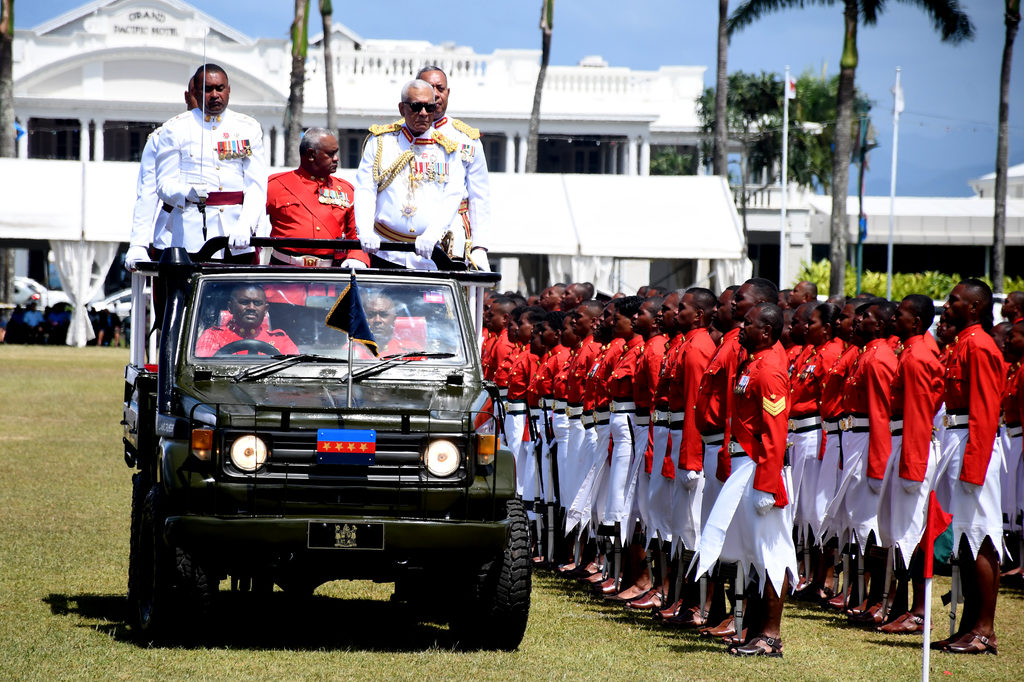
Commander comes out strong RAJNESH ISHWAR LINGAM BALGOVIND RD, NADAWA, NASINU IT takes a lion’s heart to admit a fault. I salute the RFMF Commander Ro Jone Kalouniwai who admitted that the RFMF was at fault and that they must be held accountable for that. As he addressed his officers at a church service, the man, who the nation looks up to, urged restraint, professionalism and strict adherence to the law during joint operations with officers. Ro Jone warned the officers not to repeat the instability and mistakes associated with Fiji’s past history. He also stressed the need for the security forces to remain measured and responsible under pressure. He reminded the team to guard their heart and refrain from acting in haste. Such great words of wisdom from Ro Jone Kalouniwai!
Heritage, sacrifice and identity SEJAL CHANDRA NADERA, NASINU AS a history student during my high school years, and now a final year law student at the University of the South Pacific, I write to reflect on the significance of Girmit Day and what it continues to mean for us as a nation. I still remember my grandparents’ sharing stories about my great-grandparents who came from India during the Girmit period. These stories were not simply family memories, but powerful reminders of struggle, courage, and survival. They spoke of long and difficult journeys across the seas, the pain of leaving their homeland, and the challenges of adapting to an unfamiliar environment in Fiji. These personal accounts have stayed with me and helped shape my understanding of history in a very real and meaningful way. In school, studying history gave me a broader understanding of the girmitiya’s experiences. They endured harsh working conditions, strict systems of labour, and great uncertainty about their future. Despite this, they showed remarkable resilience. They held onto their cultural practices, faith, and traditions, while also working tirelessly to build a new life. Their sacrifices contributed significantly to the development of Fiji’s sugar industry and laid the foundations of the multicultural society we see today. Now, as a law student, I have come to understand these experiences in a different light. The study of law has strengthened my appreciation for justice, equality, and human dignity. The Girmit system serves as an important reminder of why legal protections are essential in any society. It highlights the importance of safeguarding human rights and ensuring that exploitation and injustice are not repeated in any form. Girmit Day is therefore more than a public holiday. It is a time for reflection, remembrance, and education. It allows us to acknowledge the sacrifices of our ancestors while also recognising the responsibility we have to preserve their stories for future generations. It is important that young people continue to learn about this history so that the lessons of the past are not forgotten. As we commemorate Girmit Day, let us honour the memory of the girmitiya by strengthening unity, promoting understanding, and respecting the diversity that makes Fiji unique. Their legacy lives on in us, and it is our responsibility to ensure that their struggles were not in vain.
Good service KIRTI PATEL LAUTOKA THANKS Ms Rudy of FRCS Lautoka branch for your good customer service ethics. Thanks for your timely return calls and well explained steps forward. In Fiji good customer service skills is eroding and your service that too in a timely manner is appreciated and applauded. Such little kind gestures, if expanded further by most staffs in all sectors, will help Fiji develop way faster. I like to applaud good service and good work. It is the little things that get bigger and brighter. We should work on those things first before dreaming of Fiji being at Singapore level. That is long way to go, but not impossible. We do have some charms in the sweet Sugar City.