
Peacekeeping debt
The Prime Minister grabbed the opportunity to talk about the hundreds of millions owed to Fiji by the UN for our peacekeeping duties over a few decades.
The PM reportedly made the comments after welcoming United Nations Under-Secretary-General for Peace Operations Jean-Pierre Lacroix at the Blackrock Camp in Nadi (https://www.fijitimes.com.fj/un-still-owes-us/).
Having read that from the PM, I had expected to further read about Mr Lacroix addressing the issue raised about the payback of the hundreds of millions owed to Fiji.
Instead, among other things Mr Lacroix said the following: “Your commitment to being an active contributor to the safety and security of the whole region in the Pacific is also very valuable and appreciated and we are very much looking forward to working with you so that the voice of Fiji and indeed the voice of the Pacific region is being heard loudly in the efforts that we will continue to make.”
The hundreds of millions owed to Fiji remains, and counting, while Fiji faithfully obliges year in year out. Fancy speeches seem to be covering up the dinau meanwhile. Too good.
Donald Singh Nausori
Show us the money!
Thank you Mr Lacroix for visiting Fiji and heaping praise on our country and our peacekeepers.
You also suggest we should have a stronger voice and an increased manpower contribution towards future peacekeeping missions around the world.
Mr Lacroix we have lost many lives in such missions over the years and we are a third world economy.
I was, therefore, shocked to read our PM say: “The UN still owes us a few hundred million dollars, which could have gone into infrastructure development, particularly health, transport and education.”
I now realise why you had such a grin in your picture in the papers. Mr Lacroix thank you for visiting and all your fine words, but now, show us the money!
Daniel Fatiaki Suva
Australian assistance
Australia has given another $23million in peanuts to Fiji in the guise of fighting the HIV epidemic.
Fijians should not worry, they can continue to be silly, pray and fast and practise their faith and their traditions and culture and Australia will continue to prop you up and put food on the table. Like I always say, Fijians are truly blessed. There are no other people in the world who are as blessed as Fijians. But why do they complain so much?
Jan Nissar Sydney, Australia
3 or 1 pool?
Wise Muavono of Lautoka wrote in FT 7/8 that “the swimming pool is incomplete after nearly a decade and $10million over budget”, I take this opportunity to remind Mr Wise that the Botanical garden has three (3) pools, not one and the $10million he is talking about was only on paper. I believe he should ask the previous government he supported where that so called $10million went? And this is fact Mr Wise!
Narayan Reddy Lautoka
FNPF pension
Sue Cauty (FT 7/08) summarises perfectly the blatant perfidy of the FNPF CEO Vodonaivalu with his statement; “…necessary for the future viability of the fund..” If that was the case in 2012, then change the rules for new pension members joining after 2012.
Mr Vodonaivalu must be a viewer of the Jerry Seinfield TV show, series 6, episode 16 where Jerry is told: “It’s not a lie if you believe it.”
Terry Hulme Yadua
Cold cases
For years, Fiji has been haunted by a number of high-profile crimes that remain unsolved. These cold cases continue to leave grieving families without closure and raise legitimate questions about whether justice will ever be served.
Among the most notable are:
The Wailada shootings (2014): Four men, including Asian nationals, were found shot execution-style in an industrial area near Wailada. The brutal killings shocked the nation, yet no one has been held accountable.
The murder of Holand Seeto (2015): The CEO of Lees Trading Company was found dead in his office with multiple stab wounds. Investigators reportedly believed the murder bore the hallmarks of a professionally planned hit, but the case remains unsolved.
The Shipulin couple murders (2016): Russian nationals Yuri and Natalia Shipulin were brutally murdered, with their dismembered remains discovered along Natadola Beach. The gruesome nature of the crime drew international attention, yet the motive and those responsible remain unknown.
The death of Sailesh Chand (2016): His charred remains were discovered at the Fiji Sugar Corporation yard in Lautoka under highly suspicious circumstances. Despite widespread speculation, no one has been brought to justice. These are only some of the many serious crimes that remain unresolved in Fiji. Can the relevant authorities provide an update on whether investigations into these cold cases are still active? Have they been suspended, or are investigators continuing to pursue new leads?
The public deserves transparency, and more importantly, the victims and their families deserve justice. Those responsible for these heinous crimes should not be allowed to remain at large. They should be thrown behind bars.
Nishant Singh Lautoka
Time to listen!
Tevita Waqavakatoga’s plea from Seaqaqa (FV 06/08/26) should not be dismissed as another routine complaint from the sugar belt. It is a warning that Fiji can no longer afford to ignore. The expiry of agricultural leases is not just a farmer’s problem — it is a national economic crisis unfolding in slow motion.
For nearly two decades, Fiji has watched more than 20,000 hectares of prime agricultural land fall idle, overtaken by raintrees and thick bush (FT 02/08/26). These are not marginal lands. These are some of the most fertile cane–growing soils in the country, abandoned not because farmers lost interest, but because leases were not renewed.
The economic loss to iTaukei landowners is staggering. Conservative estimates place the value of foregone lease income between $150million and $250m since 2006. No one wins in this scenario — not the landowners, not the farmers, not the sugar industry, and certainly not the rural communities whose livelihoods depend on agriculture.
Instead of cultivating rich flat land, displaced farmers are now forced onto hilly grazing areas where cane yields are low, production costs are high, and the industry’s viability is weakened. This is not sustainable agriculture. It is economic self–harm.
Waqavakatoga is right: landowners and farmers must work together in good faith. The landowners are not going to farm the land themselves. And evicting families who have lived, worked, and built communities on these lands for generations — families whose history, identity, and even graves are tied to the soil — serves no practical purpose.
This is not a political issue. It is a human issue, an economic issue, and a national development issue.
The Special Committee on Sugar Industry must confront the reality that Fiji’s agricultural future depends on cooperation, not confrontation. The landowners deserve fair returns. The farmers deserve security. And the country deserves productive land, not abandoned fields.
If Fiji wants a strong sugar industry, thriving rural communities, and a stable agricultural economy, then lease renewals must be approached with honesty, respect, and long–term vision.
The alternative is exactly what we see today: idle land, declining production, and a generation of farmers walking away from an industry that once sustained the nation.
Waqavakatoga has spoken for thousands. It is time we listen.
Dr Sushil Kumar Sharma Lautoka
The Odyssey
The latest Christopher Nolan movie The Odyssey is a good watch.
It is an adaptation of Homer’s epic poem Odyssey.
It is about a souls’ journey 3000 years ago. The key character Odysseus was finding his way back home after the battle at Troy.
His homecoming is challenged by gods, elements and mythological creatures.
Odysseus rejects Calypso, a nymph goddess, offers to become immortal and dwell with her forever. Because he has a family to go to and a home. He has a faithful wife in Penelope who is ignoring 100 suitors trying to marry her for years.
Upon his return in a disguise, Odysseus finds his loyal dog forsaken and lying on a dung heap for 20 years. The creature instinctively recognises his master and then expires.
One theme I picked was; humans are always complex beings. Odysseus has great virtues like loyalty to wife and home at Ithaca. But he also has pride and disordered desires.
Gods are not the primary source of suffering.
Sachida Nath Nadi
A common goal
When it comes to road safety and protecting all who use our streets, it’s clear we still have a long way to go.
The lack of effective monitoring, enforcement, and penalties that truly deter offenders is a significant issue.
Tragically, lives are lost every day because of insufficient policing.
Consequently, I believe that the traffic police department should be empowered with better resources, both in terms of equipment and personnel, to increase their visibility and effectiveness on our roads.
Indeed, in times of great challenge, extraordinary measures are often necessary.
The response we craft must match the scale of the problem. By adopting a robust approach, we can strive to achieve meaningful and satisfactory results. Let us unite in our efforts to make our roads safer for everyone.
Suresh Chand Nadi
Thank you
I watched an introductory video of the aspiring leader of the Next Generation Party and realised he was the same gentleman who returned my phone which went missing for a short while in Lomaloma, Vanuabalavu a few months ago. Apisai Moce, aka Bis Moce, this is a short thank you note and just to say that you got my vote, brother.
It’s wonderful to note there are honest people in this world.
Samu Railoa Nadi
Safety at sea
The recent mishaps occurring off the waters of Lau brings to attention an important reminder that we human beings are never at home when travelling the ocean and mother nature is not always pleasant.
May we take precautions when travelling out at sea.
However, this raises some questions worth pondering over. How affordable is sea safety equipment for the everyday villager living on an island without a consistent source of income?
How readily available is sea safety equipment in our stores?
When supplies run out, how long does it take before the next step of supplies arrive at our shores?
Shall we make sea safety compulsory training for government employees being posted to the outer islands? Are we willing to accept an employee’s decision not to travel between islands because of safety concerns, even though this may delay implementation of work plans?
In the meantime, our prayers and thoughts go out to family members whose loved ones are reported missing out at sea.
Floyd Robinson Micronesia
Patrol boats
The recent drama of the missing health workers and their fortuitous rescue after 36 hours in treacherous Lau waters, should prompt urgent remedial action by the authorities concerned to avoid any future recurrence which might not have a similar happy ending. It certainly got me thinking.
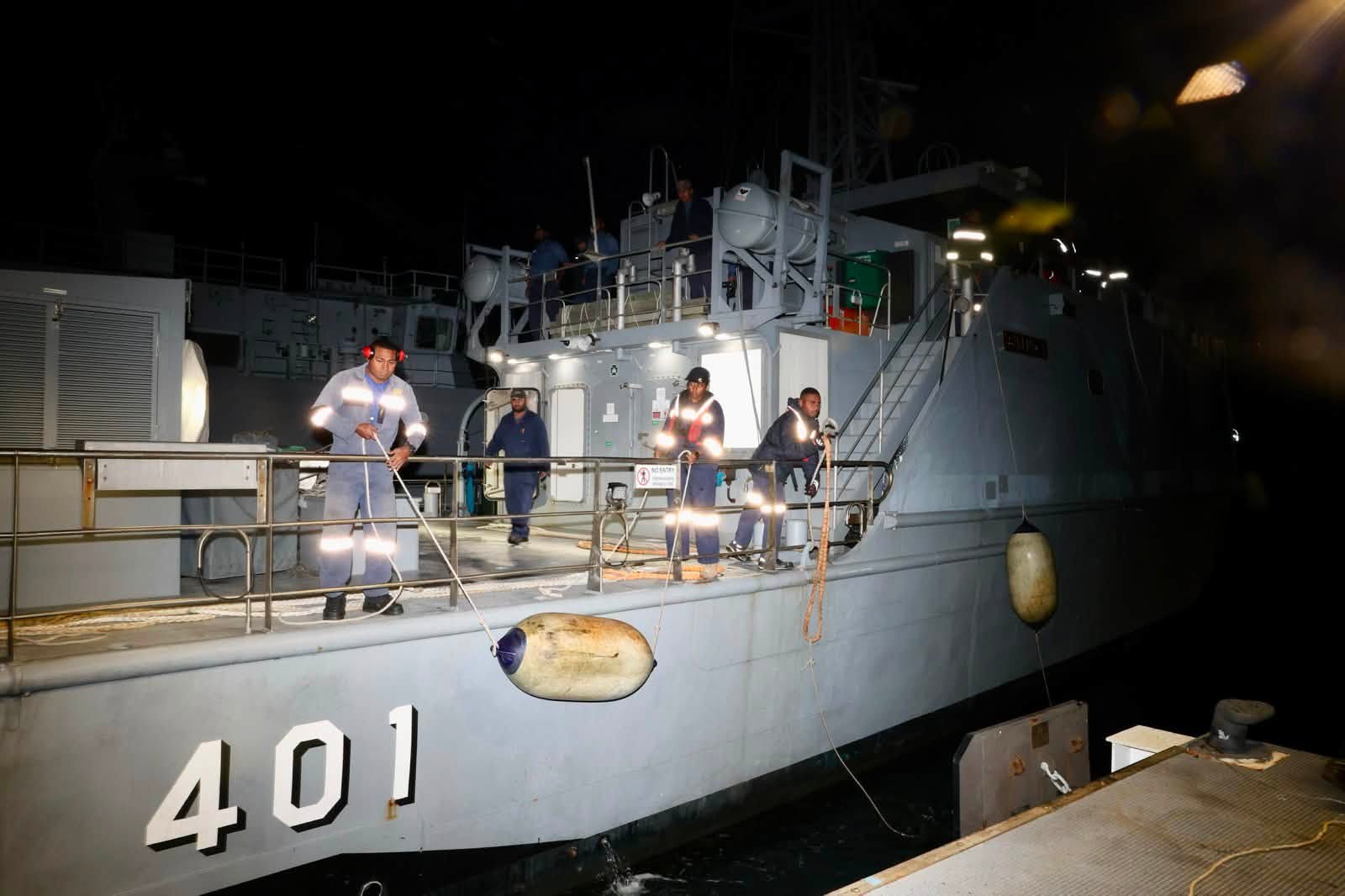
Then, I spied a news item with pictures, celebrating the recent handover to the Fiji Navy of three fast inshore patrol boats from the Government of Japan that could be used according to the news write-up, in: “… surveillance, patrols, search and rescue and support to the whole of government operations across Fiji’s maritime domain”.
And I thought to myself, what a marvellous coincidence, that is just exactly what is needed at this time.
Could I humbly request Government, to base one of the patrol boats in Levuka, Ovalau to service the Lomaiviti Group and a second, in Lakeba to service the Lau Group of islands.
Both boats are to be serviced and crewed by resident naval personnel who are rotated every quarter.
Just my thoughts.
Daniel Fatiaki Suva
Radio beacons
Last Saturday’s two page spread (FT 1/8 page 2-3) covering the story of a six-member medical team rescued after 30 hours adrift in Lau waters was of high interest to me as a retired professional mariner.
I would have appreciated better detailed information about the incident, like an actual interview with the Master of the rescue vessel.
But, while not knowing much about the specifics, it seems to me that the Government and NGOs sending employees to remote islands where they might find themselves adrift at sea should take immediate and practical action to better ensure their safety.
Starlink Mini, according to google, offers relatively low-cost two-way communication nearly anywhere under the sky and could be carried on an outboard powered boat.
EPIRBs (electronic position indicating radio beacons), in use on ships since the 1990s, are not mandated nor likely to be found on small outer island vessels, but anyone can buy a PLB (personal locator beacon) that retails for under $F1000, is pocket size and has a battery that should last up to seven years unused.
PLBs will send a signal to the same maritime rescue centre in Australia that monitors EPIRB 406 megahertz satellite signals and will immediately contact rescue authorities in Fiji of the location and identity of a PLB distress signal.
Wouldn’t it be prudent for at least heads of any government or NGO team traveling in remote outer island waters to have a PLB in their pocket?
Willard Miller Ellice Place, Suva
Support for pensioners
My sincere thanks go to Colin Deoki, Melbourne and Sue Cauty, Pacific Harbour for their great letters — LTE FT Friday, August 7, 2026.
Thank you for the clarity of your thoughts. Thank you for your support of our cause for restorative justice and restitution — nothing less.
In short, FNPF today is a cruel and heartless corporate entity.
So much for their pontification in caring for 447,000 members; $12.1billion portfolio and $2billion cash in bank. Big deal.
They have breached the trust and duty of care to the elderly who helped pioneering the Fund. We are about 1400 survivors from about 6000 affected pensioners.
Betrayed senior pensioners from 2012 continue to be inflicted with much financial distress in their twilight years. This is aggravating and exacerbating poverty levels amongst older citizens.
Ronnie Chang Martintar, Nadi
Roadside Dreams
As I read the story titled ‘Roadside dreams’ (FT: 07/08), I was reminded that success is achieved through dedication, persistence, and consistent hard work, as reflected in the wisdom of many great thinkers and achievers.
Reading Maria Luisa’s inspirational story reminded me of Stephen King’s quote: “There are no secrets to success. It is the result of preparation, hard work, and learning from failure.”
John Kamea shared Luisa’s story to remind readers that success is the sum of small efforts, repeated day in and day out and that a dream takes sweat, determination and hard work to be fulfilled.
For the past one month, Luisa, who is a mother of two, has been waking up early to arrange bundles of fresh vegetables at her roadside stall, waiting for the day customers.
Luisa had a timely message for readers, “Dropping out of school and being unemployed should not define you. Not having an office job should not define you. Use whatever resources you have around you to earn a little extra income”.
Luisa’s family depends on her. She uses income from the sales of fresh farm produce to help with her family’s daily expenses.
Her story is an inspiration for those who are trying their best to make ends meet. Vinaka vakalevu John for the piece!
Rajnesh Ishwar Lingam Nadawa, Nasinu
Warning signs
The world is watching an ancient hatred return with alarming confidence.
Antisemitism, the poison that helped pave the road to the Holocaust, hasn’t disappeared. In many places, it’s finding new voices, new slogans and new excuses.
That should alarm every decent human being. History teaches a brutal lesson: hatred rarely begins with mass violence. It begins when prejudice is excused, intimidation is ignored and people start believing that one group is somehow less deserving of dignity or protection.
There’s an important distinction that must never be blurred.
You can oppose the policies and actions of the Israeli government. That’s a legitimate part of democratic debate.
But when Jews around the world are being threatened, abused, assaulted, or held collectively responsible simply because they’re Jewish, that’s racism in the form of antisemitism and not political protest. The same principle applies to Muslims, Christians, Hindus, Sikhs and every other faith. Collective blame and justification is the language of bigotry.
The Holocaust didn’t begin with gas chambers. It began with words, lies, propaganda and the normalisation of hatred the same as is being done today.
The question confronting our generation is simple: Will we recognise the warning signs while there’s still time or will history one day ask why we saw them and did nothing?
Colin Deoki Australia
FNPF pensioners and the polls
As the political campaign picks up in readiness for the upcoming general elections, the better and “not-so-good” politicians will begin to criss-cross the length and breadth of our islands, let us never forget; let us painfully remember the cruel betrayers of our surviving 1400 senior FNPF pensioners from 2012. The festering hardships that never seem to end.
The remnants of that deregistered party under a new name today preach mentoring and stewardship. About good leadership and governance. Accountability. The then FNPF Board buckled under the weight of the Bai and Kai infamous Decree 51 and 52 of 2011 to force painfully illegal reductions of pensions, deemed irrevocable by FNPF’s founding fathers in Englishman HS Robinson; AA Ragg; and Fijians in AD Patel, Ramzan and Waqanivavalagi. This was Fiji’s serious breach of unquestionable trust. This mistrust is forever etched in Fiji’s history. It will remain indelible.
Many of us who, in lower bracket income, banked heavily on living out our retirement years with about $3000 pensions per month, were tearfully forced to accept surviving on a few hundred dollars. Out of sheer fear, we then took lump sums. These did not last. We have suffered the greatest ongoing, never-ending financial hardships in our twilight years.
Today, we depend heavily on PM Rabuka; Finance Minister Immanuel and the Cabinet in the Coalition Government to “right yesterday’s wrong”. To have the courage, the political will, the empathy, the compassion and wisdom to restore our lost dignities before we take our last breaths. We fervently pray for Divine Intervention.
We seek restorative justice and restitution – nothing less. “Give back to Caesar” what belongs to him. This nightmare and cruelty towards betrayed senior pensioners from 2012, needs to end.
Let Christmas 2026 come much earlier for us, please. This could be the Coalition Government’s “crowning glory” and shining light in the eyes of all law-abiding Fiji citizens before polling day. God-fearing leaders do not hurt the elderly — especially in their pockets. The elderly also need finances badly in the face of enforced poverty levels.
The elderly also need to survive. They need their daily bread, their comfort, absorb life’s shocks and maintain their monthly medical prescription repeats.
The betrayed elderly pensioners are not exempt from the clutches of rising inflation. We are fading minority. 4600 of ours have already passed on.
Yet today, FNPF pontificates about “serving” 447,000 members. About 70% will have balances of about $10,000 upon retirement soon. Am I wrong? If so, my apologies. The better educated and informed voters, in all our communities, will be the best judges. Be wary of politicians who betrayed us so easily… cruelty towards the elderly, at its best. Beware, trust is never given. It is earned.
Ronnie Chang Martintar, Nadi
Rubbish mess
Every day we hear the same excuse when people are asked not to litter: “There weren’t any rubbish bins nearby.”
But since when has the absence of a rubbish bin become an excuse to throw rubbish on the ground?
Think about it. If you’re hiking through a national park, climbing a mountain, or visiting a remote beach, you won’t find rubbish bins every few metres. Yet responsible people don’t simply drop their bottles, food wrappers, or cans where they stand. They carry their rubbish until they find a proper bin or take it home.
The same principle should apply here in Fiji. Sadly, rubbish can now be seen along our roadsides, in drains, on our beaches, and even in places of natural beauty. It doesn’t belong there. Every piece of litter damages the beauty of our islands, harms our environment, and sends the wrong message to our children and visitors.
Come on, Viti. If you bring it with you, take it home if there isn’t a bin nearby. It’s a small effort that makes a huge difference.
The Lord did not give us this beautiful nation to be treated as a dumping ground. He entrusted us with the land and the sea, and with that comes a responsibility to care for them. When we respect God’s creation, we honour Him and preserve His blessings for future generations.
Let’s stop making excuses and start making a difference — one piece of rubbish at a time.
God bless Fiji.
Pranav Chand Nakasi, Nausori
Warm children
I am writing to urgently call on all parents and guardians across Fiji to prioritise our children’s health by ensuring they are dressed in warm clothing before heading out to school each morning.
The Fiji Meteorological Service has confirmed that an intensifying El Niño event is bringing uncharacteristically cooler night-time and day-time temperatures.
Combined with persistent overcast skies and biting morning winds, our early mornings have become exceptionally chilly.
Unfortunately, a quick glance at any bus stop or school gate reveals a worrying trend: many of our students are still braving these freezing mornings in nothing but their thin, short-sleeved school uniforms. Sending children out unprotected in this weather makes them highly vulnerable to seasonal illnesses like the flu, severe coughs, and respiratory infections. It is incredibly difficult for a child to focus on a math or English lesson when they are sitting in a classroom shivering and cold.
While school uniforms maintain discipline and pride, parents must remember that health comes first. The schools explicitly allows students to wear warm layers during adverse weather. Please take a few extra minutes every morning to ensure your children are wearing heavy sweaters, jackets, or long-sleeved undershirts.
Let us protect our children from the elements so they can stay healthy, warm, and ready to learn.
Concerned parent.
Suman Lata Lautoka
Rubbish in public places
In Japan there are no rubbish bins in public places. People take their rubbish home to dispose of. The only place I have seen rubbish bins are on train platforms and that too is organised very well with recyclables and non-recyclables. These bins are never full.
The mentality in Japan is – if there are no rubbish bins, there will be no rubbish. Makes perfect sense to me.
Compare that to the mentality in Fiji. In Fiji, there are no rubbish bins which are ever going to be big enough for Fijians. The bigger the bins the more rubbish Fijians will create to ensure the bins overflow.
Would it be unreasonable to conclude, that is because Fijians are full of rubbish. Or more realistically, is it the case that in their own now free country they are free to dump rubbish as and where they wish. Perhaps it is a combination of both.
Jan Nissar Sydney, Australia
Family support
When I was a child growing up in the first decade of the 21st century, single-parent families seemed far less common in our communities and schools. In many families, both parents attended school events, shared responsibilities, and played important roles in their children’s education. Looking back, I believe many children benefited from having strong family support.
Today, the situation appears different. More children are being raised by a single parent. According to the Annie E. Casey Foundation, more than 23 million children in the United States live in single-parent households, and many schools in Fiji also have students in every class who come from single-parent families. Teachers often face additional challenges as they try to support these children.
Many single parents do an exceptional job of raising their children, and their dedication deserves recognition and respect. However, some children may experience financial hardship, emotional stress, loneliness, low self-esteem, peer-related difficulties, or a decline in academic performance. Every family faces challenges, but children should never become the victims of adult conflict.
Parents should seek counselling when needed, participate in religious and community activities, maintain open communication within the family, and work together to find solutions that protect their children’s wellbeing. Let us support all families and help create a brighter future for our children. Can we? Yes we can!
RODNEY CLARENCE RAJ Naleba, Labasa
Fijian Soul
Imagine walking into a restaurant where every ingredient is grown in Fiji.
Every recipe is inspired by generations of Fijian tradition. Every aroma tells a story. Every meal feels less like dinner and more like coming “home”.
I’d call it “Fijian Soul” or something similar.
This wouldn’t simply be another restaurant. It’d be a celebration of Fiji’s identity, culture and extraordinary natural abundance.
Picture a menu showcasing the very best of Fiji’s extensive fresh seafood, rourou, dalo, cassava, bele, ota, tropical fruits, fragrant coconut cream, locally grown spices and traditional recipes lovingly reimagined with modern creativity. Every plate would honour the land, the sea and the people who’ve lovingly nurtured these ingredients for generations.
But here’s the real secret ingredient.
Hospitality.
The genuine warmth of Fiji is already famous around the world. Visitors don’t just remember our beaches; they remember our smiles and the Bula spirit.
Imagine combining that heartfelt Fijian welcome with unforgettable Fijian cuisine. Every meal would feel like receiving a warm bubu hug. Guests wouldn’t simply leave satisfied. They’d leave emotionally nourished.
Perhaps that’s why I call it Fijian Soul.
It would be a place where locals rediscover the richness of their own culinary heritage, while tourists experience something they cannot find anywhere else in the world. Not imported flavours.
Not copied recipes. But something authentically, unapologetically Fijian.
The restaurant could showcase local music, traditional storytelling, woven handicrafts and artwork from Fijian artists, creating an experience that delights every sense. It would become more than just a place to eat.
It would become a destination, a meeting place. A place where food flavours make your taste buds dance with delight.
The economic benefits could be just as exciting. Local farmers, fishermen, fruit growers and market vendors would all become partners in the journey. Every meal served would support Fijian livelihoods while promoting sustainable local agriculture and reducing dependence on imported produce.
In an age when travellers increasingly seek authentic cultural experiences, Fijian Soul could become one of Fiji’s signature attractions.
I can almost imagine the reviews.
“The food was unforgettable.”
“The hospitality touched our hearts.”
“We’ve travelled the world, but we’ve never experienced anything quite like this.”
And perhaps, after one extraordinary meal, guests might even feel inspired to write a heartfelt thank-you note to the chefs for creating what could only be described as a festival of Fijian flavours.
Fiji already has one of the world’s most beautiful destinations. Perhaps it’s time we also created one of the world’s most memorable dining experiences.
Who knows?
Maybe somewhere in Fiji there’s an entrepreneur reading this today who has the vision to turn Fijian Soul from an idea into a legacy.
If they do, I have a feeling the tables will not only be filled but the experience would travel the world.
Colin Deoki Australia
A road tragedy!
MY heart melted as I saw the picture (FT: 07/08) of the deceased Kaminieli Matadradra and his wife Setaita Matadradra who were on their way to Australia to reunite with their children. The couple lost their lives in a horrific four-vehicle crash at Vakabalea in Navua.
The couple was supposed to board a flight from Nadi to Australia. They carried with them the excitement of seeing family they had longed to embrace. It’s heartbreaking that instead of meeting their family members alive, their grieving family members are preparing for a funeral to say farewell to them.
I plead with road users to be careful when driving on the road. One bit of carelessness, or over-speeding can take away a person’s life. I agree with National Fire Authority (NFA) CEO Puamau Sowane that no journey is worth risking a life.
I pray for the departed souls!
Rajnesh Ishwar Lingam Nadawa, Nasinu
$8 per hour living wage
THE Fiji Commerce and Employers Federation (FCEF) has rejected the Fiji Trades Union Congress’ proposal for an $8 per hour living wage, claiming that businesses are “already under pressure” and that the minimum wage has risen by 115 per cent in five years. This argument may sound compelling at first glance, but it collapses under basic economic scrutiny and a simple test of fairness.
The FCEF’s position is built on a misleading comparison. A 115 per fect increase sounds dramatic, but it is only dramatic because Fiji’s minimum wage started from an unacceptably low base. When wages begin at poverty levels, any correction appears large in percentage terms. This is not economics — it is optics.
The real question is simple: Can a Fijian worker survive on the current minimum wage? The answer is equally simple: No.
The cost of food, rent, transport, electricity, medicine, and school expenses has risen far faster than wages. Remittances and government assistance are not substitutes for fair pay — they are emergency buffers for households that are already struggling.
The FCEF warns that an $8 living wage will “pressure businesses”, yet the same logic was nowhere to be found when Parliamentarians approved a 138 per cent salary increase for themselves. If the economic theory used to deny workers a living wage is valid, then the same theory must apply to MPs. Why is a 115 per cent increase for the poorest “unreasonable,” but a 138% increase for the most privileged is “necessary”?
You cannot have one set of economic rules for workers and another for politicians.
The FCEF also argues that Fiji’s productivity is low. But productivity is not improved by keeping wages low — it is improved by investing in workers, training, technology, and modern workplace practices. A hungry worker cannot be a productive worker. A stressed worker cannot be an efficient worker. A worker juggling two jobs cannot be an engaged worker.
The truth is that Fiji’s labour shortage is not caused by wage increases — it is caused by low wages themselves. Skilled workers are leaving because they cannot build a dignified life on current pay levels. Employers are importing labour because local workers cannot afford to stay. Raising wages is not a threat to the economy — it is a stabiliser.
The FCEF says many businesses already pay above the minimum wage. If that is true, then an $8 living wage should not be a burden. It should simply formalise what responsible employers are already doing.
The ILO’s calculated minimum wage of $4.55 based on GDP is not a living wage — it is a subsistence wage. GDP-based formulas do not account for real household costs, inflation shocks, or Fiji’s unique vulnerability to global price movements. A living wage must be based on actual living costs, not abstract economic models.
The Coalition Government has repeatedly emphasised fairness, dignity, and shared prosperity. An $8 living wage is not radical — it is reasonable, overdue, and morally defensible.
If Parliamentarians can receive a 138 per cent increase without hesitation, then surely Fiji’s workers — the backbone of the economy — deserve a wage that allows them to live, not merely survive.
A nation cannot prosper when its workers are trapped in poverty. An economy cannot grow when its people cannot afford to participate in it. And businesses cannot thrive when the workforce is exhausted, underpaid, and leaving the country.
The $8 living wage is not a burden. It is an investment — in Fiji’s people, Fiji’s productivity, and Fiji’s future.
Dr Sushil Kumar Sharma Lautoka
Aid, really?
France v Spain, FIFA World Cup semi-final, watching with the international crowd at Holiday Inn, was way better than being the lone viewer at home.
Seated next to me was this Aussie individual and a conversation started, on Mbappe and Yamal first, then to other matters.
The individual revealed, I learned, was a visiting consultant, holding meetings and workshops, and reviewing some aid program. I couldn’t get what exactly it was all about; however, workshop, seminar, meeting and other events depicting gatherings formed the gist of the information I gathered. This was during the half-time break.
I asked the individual how their “consultancy” work was funded. The person said that the aid package covered all expenses for the month they were here.
It’s then that I properly understood why the tangible results of aid programs never seen. Most of the pledged money is blown up through meetings, consultancy, workshops and seminars. Five-star hotel and fine dining don’t come cheap either.
I like the bridge, road, school and sports facility construction aid programs. Visit a construction site and see how the senior managers live in those temporary container type dwellings.
Donald Singh Nausori
Afternoon kava station
Around the old tanoa they huddled,
by the pond of lilies,
trying to solve the nation’s problems,
even each others’ follies.
Jokes flew left, right and centre,
one has to be cast in iron,
not be riled by the banter
and the comments on the sideline.
But these seniors continued to gather,
every Saturday afternoon,
even during bad weather,
just to share despite the gloom.
A few hours only in the afternoon,
for their mind-boggling kava-sation,
not like the “until daylight” sojourns,
that continue around our nation.
“Dua na bilo” they called,
some took the offer,
others enjoying their stroll,
without stopping for the “muddy water”!
Edward Blakelock Admirals Circle, Pacific Harbour
Representation of women
During the recent Speaker’s Debate at the Grand Pacific Hotel in Suva, Parliament Speaker Filimone Jitoko posed the question of how Fiji can increase women’s representation in Parliament.
There is no denying that women make invaluable contributions to Fiji’s social, economic and political development. They are leaders in business, education, healthcare, public service and various other sectors.
However, the path to Parliament should remain the same for everyone.
If you aspire to become an MP, contest the general election, earn the support of the people, and “win”.
That is how the democratic process operates.
A seat in Parliament is not an entitlement or a privilege granted on the basis of gender. It is earned through hard work, public confidence and votes through the ballot box. For years, we have rightly championed equal rights and equal opportunities.
Equal opportunity means everyone has the same chance to contest and convince voters.
So, to aspiring female leaders, step forward, campaign hard and earn your place in the august House through merit and not because you are a woman.
Nishant Singh Lautoka
The War and the Trophy
During our last monthly family FaceTime session, our conversation inevitably turned to rugby. One observation in particular captured everyone’s attention.
My brother-in-law, a long-time rugby coach, argued that the Springboks don’t simply win because they possess talented players or execute the basics well. In his view, they’ve elevated physical domination into a strategic weapon that demolishes just about every opponent.
His observation was that South Africa’s huge, athletic forward pack relentlessly pounds the opposition with punishing collisions, sapping energy, disrupting rhythm and forcing mistakes. Only after that physical battle has been won do they unleash their attacking weapons against an opponent that’s already under immense pressure.
Whether or not that fully explains the Springboks’ success, it’s certainly an intriguing way of looking at modern Test rugby.
He also believes the All Blacks, under David Rennie, are embracing a similar physical philosophy and approach, making their upcoming clashes with South Africa a compelling contest between two sides that understand an uncomfortable truth: before you can win the scoreboard, you often have to win the brutal force of fast driving forwards working like battering rams to destabilise their opponents.
That raises an important question for Fiji.
Can the Flying Fijians consistently match the size, strength and relentless physical intensity of rugby’s heavyweights while still preserving the instinctive, exhilarating style that’s made them one of the world’s most exciting teams to watch?
Fijian flair has never been in doubt. But flair without ferocious forward pack dominance can be suffocated by an elite opposition hellbent on breaking down a side with their carefully constructed barrage of pounding attacks.
Perhaps the modern game has become rugby’s version of warfare.
The massive forward pack becomes the heavy artillery, relentlessly bombarding the defensive line until cracks begin to appear. Every crushing tackle, every dominant carry and every brutal clean-out weakens the opposition’s resolve. Only then comes the decisive assault, when backs exploit the fractured defence and turn pressure and mistakes into points.
If that analogy has merit, then perhaps the Springboks have mastered the art of “rugby warfare” better than any nation on earth.
The challenge for Fiji isn’t to imitate South Africa. It’s to combine South African physicality with uniquely Fijian flair and brilliant athleticism.
If the Flying Fijians can marry uncompromising forward pack power, ruthless discipline and their natural attacking flair, they may well become the team nobody wants to face at next year’s Rugby World Cup.
In Test rugby, flair may win applause and the Flying Fijians have done that countless times.
But the team that wins the “big hit” collisions usually wins the war and the trophy.
Colin Deoki Australia
Climatologist or expert on politics and economics
I refer to Dr Sushil K. Sharma letter in The Fiji Times and his personal attack on NFP Leader Professor Biman Prasad.
Public debate is essential in any democracy, and Dr Sharma is entitled to express his views. However, any assessment of Professor Prasad should be based on evidence rather than selective criticism.
Dr Sharma’s opinions cannot erase a lifetime of professional achievement and public service. Professor Prasad did not earn his reputation through politics. Long before entering Parliament, he had established himself as one of the Pacific’s leading economists. For more than three decades he taught economics at the University of the South Pacific, published extensively in public finance, development economics and trade policy, supervised generations of students, and contributed to regional and international policy debates.
His expertise has been recognised well beyond Fiji. He has worked with international organisations, advised governments and regional institutions, presented research at international conferences, and been respected by academics, policymakers and development partners across the Pacific. Such standing is earned through scholarship, integrity and professional competence — not political slogans.
It is, therefore, unfair to dismiss Professor Prasad’s views on the sugar industry or the economy through political rhetoric. One may disagree with his policies — as is perfectly legitimate in a democracy — but questioning his credibility as an economist ignores decades of internationally recognised academic work and public contribution.
Dr Sharma also suggests that Professor Prasad should step aside because of an ongoing court matter. Fiji’s legal system is founded on the principle that every person is presumed innocent unless proven guilty in a court of law. Political demands should not replace due process.
Healthy public debate should focus on facts, policies and evidence — not on attempts to diminish the professional standing of one of Fiji’s most accomplished economists. Strong democracies are built on informed discussion, not selective narratives or personal attacks.
Professor Prasad entered government at a time when Fiji faced significant economic and fiscal challenges following the COVID-19 pandemic. The task before the Coalition Government was to restore fiscal stability, rebuild investor confidence, strengthen social protection and revive economic growth while managing high public debt and global inflationary pressures.
Over the past several years, policies introduced under his leadership in finance focused on rebuilding confidence, maintaining fiscal discipline, supporting vulnerable households, increasing investment in health and education, reforming taxation, strengthening the tourism sector and restoring Fiji’s international credibility. These achievements can be debated, but they cannot simply be ignored.
No finance minister governs in ideal circumstances. Every budget involves difficult trade-offs between competing priorities. It is therefore fair to scrutinise policies, but it is equally important to acknowledge the complexity of the challenges faced and the progress that has been made.
Dr Sharma dismisses Government’s contribution to growers’ incomes by claiming higher cane payments are solely the result of world sugar prices. That is only part of the story. Global prices matter, but so do domestic policy decisions. The Coalition Government has provided direct support through fuel subsidies for harvesting and transportation, assistance to farmers, investment in drainage and access roads, increased support for FSC operations, and measures aimed at restoring confidence in the industry. These interventions have helped growers benefit from favourable world prices.
He says that Professor Prasad should resign as leader. Dr Sharma should first call for the 85-year-old Mahendra Chaudhry’s resignation from the Labour Party. He should know his record- I believe he has been twice convicted. Even after he was convicted, he remained leader of the Labour Party and continues to hold that position. On the other hand Professor Prasad has been subjected to a politically motivated charge of non- disclosure under the draconian political parties act which he is defending in court and I am confident that he will be cleared
Dr Sharma would do better as a climatologist forecasting weather instead of trying to become an expert on politics and economics.
Avenai Serutabua Nabukelevu Village, Serua

