Ovalau’s network nightmare
For decades, residents of Ovalau and areas surrounding Levuka Town have endured pathetic network coverage from Vodafone and Digicel.
Today, almost everyone here owns a phone. We pay the exact same rates for mobile data bundles as consumers in urban centres like Suva or Nadi, yet the quality of service we receive is vastly inferior.
While urban users can stream videos seamlessly from the comfort of their beds, Ovalau residents are frequently forced to walk miles away from their villages just to catch a glimpse of a weak signal. This is a blatant double standard. If we are paying the same money, we deserve the same quality.
We have stayed silent for too long, falsely believing that this sub-standard treatment was normal. It is not. Vodafone and Digicel are effectively taking our money without delivering the services promised.
Ovalau is calling. We urgently need more network towers built around the island. Both mobile providers must act now to bridge this digital divide or admit they are shortchanging rural customers.
Paula Kaloukocei Levuka, Ovalau
Tough life decisions
I am writing to share a story of determination and national pride that I hope will inspire fellow Fijians, especially young people facing tough life decisions.
Leaving a comfortable life behind is never easy. I was working as a distiller in my hometown of Lautoka, just a short distance from my home in Rifle Range, with a prestigious and high-paying job. However, driven by a passion to further my education, I took a leap of faith: I resigned from my job to move all the way to Mumbai, India, to pursue a Master’s degree in Physics with a specialisation in Materials Engineering.
The transition was daunting. Being in an entirely new environment without a local support system, I had moments of intense self-doubt where I questioned whether quitting my job and becoming a full-time student again was a huge mistake.
Instead of giving up, I gathered my courage and pushed forward. My perseverance paid off beyond what I had initially imagined:
-I graduated as one of the highest scorers in my competitive batch
-I successfully authored two research publications along with a book chapter alongside my thesis submission, a rare achievement for a Master’s student.
o Most proudly, I have been accepted into the Ph.D. in Physics program at the Indian Institute of Technology (IIT) Madras. IIT Madras is one of the world’s premier which has an acceptance rate of 0.11% to 0.2% making me the first Fijian to ever gain admission to this prestigious institution, the alma mater of global leaders such as Google CEO Sundar Pichai and its admissions process is notoriously competitive.
I am honoured to be the first Fijian to ever secure a spot in this program.
I hope my journey serves as a reminder to our youth that taking risks, embracing hard work, and venturing outside one’s comfort zone can yield extraordinary results on the global stage.
Avishkar Avinesh Ratnam Lautoka
Our pensions
Can the Fiji National Provident Fund’s deprivation of our irrevocable pensions earned by surviving betrayed senior pensioners be deemed as first class corporate “bullying”?
Why is it allowed to fester for about 14 long and painful years?
Of the original 6000 from 2012, about 1370 survive today to relate this cruelty colluded by former Prime Minister, Voreqe Bainimarama and his #2 man, Aiyaz Sayed-Khaiyum.
This is a “David and Goliath” story.
We are strong enough to fight on until our last breath … a simple sling-shot against the might of a corporate entity grossly lacking in empathy, compassion, respect and goodwill for elderly retirees. In our ways we served Fiji with pride and distinction in our lifetime.
“Blessed are the meek; for they shall inherit the earth.” Matthew 5 : 5 – 9.
Ronnie Chang Nadi
FNPF Saga
Reading Professor Vijay Naidu’s article on FNPF (FT 7/11) and other letters recently published about the FNPF pension issue made me realize that your readers may be interested in the backstory of the Burness case frequently referred to in the article and letters.
I write in my personal capacity and not as UniFiji VC.
The late David Burness was my neighbour at Suva Point. David’s ancestor, David Wilkinson, had translated the Deed of Cession and so David and I, for many years, often had wonderful conversations over the fence, about everything.
One morning the conversation turned to the Bainimarana Government’s proposal to reduce the pensions of pensioners already retired.
I was not a FNPF pensioner so I was not aware of the details, however, David insisted that he and other pensioners like him could legally challenge the proposal before it became law. He wanted me to represent him. In fact, after that, he would badger me every morning over the fence, as I was making breakfast, to take the case.
I was not looking to represent anyone pro bono at the time as I had only just opened my law firm having had my position as Ombudsman recently disestablished through abrogation of the Constitution in 2009.
Had I still remained at the Fiji Human Rights Commission, I would definitely have taken action on behalf of David’s complaint about the human rights violation represented by the FNPF proposed reduction in pensions.
Nevertheless, I could not resist David as he and his equally fierce wife, Talei, had been such good neighbours, so I filed directly in the High Court for redress, postponing my planned travel to New Zealand for further studies.
David’s initial application attracted many other pensioners in the same position, all wanting to join.
What was, therefore, the Burness v the FNPF and the State suddenly became a class action, now called Burness and Others v FNPF and the State.
The others who joined were professionals, businesspeople, former government and statutory employees, at least 50, to my recollection. Many have, sadly, passed away, but their names still appear in Professor Wadan Narsey’s articles about the case. Wadan had also joined as an applicant alongside David and others but, as an economist, he was to be our star witness.
Similarly, Jackson Mar joined; his calculations of the viability of the FNPF pension scheme were crucial to convince the court that pensions for those well into retirement were affordable. Even two of the original members of the FNPF Board provided supporting affidavits, and all were placed before the Court.
In the meantime, another of the class applicants, Rick Rickman, and I resolved to establish a website, not only to keep the applicants connected but also to show everyone that our pensioners were all intelligent and still highly competent despite their age and that, having contributed so much to Fiji over decades, they deserved to be looked after in their old age when they needed it most.
The website is somewhat dormant but will re-emerge when needed as, thankfully, Rick is still actively with us.
The first appearance before the High Court was daunting for all. The Pensioner applicants had turned out in numbers crowding the small courtroom with barely enough room to stand.
On the state side of the bar table were the top of the Solicitor General’s team, led by Christopher Pryde and Devanesh Sharma, as well as Sharvada Sharma, representing the A-G. The CEO of FNPF at the time also turned up but because there was no room for him to sit, he had to stand and I had to shush my clients as they chuckled not very quietly about that.
At the preliminary stage of the first call, the state solicitors team and FNPF had the temerity to seek huge legal costs, knowing very well that the pensioners had no money and that I was appearing pro bono.
In this regard I do believe that subsequent events faced by these state solicitors may be considered in an appropriate light as any inhumane action imposed on vulnerable people generally does have its dire consequences for perpetrators in one life or another.
Soon after our first appearance in court, as we were preparing our submissions including for witness examination, news arrived that government had imposed Decree 51 to stop any case against FNPF, moreover, unilaterally reducing the pensions for David Burness and his fellow applicants.
Decree 51 also imposed restriction on the court for any future action that might be contemplated and filed by others in the same situation.
David Burness passed away some years later as did others, progressively, as time went on.
I continue to grieve for those elderly who were suddenly deprived of the benefits of their hard work to build Fiji as a nation.
However, there is light, perhaps, before the end of the tunnel. Given that the Burness case was never officially dismissed, it is still on foot. Section 11 (6) of the Decree allows a proceeding already underway, as the Burness case was, to continue if the class applicants so wish.
Shaista Shameem Lautoka
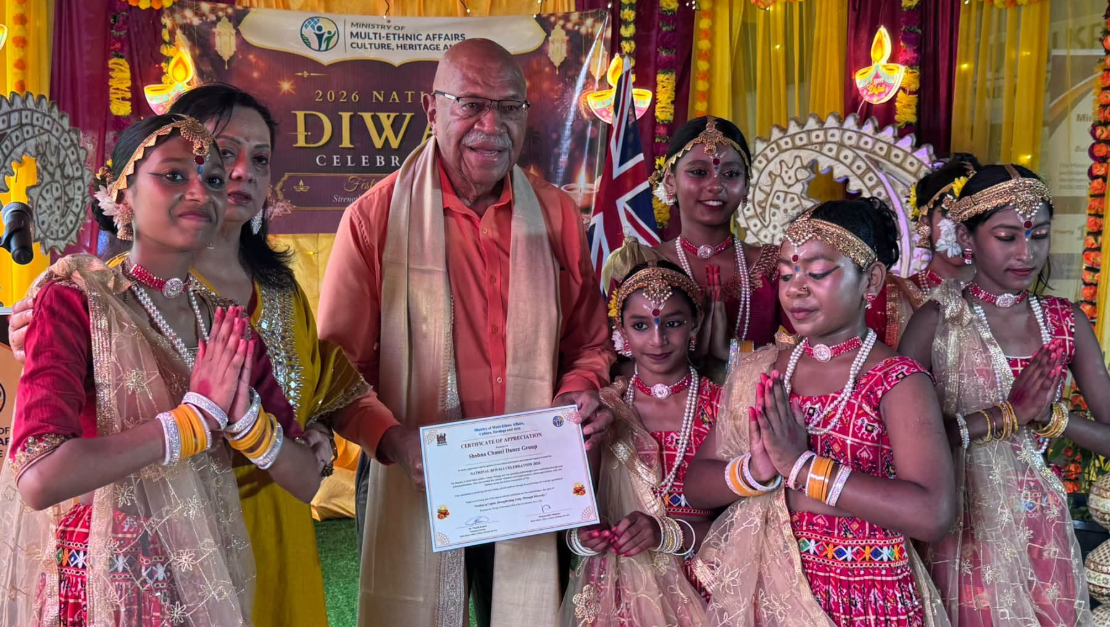
Diwali message
The main message of Diwali is the triumph of good over evil.
The triumph came from Lord Rama’s fight against the force of evil. How many of those who celebrate Diwali in today’s world stand up to fight against evil in its many manifestations which harm planet Earth, humanity and all God’s creatures?
Rajend Naidu Sydney, Australia
Which one?
Families neglected, pensioners fleeced? Or… Financial negligence punishing Fijians? Which one sits right with you? Or could this be more appropriate and accurate. Fraudsters never prosper, fools? Lori aweh.
Colin Deoki Australia
Conscience or what?
Minister Sashi Kiran said as reported in The Fiji Times that her vote on the constitution amendment bill will be “guided by her conscience”. Meaning not by her NFP party directive to vote “No” to the bill. I wonder when was the last time she was guided by conscience during the governance we have been witnessing under the Rabuka Coalition Government? Is it really her conscience or political expediency that she’s been guided by as a minister in Rabuka’s government? I believe thinking Fijian people know the answer to that.
Rajend Naidu Sydney, Australia
FNPF saga
After reading Prof. Vijay Naidu’s eye-opening article (FT7/11), and Ross McDonald’s letter of 2011, could FNPF’s obstinate silence on the issues raised be construed as an Admission of Guilt?
Colin Deoki Australia
Women leaders
The Fiji Times Editorial Comment “Giving Women a fair chance to lead” (FT25/10) is to be noted well by all stakeholders. Pritika Raj has also emphasised that women are well prepared to lead and be given a fair chance. Let’s honour their rights. Women have their right to speak freely and the right to be heard.
Tahir Ali Hamilton, New Zealand
Pension plot
Any reasonable person would conclude from Professor Vijay Naidu’s insightful analysis ‘The FNPF pension plot’ (FT 7/11/26), that the FNPF in cahoots with the post-coup Bainimarama military regime abdicated its legal and moral obligation to the pensioners who were deprived of their lawful and just pension payment. I believe that is not the conduct or modus operandi of a responsible institution of state or society. Solidarity with the pensioners still fighting the good fight to seek justice and right the wrong perpetrated on them.
Rajend Naidu Sydney, Australia