
Special moments
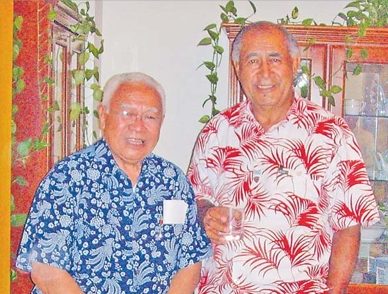
Not many people, I believe, have had the privilege of pouring a drink for the late President Ratu Epeli Nailatikau. In 2010, I poured his drinks during an informal evening function at the Fijian Ambassador’s residence during his trip to Beijing. My job was to first ask him “Sir, wine or beer?”. After quietly rehearsing a couple of times, I did ask him. Then I carefully poured his wine, my hands no longer trembling, after he had casually left that decision to me! Those few hours of the evening have stayed in my memory in high definition since then. Hilariously, he once referred to the Bird’s Nest as the “Bee Hive”, and that brought the roof down with nobody able to hold laughter. He simply smirked after someone whispered to him the correct name, then let out his own laughter! Then we have memories of seeing him walking along Cumming St with his broken leather belt, to be repaired at one of those shops there. And we have memories of people offering him to jump the queue at the ATM and him refusing, opting to withdraw his cash after the dozen people ahead of him in the queue. Plenty more. Pouring the late Ratu Epeli Nailatikau’s drink remains the highlight reel in HD in my memory. Donald Singh Nausori
Rest in paradise
Loved by all, hated by none. Ratu Epeli Nailatikau was the true definition of a statesman. The one of a kind Fijian chief that we will encounter only once in our lifetime. Rest well sir! Wise Muavono Balawa, Lautoka
Farewell Ratu
Our very home grown well respected, down-to-earth, distinguished stateman and military disciplined chief was a real noble banner blue of Fiji. The outpouring of emotions, the personal touch that the late Ratu brought to thousands is evident during the last few days as the nation stood still for two hours, farewelling him for the last time on the chiefly Bau Island. Even Tonga was shaken by his loss and sharing the grief just indicated the late Ratu’s personal touch was simply Fiji the way the world should see. Mine and thousands of prayers are with Adi Koila and the family of the late Ratu. His connection to every province of Fiji either through relation or just simplicity brings to an end a noble banner blue legacy. Sa moce sir, we will miss that walk past Terry Walk or the Grant Waterhouse along Waimanu Road without a single guard in sight and above all we will miss the sight of a chief taking his normal morning or afternoon walk at Nasese. A naming right somewhere in Fiji to honour our home-grown hero would be a befitting gesture to remember him forever as our noble banner blue chief who was for Fiji ever Fiji. Shalwyn Prasad Mukta Ben Place, Nabua, Suva.
Clarification of reguregu
I must correct a mistake in the printing of my letter to the Editor on the word reguregu (17/4). I wrote that, like all verbs, reguregu can be used as a noun, for example nodra reguregu “their going to present gifts etc”. Somehow this was changed on publication to “they’re going to present gifts”, which is of course a verb not a noun, making no sense at all. A further note on the prefix ‘i’ is that it is used with common nouns, for example na iTaukei Naisogolaca, but not with proper nouns, so o Taukei Naisogolaca. Paul Geraghty USP, Suva
Saweni Beach
My dad used to take us to Saweni Beach every Sunday morning almost without fail when we were little. That is where my four sisters and I learnt how to swim. It was a safe, untouched, tranquil place at the time. One cannot say the same about the place today when I visited the beach recently after many decades. The rubbish was embarrassing to me. I don’t believe the locals mind the rubbish as they are the ones who make the beach what it is today. However, the current debate about constructing a multi-million-dollar incinerator near the beach should not be about whether it is environmentally friendly or suitable, but who was paid off and how much, by whom and when. All the opponents of the incinerator are not asking the right questions. Jan Nissar Cairo, Egypt
No permit
The Fiji Police Force’s last-minute denial of a peaceful march opposing the Vuda waste-to-energy project is nothing short of disgraceful. Shutting down lawful, nonviolent protest at the eleventh hour is not just incompetence, it is a deliberate suppression of citizens’ rights. The silence, as usual, around the reasons for this decision only makes it worse. It reeks of the same authoritarian reflexes concerned citizens were subjected to during the dark era of the Bai and Kai regime. So much for “democracy”. Let’s stop pretending. If peaceful assembly can still be blocked on a whim, then the word “democracy” in Fiji is nothing more than a hollow slogan. We either stand by it, or we admit we don’t believe in it. Frankly, we might as well drop the façade altogether. Hand the country back to the unelected elites, the chiefs, the GCC, and might as well throw in the church in the mix as well. At least then we would be honest about who really commands power. Because right now, all we are doing is recycling the same failed ideas and calling it progress, while the country remains stuck exactly where it has been for the last hundred years. Someone should probably film a documentary on us, titled “Fiji – a fictional democratic island nation”. Nishant Singh Lautoka
Quick view
PM Modi “received a call from his friend Donald Trump and they spoke for 40 minutes” (letter RCS 17/4). Was that a meeting of brilliant minds or reactionary ones? Rajend Naidu Laucala Beach Estate, Nasinu
Petition signing
9453 people signed the petition against the development of the controversial waste to energy plant in Vuda/Saweni, Lautoka which was delivered to the Department of Environment office in Lautoka. That is more than what many members of Parliament got to be in parliament. Imagine what the 9453 votes can do in the next election. Narayan Reddy Lautoka
Humble leader
He was approachable, engaging easily with people from all walks of life and cultures. Humble and down-to-earth, he was a leader citizens could genuinely relate to and interact with. Farewell, Ratu Epeli Nailatikau. Our beloved nation was truly fortunate and blessed to have a leader of his calibre. Floyd Robinson Micronesia
FNPF issues
The Fiji Times LTE writers affected by that decree are desperately waiting for their well-deserved dues. I feel 1400 still survive with their ID card membership, as a writer asks for their registrations. Justice should prevail as we are always assured of our future security with FNPF. Pay those 1400 first, lest it’s too late. Tahir Ali Hamilton, New Zealand
No permit
Police deny permit for march against Vuda waste project (FT 16/4). I am reminded here of a letter of mine published by The Fiji Times after the 1987 military coup in which I had asked if permit is denied for a peaceful pro-democracy march, what kind of marches get approved? Rajend Naidu Sydney, Australia
No march
No permit given by the police. Is it the fear of numbers organizers have announced or the indication that those involved in the project were barking up the illegal tree? Dan Urai Lautoka
A lesson in belonging from Ratu
Fiji has laid rest to one of its most beloved presidents. He was known by many names – “Ratu” to the people, the “Soldier’s President” in the military, and Na Turaga na Taukei Naisogolaca among his own. A leader deeply connected to the vanua, to the people, the land and the shared identity that binds them. He was, truly, a people’s leader. I had the opportunity to briefly speak with him once. To this day, I don’t quite know why he chose to stop and speak to one of the smallest girls in the squad, but he did. It was at Xavier College’s cadet pass-out parade. He paused, smiled and asked her name. Then, gently, “Where are you from?” A little startled but excited, she replied: “Ba, sir!” He continued: “And where is your father and grandfather from?” Slightly puzzled, she answered: “Nausori, your excellency.” His response captured everything about who he was: “Then you are from Rewa – Kai Rewa!” We shared a laugh, and he moved on. But that moment stayed. In a single interaction, he gave a young girl a sense of belonging, reminding her that identity is not just where you are, but where you come from and who you are connected to. That was his gift: making people feel seen and included. And yet, today, we find ourselves once again in conversation about national identity — who belongs, who we are and how we define “us.” Perhaps that is why his leadership felt so rare. Ratu didn’t just speak about identity, he practiced it. He expanded it. He made it inclusive, relational and human. May be the answer we are searching for is already in the way he led: not narrowing who belongs but widening it so that more of Fiji can see themselves within it. Tejal Lad Wellington, New Zealand
Final farewell for Ratu Epeli
The nation united to bid farewell to Ratu Epeli Nailatikau as his funeral cortege departed State House to Albert Park and then to Bau Island in a solemn procession. Tears flowed as Ratu Nailatikau’s casket was laid on the central platform at the iconic Albert Park surrounded by dignitaries and ordinary citizens alike. On the streets, the public gathered quietly paying their tribute to the former people’s president as he passed through the heart of Suva for the final time. Braving the weather, ordinary Fijians and students sat on the road and on footpaths as they awaited the funeral cortege to pass by. Race, colour, ethnicity and gender were put aside as people from all walks of life came together. On the chiefly island of Bau, preparations continued as they waited for their chief to be brought to his resting place. The gentle rain and quiet reverence were felt by those on the chiefly island as they braced for the wave of mourners gathered to pay their respect. I salute the Fiji Military Forces for leading the military parade. I thank them for honouring Ratu Nailatikau with deepest respect and solidarity. PM Sitiveni Rabuka delivered a fitting eulogy on behalf of us. He highlighted Ratu Nailatikau’s legacy and successful journey as a soldier, diplomat, mentor, Statesman, president and Speaker of the House, describing him as a devoted servant and proud son of Fiji. Ratu Nailatikau wore many hats with courage, dignity, values and humility. His ability to remain calm in terms of adversity with humour made him stand out. He understood that leadership was not about power but about responsibility. The high chief did not let his status affect his relationship with ordinary Fijians as he shared their pain and listened to their stories, pleas and grievances. Ratu Nailatikau’s departure is a poignant reminder that we have lost a gentle leader who had the nation and her citizens close to his heart. His legacy, which was defined by a life of purpose and service, and life have left footprints and immense lessons of unity. Leaders must take a cue from his vision of a united Fiji. Ni moce mada, Ratu! Rajnesh Ishwar Lingam Nadawa, Nasinu
Drought in the Happy Valley!
The Kai Tak Stadium will play host to the much-anticipated three-day Hong Kong 7s festival and world’s biggest rugby party. Fiji’s glorious days at the So Kon Po Stadium will forever be etched in the minds of 7s followers. At the iconic So Kon Po Stadium, we won the HK 7s title three years in a row (1990-92), our first and second Melrose Cup in 1997 and 2005, and the five wins in a row (from 2015 to 2019). So Kon Po was home to Fiji. We enjoyed a lot of magnificent wins. Our players shed tears, blood and energy in front of a passionate 7s crowd. The HK 7s tournament holds a special place in the hearts of thousands of Fijians. I just hope that our boys will remember that when they aim to win the tournament at the new stadium. We last won in HK in 2019, beating France 21-7. It’s hard to believe that we haven’t won at our happy hunting ground for the past six years. As I recollect memories from So Kon Po, I thank our past players and team managements for their input in putting Fiji as a powerful brand on the 7s arena. So Kon Po gave us the tag of 7s Kings. Unfortunately, the Kai Tak Stadium proved unfriendly last year. We lost to France 24-17 in the semis and then 22-21 to Australia in the bronze final. I hope our heroes will capture the imagination of fans and display feats of magic. The Happy Valley has long been a bridge across many divides, attracting fans from all walks of life. This weekend will be no exception as fans unite. The Fiji Times headline (17/07) read ‘Baptism of fire’. The boys need to be clinical and ruthless if they want to win at the Kai Tak Sports Park. There is no room for complacency. We must be on our toes and get the basics right. I’m dying to see the Yaro Chiefs stars unleash their game. To the boys, here at home, we are mourning the passing away of Ratu Epeli Nailatikau. Play for him and get the gold medal. Go Fiji! Rajnesh Ishwar Lingam Nadawa, Nasinu
Doing good!
So you want to do “good” for your family, your community and your country. That’s admirable. Noble, even. But here’s a question that quietly lingers beneath the surface of that desire. What exactly is “doing good” in your book? Is it providing financially and making sure your family never goes without? Is it being present, offering your time, your listening ear, your quiet strength? Is it standing for truth even if it means costing you status, comfort, popularity or peace? Or is “doing good” simply doing what feels right in the moment because it’s fashionably convenient? Because what feels “good” isn’t always what’s good. History has shown us that entire nations have pursued what they believed was “doing good”, only to realise, often too late, that their version of doing good was shaped more by convenience, culture or control than by truth, wisdom or compassion. Even within our own homes, “doing good” can be misunderstood. Shielding our children from hardship may feel like love… But could it be robbing them of learning resilience and helping them understand how to dust themselves off and get back on their feet? Yes, giving our children a hand up is sometimes better than giving them a handout. Keeping the peace at all costs may feel noble. But could it be avoiding necessary truth? Working tirelessly to provide may feel responsible. But could it be replacing presence with provision? The tension is real. Because “doing good” isn’t always obvious. It’s not always comfortable. And it’s rarely convenient. True “doing good” often requires clarity and knowing what truly matters beyond opinions and trends. It requires courage for doing what’s right and not what’s easy. It requires consistently choosing the long road over the quick short cut to winning. And perhaps most importantly, it requires humility and the willingness to ask: “What if my definition of doing good needs adapting and refining?” Maybe “doing good” isn’t about grand gestures or public recognition and seeking validation. Maybe it’s found in the quiet, unseen moments of choosing ethics and integrity when no one is watching. Of extending grace when it’s undeserved. Of speaking truth when silence would be easier. Of showing up, again and again, even when it’s hard, awkward or uncomfortable. Because in the end…”Doing Good” is less about what we claim to stand for and more about what consistently flows through our lives. So before we set out to “do good”… Maybe we need to pause long enough to define what “doing good” really means. And then have the courage to live it, breathe it and be it. Even if it costs us. Even when it’s misunderstood. Even when no one applauds. That’s where “doing good” really begins. Colin Deoki Australia
Glue sniffing
It’s concerning to see the number of students and even some adults glue sniffing. Fiji is at a crucial stage due to this problematic issue. I am a resident here in Lautoka and I was surprised to see some female teenagers sniffing glue at Churchill Park ground number 2. They were just sitting on a bench. Holding a tin each and sniffing the glue from the tin. They were not even scared to see me approaching them as they were really high on this substance. I felt sorry for these female teenagers as they were not worried about the harmful effect of the substance they were sniffing. What will become of Fiji in a couple of years’ time as these are the future leaders of tomorrow. I was so shocked to hear in the news a couple of weeks ago that St Giles Hospital is becoming full of people being affected by glue sniffing especially students. Government should come down hard on those shops that are selling this glue easily to students. The Government should come up with a proper procedure of purchasing this glue from shops. Come on Fiji we need to hold hands and try to eradicate this dangerous behaviour. Let’s work together and protect the future leaders of tomorrow. Filipe Alifereti Lautoka
FNPF saga
Good, caring, thoughtful and respectful national leaders, politicians do not bring harm to senior retired citizens. God-fearing leaders never hurt fellow human beings. In Fiji, in 2011, this was not the case. Former prime minister, former attorney-general and minister for finance, in their show of almost absolute power and authority, saw it fit to illegally reduce our irrevocable, hard-earned pensions. This contract is a “sacred” agreement, between two parties i.e. betrayed senior pensioners and the Fiji National Provident Fund. The then unelected government, headed by Mr Bainimarama and Mr Sayed-Khaiyum, in my view, had no legal right, as third party, to interfere in our pensions. None! To this day, this gross inhumane and disgraceful act of betrayal of senior pensioners continues to hurt and cause exacerbated pain and suffering to some 1400 betrayed survivors. About 4600 have died since 2012. How much longer must we endure such enforced inhumane acts to older senior pensioners? Why must such cruelty be allowed to persist? Respectfully, I pray as a God-fearing betrayed senior retiree for immediate restitution. Justice must prevail – not just spoken. Honourable Prime Minister, Sitiveni Rabuka, you hold that “golden key” to unlock that door and ease the 14 long and painful years of pain and suffering; humiliation and loss of self confidence. We deserve to live out our twilight years and die with respect. Heavenly Father, please hear our cries for help in Jesus’ Holy Name. FNPF today remains grossly insane, inhumane, incompassionate and recklessly heartless. They buckled under Bai and Kai’s pressure. FNPF cannot plead its inability to right yesterday’s wrongs. They cannot plead inability to pay us. They remain stubbornly heartless. This betrayal is one chapter in Fiji’s annals of history. Stealing one’s pensions is unforgivable. One supreme and infallible authority is watching. Real men do not hurt their fellow man. Real men do not steal pensions. This is a crime, in my view. It is “funny” how “the law” in FNPF’s view allows this thievery to persist. In memory of our fearless fighters, the late David Burness and the late Jackson Mar, on behalf of some 1400 surviving betrayed senior pensioners, I maintain my stand and remain a strong advocate for justice and restitution… and peace of heart and soul. Ronnie Chang Martintar, Nadi
A mammoth task!
THE Extra Bula FC faced a mammoth task as they battled the second ranked South Melbourne United FC at Ba’s Four R Stadium in the OFC Pro League. Against the last ranked Hekari FC, the side was lucky to have scored the decisive goal by Adam Supyk who also walked away with the man-of-the-match award. In fact, we struggled to beat the PNG-based franchise for whom Labasa defender Lekima Gonerau delivered a solid performance. Prior to the match, South Melbourne was second on the points table, while we trailed them by a point. The opposition was unlucky to have lost 3-2 to the top ranked Auckland FC side. Had the Bula FC won, we would have been in a good position in the top four. However, the loss has made things difficult as there is a tough battle for a top four finish. South Melbourne FC strengthened their place in the top four after their impressive victory thanks to two early sitters from Yuki Uchida and Max Mikkola. The visitors stood tall in all facets of play in wet and testing conditions. The Fijian crowd was silent. It was also disappointing to see that almost three quarters of the stadium was empty. I was hoping for a match here at the HFC Bank Stadium as we also have Southern and Northen based players in the side and fans would have loved to see them play in the Central division. The experience, composure, structure, pattern and class of the visitors gave them the upper hand and down two nil, the hosts found it hard to find the equaliser although Adam Supyk and Ba’s Nabil Begg missed two golden opportunities. It’s back to the drawing board for the boys! Rajnesh Ishwar Lingam Nadawa, Nasinu
Fabulous holidays
OUR children and grandchildren have just returned from a fabulous holiday in Bali, travelling with a group of close friends. Naturally, as any proud Fijian would, I was eager to hear how it compared to their recent visit to Fiji only a few months prior. I asked the question with a quiet confidence. Perhaps I shouldn’t have. Their verdict was unanimous and delivered with the kind of enthusiasm that leaves little room for patriotic rebuttal. Their stay at Club Med in Nusa Dua, they said, far exceeded expectations. In fact, they felt it comfortably outperformed its four-star rating. Why? Because, quite simply, they didn’t need to go anywhere else. Everything was there at their resort. Meals, drinks, activities, entertainment – an entire holiday ecosystem wrapped neatly into one seamless, all-inclusive experience. From golf to archery, from kids’ programs to nightly entertainment, it was all part of the package. No reaching for wallets. No mental arithmetic before ordering another drink. Just…pure enjoyment minus the hassles. And then came the line that stings just a little more than we’d like to admit: “It was cheaper than Fiji…and much better value.” Ouch! Now, I say this with both affection and concern. Fiji isn’t just another destination to us. It’s our first home. It’s where our children were born and raised. It’s our identity. It’s something we proudly “sell” to friends, colleagues and anyone willing to listen to our stories of warmth, culture and unmatched hospitality. But here’s the irony. While we, the Fijian diaspora, continue to champion Fiji across the globe enthusiastically, persistently and at no cost, we remain an untapped and largely unrecognised extension of your marketing force. Why? We’re your most authentic storytellers. Your most credible ambassadors. Your most passionate advocates. And yet…silence. Not a whisper of inclusion in any structured tourism strategy. No engagement. No acknowledgement. No invitation to help shape the narrative we’re already telling and selling. Why? Tourism, as you well know, is entering uncertain waters. Global tensions, shifting economies and increasingly discerning travellers mean that destinations must now work harder and smarter than ever before to capitalise and capture the dwindling global market potential. Value is no longer a bonus. It’s become the battleground. And unless Fiji sharpens its competitive edge, particularly in pricing and packaged value, the pinch you feel today may well become a tightening grip of fewer bookings tomorrow. This isn’t criticism for the sake of criticism. It’s a nudge. Perhaps even a friendly jab and jibe delivered with a smile, but carrying a serious undertone that Fiji needs to pick up its game and deliver a far better value added package than what’s being offered at present. When it’s all said and done we want Fiji to win because the people of Fiji matter to us. We want it to thrive, not just survive. And we, the scattered diaspora across the globe yet deeply connected to our roots, stand ready, while already doing our part, will continue to help make that happen. All we ask is simple: See us Hear us. Use us. Because if Bali can turn a holiday into an effortless value added adventure experience, imagine what Fiji could do with its heart, its people and just a little more strategic thinking coupled with value added island holidays. Colin Deoki Australia
My response
THE Fiji Trade Union Congress (FTUC) responded to my recent submissions to Parliament on the Employment Relations Amendment Bill by personally attacking me in a statement that was reported by The Fiji Times online on April 8, 2026. They should have focused on the concerns that I raised so that we can actually advance the dialogue on this very important law.
For the record, I fully respect workers’ and union rights. I do not just advise employers. I have also advised and represented unions and individual employees. The focus of my comments is that the proposed changes in the Bill go way beyond what the ILO Conventions require and adversely affect d workers. They will stop current employers from hiring new workers and stop some investors from going into business altogether. None of this is good for workers. And these risks do not just apply to big employers. I emphasised that these risks apply to everyone who employs someone, including small business, farms and even a family that employs a housemaid. It applies even if someone has worked for you for a single day.
When I spoke to the Parliamentary committee I tried to compare Australia and New Zealand laws to the Bill’s proposals. That’s because these countries are recognised for protecting workers’ rights and Bill is supposedly modelled on their laws. They are also where many of our investors come from. Those investors are unlikely to invest in Fiji if the risk and costs of doing business are greater here.
Here are some examples:
We all recognise that workers must have a right to legally challenge a dismissal in a tribunal or court. This right already exists in Fiji. But the Bill would also allow employers to be prosecuted for unjustified dismissal and other contract breaches, with large fines. It would also make them liable to civil penalties — so there are three possible risks of liability for one action. This is not the law in Australia or New Zealand
In Australia and New Zealand, employees can’t bring claims for dismissal if this occurred during their probationary period. This protection allows employers there to take a risk on a new employee to see if he or she is suitable. There is no such flexibility in Fiji so an employer may not hire a person on a trial basis for fear or being sued (or prosecuted). That means that many young people miss out on work opportunities they could get from a risk-free “tryout”.
The Bill proposes to introduce ‘bargaining fees’. This will require non-union employees of a business to pay any union representing workers at that business one whole year’s union dues, up front, if they get the same benefits as were negotiated by the union under its collective agreement. In practice, this will force workers to join a union or pay union dues, even when they do not want to though they do not want to join a union
Bargaining fees are not lawful in Australia. In New Zealand, bargaining fees only apply if the employer and union both agree that they should apply and the majority of affected workers approved it in a secret ballot. If they apply, then the non-union workers just pay their fees on pay day like unionised employers. The Fiji bargaining fee provisions would clearly breach the rights of workers who do not wish to join a trade union.
The Bill would require employers in unionised workplaces to give new recruits the option of employment under a collective agreement or an individual employment contract. This means that employers are basically being required to recruit union members. New Zealand used to have this law but has abolished it.
The Bill also takes away the right of unionised workers to negotiate their own individual terms of employment. It will give trade unions the exclusive power to bargain for members. This means that a union member cannot even agree their own promotion or salary with their employer.
The new redundancy provisions also well exceed what is payable elsewhere. The proposal is for a mandatory consultation period of 60 days, and then if a worker is made redundant, 3 months’ pay and 2 weeks’ pay for every completed year of service. There is no limit. So an employer who has to close down or has to reduce staff numbers must pay a new worker who has worked for less than a year at least five months’ wages. In New Zealand, there is no statutory requirement to pay redundancy pay. In Australia, the maximum statutory redundancy pay entitlement is 26 weeks’ pay.
These are only some of the concerns I raised that need to be considered. There are many more.
The purpose of the Parliamentary submissions process is to make sure that law-makers see the effect of laws from all sides. Well-intentioned laws aimed at protecting workers sometimes have the opposite effect.
Unions in particular argue for laws that might work well in a factory or a bank, but they do not think about employers who are SMEs, or the effects on workers — especially women and young people – who want new ways of working such as flexible hours or working from home or remote locations. Employment laws affect nearly everybody. They must be forward looking. Many of the changes proposed in the Bill are the opposite of this. Jon Apted Suva
Times at HK 7s again!
I salute the people’s newspaper for the coverage of this year’s 50th Hong Kong 7s tournament! It’s going to be a special and emotional tournament for fans and former players who have played in the Happy Valley. The dynamic duo — Vereimi Wara and Jona Konataci jetted out of our shores and are at the Kai Tak Stadium within the Kai Tak Sports Park in Kowloon. In 2024, Rohit Deo and Baljeet Singh covered the tournament at the So Kon Po Stadium. Last year, Vereima Wara joined Singh at the new stadium. The Fiji Times management is commended for giving these journalists and photographers and the likes of the late Maciu Malo, Paula Tagivetaua and Ilaitia Turagabeci Prasad, who set a legacy, Rashneel Kumar, veteran Joseva Makaba, Sakiasi Waqanivavalagi, Emoni Narawa, Jovesa Naisua and Eliki Nukutabu an opportunity to cover the mecca of 7s which every ardent 7s fan dreams of watching live from the stands. I started following the HK 7s from 1990 and back then we didn’t have Fiji One in Savusavu. There was no Facebook, google or social media that we could rely on. We relied on The Fiji Times for updates and sports coverage. Back then it was rare for a journalist or photographer to be sent to So Kon Po to cover the event, but today things have taken a modern turn, and our journalists and photographers bring live action straight from the pitch and stadium. I recalled memories of our winning days at the So Kon Po Stadium as I flipped through the in-set (FT: 17/04). The colourful pictures brought the glory days of the past, when our boys won the Cup and crazy fans mobbed them. The pictures of the 1992, 1999, 2012, 2013 and 2015 wins and that of 7s legend Waisale Serevi carrying his son on his shoulders after Fiji won the Melrose Cup in 2005 will be remembered. Vinaka vakalevu, team The Fiji Times, for recapping those emotional moments on the 50th anniversary of the HK 7s! Rajnesh Ishwar Lingam Nadawa, Nasinu
Fireworks
WILL fireworks light up the weekend? For rugby fans, it all depends on the results from the 2026 Hong Kong Sevens and, of course, where your loyalties lie. Given the inconsistent performances of our beloved Fijian Drua, let’s hope coach Kolinisau and our sevens gladiators can rise to the occasion and bring joy and smiles to rugby fans everywhere. May the best team win and may the 2026 Hong Kong Sevens Tournament truly live up to expectations. Floyd Robinson Micronesia
Confronting Fiji’s NCD crisis real drivers
Recent reports on the strain non-communicable diseases (NCDs) are placing on Fiji’s health budget highlight a growing national concern. But while we continue to treat the symptoms, the root causes remain largely unchallenged. Two stand out clearly: tobacco and excessive sugar consumption. Tobacco’s impact goes beyond health. Increasingly, prime agricultural land is being diverted from food production to tobacco farming. This is not the fault of farmers—tobacco offers better financial returns and strong corporate support. However, the national consequence is clear: less land for nutritious crops and greater dependence on products that contribute to disease. If we are serious about reducing NCDs, then supporting farmers must become a priority. With the right investment, training, and market access, healthy food production can be just as viable. At the same time, we should revive traditional diets and local knowledge — resources that once sustained healthier communities. On the other side is sugar, particularly through soft drinks. Widely available and heavily consumed, these beverages contain high levels of sugar that contribute directly to diabetes and other chronic illnesses. More concerning is their reach — targeting children and embedding unhealthy habits early in life. This is not just a health issue; it is a generational one. There is also an environmental cost. Most of these products are packaged in plastic, contributing to pollution of our waterways and coastlines—creating a parallel crisis alongside NCDs. Corporate responsibility must go beyond branding and sponsorships. Companies profiting from such products should play a more meaningful role in addressing their impact—through responsible marketing, recycling initiatives, and support for healthier alternatives. Government, too, must act decisively. Targeted levies (Social Obligation Fund) on harmful products—potentially directed into a dedicated health fund—could help offset the growing burden on the healthcare system. The NCD crisis is not just a medical issue. It is about how we farm, what we consume, and the kind of future we are shaping. Fiji cannot afford to ignore it any longer. Food for thought. RAJ DEO Votualevu, Nadi
Fiji’s constitutional clock ticking
Professor Wadan Narsey’s proposal (FT 15/04/26) for a 71-seat Parliament with 25 reserved seats for women raises more questions than it answers. While gender equity in Parliament is a national imperative, a system of reserved seats must be accompanied by an equally serious investment in candidate development, civic education, and leadership pipelines for women — particularly in rural, maritime, and provincial communities. Without that infrastructure, reserved seats risk producing presence without power. Numbers without preparation is a quota, not a reform. Fiji, with 900,000 people, cannot afford a bloated 71-member Parliament or the assistant minister culture that eats at our economic fabric. Furthermore, the proposed regional disparity is alarming. Suggesting 43 seats for the Central Division — largely concentrated in Suva’s urban and peri-urban sprawl — while the vast Western Division, the nation’s primary economic engine, is relegated to just 28 seats is a recipe for geographic instability and long-term regional resentment. This complex system appears less like genuine reform and more like an engineered outcome designed to secure a preconceived result under the guise of proportionality. Fiji is currently running against the clock. Before the 2026 Constitutional Review Commission (CRC) proceeds further with public consultations, the following fundamental issues must be addressed:
The missing terms of reference: The public cannot credibly contribute to a review without a document defining its scope and legal methodology.
The legal pathway: Government must clarify whether it seeks clause-by-clause amendments under Section 160 or a full constitutional replacement.
The referendum framework: The National Referendum Bill No. 46 of 2025 remains incomplete, meaning the legal architecture for change does not yet exist.
The impossible timeline: With a final report due in August 2026 and an election window closing in February 2027, the sequence for legislative debate and a national referendum is severely compressed.
Release of the 2025 Report: The embargoed July 2025 Electoral Legislation Review must be made public immediately to avoid a F$1 million duplication of work already completed at taxpayer expense.
Without these clarifications and a robust program of public education, this exercise risks becoming a redundant wish list rather than a legal reality. Fiji needs cost-effective governance and a democratic map that every citizen — not just those with a doctorate — can read, understand, and trust with their future. Dr Sushil K Sharma Lautoka
Constitution amendment
IF Fiji’s Supreme Court cannot endorse the necessary amendments of the 2013 constitution, then what is the point of its existence? Were the clauses not written by humans? Is it not the people’s “will” that matters most? That was why the initial processing was “democratically undermined”, in my opinion. How will the nation’s progress be destabilised? In fact, the constitution itself has to be for the governed. When the values concerning their “will” are aggressively distorted accordingly, I definitely wonder why it is still in place. Unfortunately, I think the Supreme Court has devised mechanisms and procedures, to make the Fiji people fit, the pre-existing model. And in my view, Fiji’s governance has been “democratically inverted”. However, I am certain that it is not diversity or ethnicity or religion or culture that divides us. In my opinion, it is between those who cherish democracy and those who do not. Amelia Earhart said: “The most difficult thing is the decision to act, the rest is merely tenacity.” Samu Silatolu Nakasi
Erosion of trust
Samu Silatolu speaks about erosion of trust between citizens and government. Fiji had an iTaukei as head of Government since its independence with the exception of 1999, when MP Chaudhry became Prime Minister in a Labour Party led Coalition Government. That year the economic growth was 9 per cent. The two men led FFP had majority of iTaukei ministers as it is presently. Since my retirement in 2015, I have noticed a steady increase of iTaukei people moving away from their homes and villages and renting in small flats in Malolo. Every evening, while standing outside my gate and feeding stray dogs, I would chat with the passersby. Seeing them carry loaves of bread, I enquired if it was for breakfast. Their reply; it was for dinner. People who live in rented property do not have space to plant root crops, vegetables etc. Today, sliced large wholemeal bread costs $3.80. Marie Antoinette, the Queen of France said during the French Revolution (July 14, 1789): if people cannot buy bread, “let them eat cake!”. Let’s hope we don’t come to this level of discourse. Will Samu Silatolu tell me how any of the past or present Fiji’s Constitution could provide a balanced meal to our young people. Rakesh Chand Sharma Nadi
Encouraging women
AS Fiji moves toward its next general election, there is an opportunity to take a more deliberate and forward-looking approach to gender equality in political representation. For women to be meaningfully represented, political parties must ensure they are included from the outset — not as an afterthought, but as an integral part of leadership, candidate selection, and decision-making processes. Creating space at the table is the first step toward achieving genuine balance in Parliament. Parties that can clearly demonstrate how they are identifying, supporting, and encouraging women — across generations — to step into leadership roles will not only strengthen their own platforms, but also build broader public confidence. Representation matters not just in numbers, but in the diversity of perspectives and ideas that shape national progress. While progress has been made, there remains significant scope to better reflect the full range of contributions that women bring to governance, policy, and community leadership. A more inclusive approach will ensure that these voices are not only heard, but actively shaping the country’s future. Equally important is the need to foster an environment in which women feel safe and supported to participate in public life. Respectful discourse — both offline and online — must be upheld, and harmful behaviour such as harassment or defamation should be addressed through appropriate and consistent measures. As we look ahead, this is an opportunity to reset expectations and strengthen the foundations of inclusive leadership. A more balanced and representative Parliament will benefit not only women, but the nation as a whole. If Fiji is to realise its full potential, it must draw on the talents of all its people. A more balanced Parliament is not simply desirable — it is necessary for the country’s long-term progress. Ash Dee Lautoka
National mourning and shared citizenship
I write to reflect on the State Funeral of the late former President, Turaga na Tui Naisogolaca, Ratu Epeli Nailatikau. The public was invited to line up along Waimanu Rd, Victoria Pde and Queen Elizabeth Drive on Thursday, April 16, and to pay their respects at the State House. All 14 provinces, church groups, the vanua of Kubuna, QVS Old Boys and others were recorded as presenting their traditional farewells. What has not been publicly highlighted is the participation of our Indo-Fijian community. Apart from Hon. Prof Biman Prasad in Labasa, very few Indo-Fijian faces were visible along the procession. I am left asking whether the Sangam, Sanatan Dharam, Arya Samaj, Fiji Muslim League, Gujarat, South Indian, Sikh communities and other girmitiya descendants formally presented their ireguregu. Ratu Epeli served Fiji as President, Vice President, Speaker, Commander of the RFMF, Foreign Minister and diplomat. He served all citizens. If we as Indo-Fijians claim the name Fijian, then State funerals and national protocols should matter to us as well. The Prime Minister asked all Fijians to participate with respect and unity. If our groups did attend and it was simply not reported, that should be made known. If we were absent, then we must ask ourselves why. Citizenship carries both rights and responsibilities, including fronting up in sacred national moments. Ratu Epeli was remembered as a people’s President who greeted everyone without escort. The question for us is whether we reciprocate that spirit. Binu Prasad Labasa
Deep sense of loss
It is with profound sorrow and a deep sense of national loss that we mourn the passing of Ratu Epeli Nailatikau, a statesman whose life was devoted wholly to the service of Fiji and her people. Ratu Epeli’s distinguished journey through the ranks of the military, his diplomatic service, and ultimately his tenure as President of the Republic, reflected not only a remarkable career, but a steadfast commitment to duty, honour, and country. He embodied the very essence of leadership — quiet yet resolute, humble yet firm, principled yet compassionate. In moments of uncertainty and challenge, his presence brought reassurance. He led not through loud proclamation, but through measured wisdom and calm authority. His ability to unite, to listen, and to guide with dignity set him apart as a true custodian of our nation’s values and traditions. To many, he was more than a national leader — he was a symbol of stability, a bridge between generations, and a guardian of the spirit of Fiji. His life reminds us that true leadership is not defined by power, but by service; not by words alone, but by consistent action rooted in integrity. As we bid farewell, we do so with gratitude for a life so selflessly given. His legacy will endure in the institutions he strengthened, the unity he fostered, and the example he leaves behind for all who aspire to serve. May his soul rest in eternal peace, and may his memory continue to inspire our beloved nation. Peceli Alistir Waitolu, Naitasiri
Two great souls
Two great souls Kanti Punja, senior founder of Punjas Group of Companies of Lautoka was laid to rest on April 10 and Ratu Epeli Nailatikau was laid to rest yesterday on Bau Island. They held high status being the largest industrialist and a great Statesman respectively, were humble and remarkable with immeasurable length of love and support, and gained immense respect from Fijians from all walks of life. The late Kanti Punja and late Ratu Epeli Nailatikau touched the hearts of many promoting racial harmony and diversity amongst Fijians will be remembered for a long time. DAVID SUSHIL LAL Malolo St, Lautoka
Telling the truth
The Fiji Truth & Reconciliation Commission was established in December 2025 and assented to by his excellency, the President. The operations of the commission started on January 13, 2026. The office of the commission is located at 78 Berkeley Crescent, Suva. The following are the members of the commission: Chairperson, Joachim Da Fonceca, Sekove Naqiolevu, Ana Laqeretabua, Rachna Nath and Rajendra Das. On Thursday, April 9, 2026, I was invited by Elizabet (the co-ordinator) to attend an interview at the Bali Towers, Level 4, Toorak. She arranged for me and my daughter Prameeta to be picked up at 1 o’clock. The transport was dead on time and we were very impressed with the efficiency. Upon arrival we were received by a staff member who escorted us to the lift and we finally reached level four where Elizabet was waiting for us with a big broad smile. Handshake, warm welcome and we were asked to take seats on a comfortable sofa in the reception area. Just before 2pm all the three commissioners walked in and headed for the conference room. Thereafter, we were escorted to the conference room and shown our seats. Elizabet sat on my right and my daughter Prameeta on my left. Commissioner Rachna Nath (Chairperson) sat directly opposite me and gave a big broad welcome smile! I felt relaxed. Commissioner Sekove Naqiolevu sat on her left and Commissioner Rajendra Das sat on her right. Elizabet read my brief introduction and this was followed by an oath taking ceremony. As a Hindu I took oath on holy Bhagavad Gita and I swore to speak truth and nothing but the truth. The chairperson (Commissioner Rachna Nath) introduced the other two commissioners and explained the procedure of the interview: I could take a break, drink water, ask questions and quit if I wanted to do so! I smiled and thanked the commission for its kind invitation. I had come fully prepared to speak my experiences out during and after the coups of 1987, 2000 and 2006 and its devastating impact on the country. Indo-Fijians were the target: they were terrorised, humiliated, women raped, properties taken over forcibly, crops damaged, animals slaughtered and businesses looted. Indo-Fijians ran halter and skelter. Those who could afford took the earliest flight out of the country for Australia, New Zealand, Canada and the USA. Along with them went the capital and the skills. In 1987, I was the principal of Ba Provincial Secondary School in Tavakubu, Lautoka. In the chaos three armed soldiers came to my principal’s house and ordered that I vacate the premises within 24 hours or face the consequences. My family and I were terrified and the trauma still lives on. I sought help from the villagers and sought shelter in my house in Vomo Street. I thought I had lost my job and no one was listening. Finally, Kuini, from Lautoka Education Office came to my rescue by posting me to Drasa Secondary School. In the coup chaos I survived there for three years and was subsequently promoted as the principal of Bhawani Dayal High School in Nakasi (now Bhawani Dayal Arya College). In 1999 I was forced to retire as the rules had been changed. In two weeks, I joined the Fiji Trades Union Congress as its Publicity and Education Officer. This brought me into contact with unionists and politicians such as Mahendra Pal Chaudhry, Felix Anthony and Krishna Datt. Subsequently, I worked as the SAO (Senior Administration Officer) in the Parliamentary Opposition Office. This was a huge learning curve with Mahendra Pal Chaudhry. In the corridors of power, I was sucked into politics and stood on the Labour ticket for Laucala Bay Indian Communal Seat and had a landslide victory. But six months down the line Frank Bainimarama executed his military coup to topple the Laisenia Qarase government. With that I lost my parliamentary seat and a source of income. As per the current parliamentary pension rules, I did not qualify for parliamentary pension. The requirement is three years of service. How is this possible when a military coup displaced us! I have written several letters to the FijiFirst government and the current coalition but there has been no response: not even an acknowledgement. And we often hear that we have a listening government! In 2011 FNPF (Fiji National Provident Fund) carried out reforms based on some actuarial report in cahoots with the FijiFirst dictatorship and drastically reduced the FNPF pension by illegally breaking a legally binding contract: an ultra vires act. Further, they introduced Decree 51 to prevent the pensioners from going to court to seek justice. Thus, we lost our human rights and Fiji still calls itself a democracy! The Human Rights Commission is mum on this subject. It is in this light that I have touched on a number of very sensitive subjects: origin of the word ” Fijian” and “Indo-Fijian”, weaponization of land leases, collapse of the sugar industry, school cadets, discrimination in education, appointment of the President and the role of the Great Council of Chiefs where reform is essential if Fiji is to live in harmony and be called the paradise of the Pacific. Thus, Fiji Truth & Reconciliation Commission provides a much needed platform for dialogue between the victims and the perpetrators of the heinous crime of coup. I encourage more victims to come out and relate their experiences with the Fiji Truth & Reconciliation Commission. This will be one huge step in national healing. Dewan Chand Namadi Heights, Suva
Use fuel sparingly
I ask this very pertinent question, with every respect, care and concern. At this important juncture in international affairs when the whole wide world is having to deal with major fuel concerns and increasing costs, why is Fiji still offering speeding police escorts to arriving and departing dignitaries, both local and foreign? I stopped to watch and hear, at approximately 10.30am on Thursday, April 16, 2026, at Burger King Nadi intersection, heading from Nadi Airport towards Denarau Bypass road. Police officer through his public address speaker blurt out: “Driver of vehicle number ………., move your vehicle.” Do foreign governments accord our dignitaries and leaders the same respect? Are we extended reciprocal courtesies? Surely, Fiji authorities need to lead by example now. Conserve fuel. Dignitaries will understand. I ask these tough questions out of national concern, with utmost respect, and humility. Absolutely no offence is intended. Fiji needs to use fuel very sparingly now. Our economy too will feel hard times ahead. We will not be spared the difficult days ahead. Belt tightening now is a prerequisite. Ronnie Chang Martintar, Nadi
Bula FC performance
As a passionate footballer and ardent fan of the Bula FC, I am sad and frustrated to see the lackluster performance by Bula FC in recent games. While I am not specifically talking about the result itself, but the level of football that they display and that too on our home soil. Being a new kid on the block when it comes to professional football, the result that we get in terms of winning and losing is fine so far, but the performance, structure and entertainment that we expect from a football team is missing. This is not to blame anyone but for the team coach and management to dig deep and provide some exciting performance. While I am penning this, I hope they ignite in today’s fixture. We hope to see some electrifying performances and firepower in our boys. Something is wrong somewhere, clearly indicating that the preparation and performance puzzle is not falling into its place. If one watches, some football fans watch EPL or recent Champions League games and then watch our boys, you will doze off. Apologies for this but I wish to see a lot more. As alluded to, it’s not about winning but about structure and a performance that can leave us proud irrespective of the game results. All the best boys. Go Bula FC go. Rohitesh Chand Kalokalo Crescent, Makoi, Nasinu
No sense of responsibility
Littering has been a persistent issue for far too long, with no solution in sight. It has truly become an unsightly problem for visitors and tourists who come to enjoy our cherished Fiji. Those who litter seem to disregard the damage it inflicts on both nature and public health. I believe that those who engage in littering are educated enough to grasp the repercussions of their actions, yet they choose to ignore them. There is a noticeable decline in people’s sense of responsibility and pride. The simple act of placing trash in a bin is becoming less common. We need a shift in our mindset. The careless disposal of waste must come to an end. While it’s easy to blame municipal councils, we should reflect on our own pride and commitment to the issue of littering, which often goes unheeded. A collective national effort is essential to bring back cleanliness. Responsibility begins at home, and we must take greater ownership of our environment. We are fortunate to live in the stunning and tranquil Fiji. Why tarnish Fiji’s natural beauty with litter? Let’s put an end to this decay and ensure proper waste disposal. Suresh Chand Nadi
Together we can
Every citizen of Fiji, irrespective of what we are called, want our people to prosper. We all want our landowners prospering through beneficial investment on the land they have. The tenants also need to prosper through their input into the nation building through meaningful and reliable allocation of resources. Every citizen needs clean water, clean environment, reliable supply of electricity or any other source of energy, good governance, corrupt free society at all levels, excellent education system to empower our young ones, healthy food supply, dependable health facilities, healthy economy at all levels, pollution free waterways and travel infrastructure, easy access to Government services, accountability by all, justifiable justice system, freedom of speech, free movement and many more. In this era of well-educated society, why can’t we live prosperously amongst the richness of the diversity in our nation? Every community requires safety and security for their well-being. We can see what is happening under leadership of bigger nations. However, they can sustain with their big economies but for us, the only way to sustain our healthy living is to work together and in harmony. We also need accountable leaders at all levels. We do not deserve leadership where promises do not match actions, unequal distribution of resources and politically motivated decision making. Our scriptures have always been warning of ill-will amongst citizens. Let us be guided by our scriptures with the intended interpretation as it is and not inter-twined by what we intend. I am very thankful that we have such a cordial relationship between people of all walks of life, especially in the villages around Fiji. Let us not pollute this good relationship through unthoughtful arguments and deceitful intentions. The common men can achieve every thing mentioned above but our influencers can do more harm than the bombs currently in use elsewhere in the world. God bless Fiji. Dhirendra Prasad Lautoka
Self-sufficient
Minister for Agriculture, Tomasi Tunabuna says Government remained committed to building a more self-sufficient and resilient nation. Its food security response for the poor is also appreciated. Today, we are importing rice worth $40million to $60million from Vietnam, Thailand and China. We are also buying thousands of kilograms of dried lentils from India, Australia, Canada and New Zealand. To cater for tourism and upmarket supermarkets, we import carrots, capsicum, celery and many other vegetables. Due to wars and instability in the world with rising oil prices and shipping costs, I believe it is time for us to begin cultivating all our arable land lying idle to make them productive. Even carrots, capsicum etc., can be grown in areas like Nadarivatu, Sigatoka Valley etc. The onus is on us to lower our food import bills and use the savings to improve our pothole riddled roads and other infrastructure. It is very depressing to drive in the Western Division and see acres and acres of land with expired land leases overgrown with brushes / shrubs and trees. Rakesh Chand Sharma Nadi

