
Sight words, books and reading
“A child playing is a child learning” – Author. “Books bring words to life” – Author. A child cannot learn to read by sight words alone. While it is not difficult to teach a child Dolch’s first 100 sight words or even the entire 220 words from the sight word list, the exercise becomes exactly that: an exercise and an exercise only. There must be practical application and connectivity. Familiarity with sight words alone will not get your child reading, but they will act as the catalyst; they will trigger the realisation in the child that words are important and hold a magical power. Sight words along with a good book can hold the power to transform a child with no knowledge of words and reading to one who is curious, confident and who has a thirst for books and reading. On the other hand, books are the enabler and the influencer to a child’s ability to acquire reading skills. Books and the stories within bring words to life. Have you noticed how children have their favourite books which they love you to read to them? Why? It is because they are familiar with the content. Familiarity offers reassurance and satisfaction in the same way you might have a favourite movie you can happily see over and over again and of which you will never become tired.
The relevance of ‘relevance’
If a story you read to your child contains subject matter with which they are familiar with then the story will hold added value. You could say ‘matter’ matters. Take, for example a story about the adventures of a dog. If that dog hides in locations that are familiar to the child such as in a box, under the house or behind a tree, the child will know these locations as well as the habits of a playful dog. There is relevance for the child and with relevance comes understanding and the story holds meaning.
Hello sight words
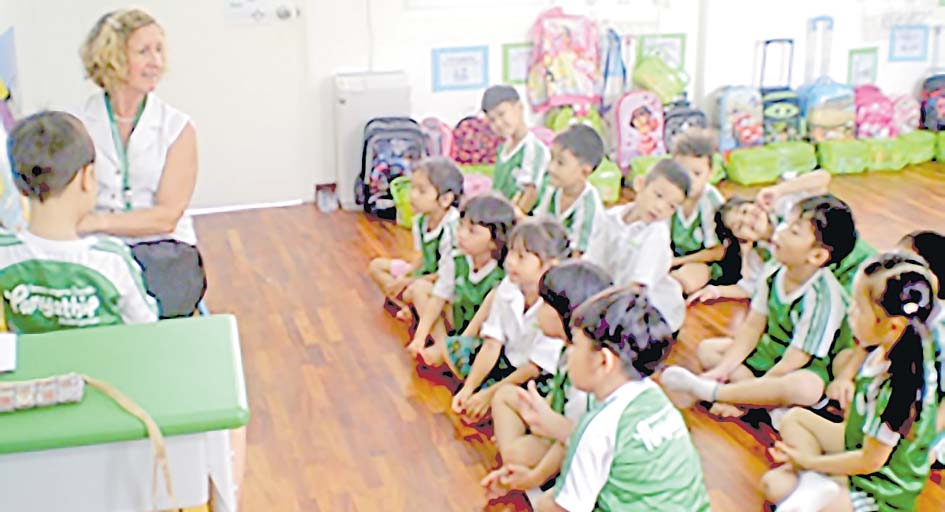
Not many sight words in Dolch’s list are nouns like dog, box, house and tree. The reason being is that nouns are not good at aging. They can go out of date. Take the word ‘device’. Thirty years ago would that term have existed? Instead, many sight words have stood the test of time. They are ‘glue’ words like prepositions: in, under and behind that connect nouns and verbs and add meaning to a story. ‘The dog hides in the box’ ‘Words and their meanings go hand in hand’ – Author. Applying sight words to a story Once a child knows a good number of sight words and that can be between 50 to 100, then the child has the ability to recognise and read up to (if not more than) half the words on a page. A child does not need any obstacles which might prevent them from recognising and reading the sight words they know as well as all other words on each page. The child also needs to be able to see the accompanying illustrations. On this basis, the book needs to be facing the child. In a kindergarten classroom setting, it is best if the teacher can be seated in front of the children seated on small chairs or on the floor with the book held to the side so it faces the children. If the book that is being read to the child is particularly large, the teacher can ask a child to sit on the other side with the book between the child and the teacher. A child, who is asked to do this, will consider it an absolute privilege and will be most willing to help. It isn’t the most comfortable position for the teacher, but it is ideal for the children who can most easily and clearly see the words as well as the illustrations in the book. When it comes to reading to or with children, there is no right or wrong time, place or age. Send a message to children that reading should be like breathing: that it can be done anyway, anytime, anywhere and at any age.
Reading to a baby
You may think this is a waste of time; that a baby is too young to read to. To know that we learn visually before verbally or before we are capable of speaking and speaks volumes for reading to a baby. If a parent is reading to their child then the seating arrangement will be different than in a kindergarten classroom. It depends on the size or age of the child. If the child is a baby then placing the baby on the parent’s lap is most comfortable for both parent and baby. Have the baby facing the book with the parent holding the book out in front of them works well. If the child is older, they can be seated next to the parent with the parent holding the book in a way that it faces them both.
What makes an ideal book?
The answer is a book that is as easy and clear for the child to read as possible. Aspects to consider when selecting a book should be: font, font size, a good story/plot, rhyme and illustrations.
Font
The font style should be simple and clear. There are many fonts and many are not suitable for a children’s book. A font which is too elaborate poses a challenge to children. Elephant – This font is too fancy and difficult for a child to read. Comic Sans M – This font is a lot easier for children to read.
Font size
Font size should be quite large and only suitable for a big book. It should not vary in size from one word to the next but rather, remain consistently large.
A good story (or plot)
If a story has a good plot and better still, a take-home message then that’s a bonus. There are many stories that have been written that simply don’t make the grade. Take the time-old Aesop’s fable of the Hare and the Tortoise. It offers relevance and familiarity, but also carries a great message about not being too confident or making assumptions. The story is beautifully simple. Even the vaguest of children will not complain about being able to explain the message.
Rhyme
Rhyming verse can play a significant role in assisting the child with learning to read in several ways. The very rhythm is no different to a musical tune. It’s easier to remember and if a child can remember the words then recognition of the words. Rhyme helps the child remember the words.
Illustrations
Illustrations in a child’s book are a must. A book can offer relevance which in turn provides meaning. Learning becomes much easier, more meaningful and more relevant to their lives if the exercise is paired with reading stories to. A child learns through context and relevance. This is clearly evident when observing a child at play.
• JULIE SUTHERLAND is a regular contributor to this newspaper. The views expressed are the author’s and do not reflect the views of this newspaper.

