
Fiji’s future will be shaped not only by new roads, stronger trade and economic growth, but by the young people who will one day lead the nation, says Finance Minister Esrom Immanuel.
Addressing delegates at the International School Nadi (ISN) Model United Nations (MUN) Conference 2026, Mr Immanuel challenged students to view leadership as a responsibility grounded in integrity, collaboration and service rather than authority.
“Our national development is not only about infrastructure, economic growth or trade expansion,” he said.
“It is about developing capable, ethical and visionary leaders who can guide Fiji into the future.”
His message reflected the aspirations of Fiji’s National Development Plan, which places education, skills development, innovation and youth empowerment at the centre of the country’s long-term vision.
Mr Immanuel said platforms such as the Model United Nations play a vital role in preparing young people for the challenges of tomorrow by exposing them to diplomacy, negotiation, critical thinking and responsible decision-making.
“Model United Nations is much more than a simulation.
“It is a platform where young people learn diplomacy, negotiation, critical thinking, problem-solving and leadership. It teaches the value of listening to different perspectives, respecting diverse opinions and working collaboratively to find solutions to global problems.”
He said these were not simply academic exercises, but practical life skills needed across every profession.
“Whether you choose careers in public service, diplomacy, business, law, technology, education or entrepreneurship, these are the qualities that Fiji’s future workforce requires.”
Mr Immanuel described investing in young people as one of the nation’s most important priorities.
“I strongly believe that investing in our young minds is among the most important investments a nation can make.”
Leadership beyond the loudest voice
With the world facing growing political division, rapid technological change and complex global challenges, Mr Immanuel said tomorrow’s leaders would need empathy as much as intelligence.
“Leadership is not about always having the loudest voice in the room.
“It is about understanding complexity, building trust and bringing people together toward shared solutions.”
He encouraged students to approach the conference with confidence while remaining open to learning from others.
“Speak confidently, listen respectfully, debate thoughtfully, challenge ideas constructively and, most importantly, remain open to learning from one another.”
He said the world needed leaders capable of uniting people rather than deepening divisions.
“The world needs leaders who can unite rather than divide. Leaders who can innovate responsibly and leaders who can act with courage, integrity and compassion.
“I believe many of those future leaders are sitting in this room today.”
Innovation with
responsibility
Mr Immanuel also urged students to think critically about the opportunities and responsibilities that accompany technological advancement.
He said artificial intelligence, digital technologies and innovation were reshaping economies and creating industries that barely existed a decade ago.
Young people today, he said, have access to opportunities previous generations could only imagine.
But he warned that innovation must always be guided by ethical leadership.
“Artificial intelligence, digital technologies and economic progress must be guided by ethics, inclusion and accountability.
“Progress must serve humanity and not divide it.”
He said today’s students would ultimately determine how technology would be used to improve society.
“You will shape how societies balance innovation with ethics, decide how technology serves communities and influence how economic growth becomes inclusive and sustainable.”
Students tackling global challenges
The conference theme — “Exploring the Balance Between Power and Responsibility in an Increasingly Divided World” — reflected many of the issues highlighted by the Finance Minister.
ISN Secretary-General Kathryne Pillay said delegates selected the theme because it captures one of the defining challenges facing the international community.
“As nations, leaders and institutions gain greater influence, they also carry greater responsibility to use that power ethically and for the collective good,” she said.
She noted that political polarisation, armed conflict, technological advances and widening social inequalities have made responsible leadership more important than ever.
Fellow Secretary-General Shlok Patel said the conference encouraged students to think critically about governance, human rights, artificial intelligence, global security, climate action and international cooperation.
“Through diplomacy and respectful discussion, we hope to inspire innovative solutions that bridge divides and contribute to a more peaceful, equitable and sustainable future,” he said.
Organised by the United Nations Association of Fiji, the two-day conference brought together students from schools across the country to strengthen their leadership, diplomacy and public speaking skills.
For Mr Immanuel, the conference represented more than an academic event.
It was an investment in Fiji’s future.
“You are not simply discussing global problems in theory,” he told delegates.
“You are preparing yourselves to become the problem-solvers, policymakers and changemakers of tomorrow.”
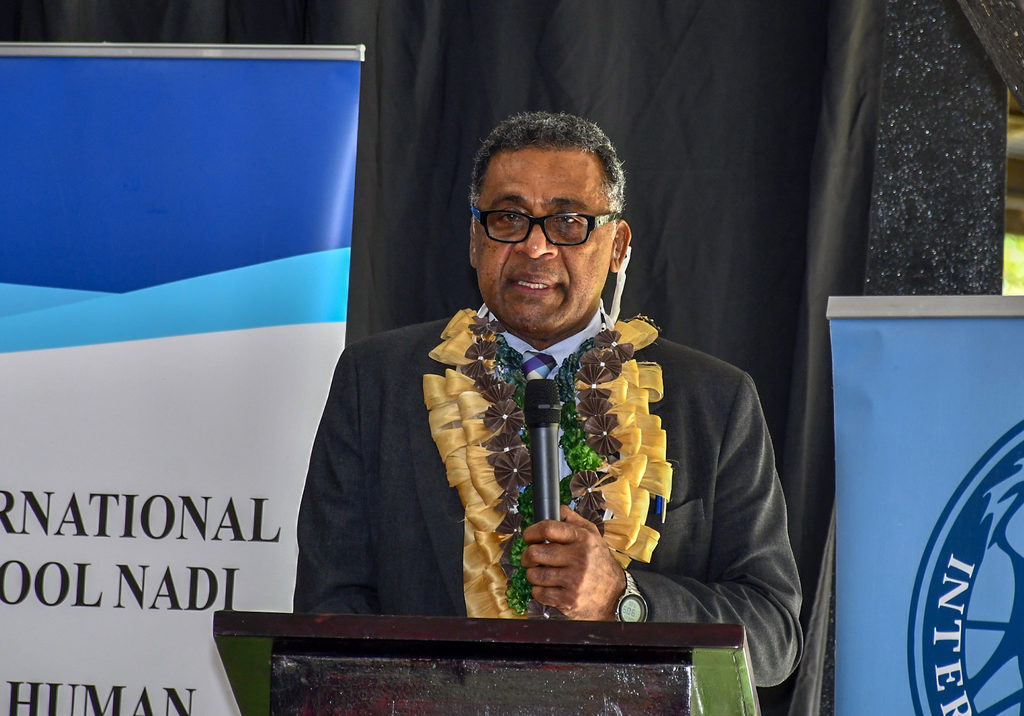
Finance Minister, Esrom Immanuel addresses delegates at the International School Nadi, Model United Nations Conference.

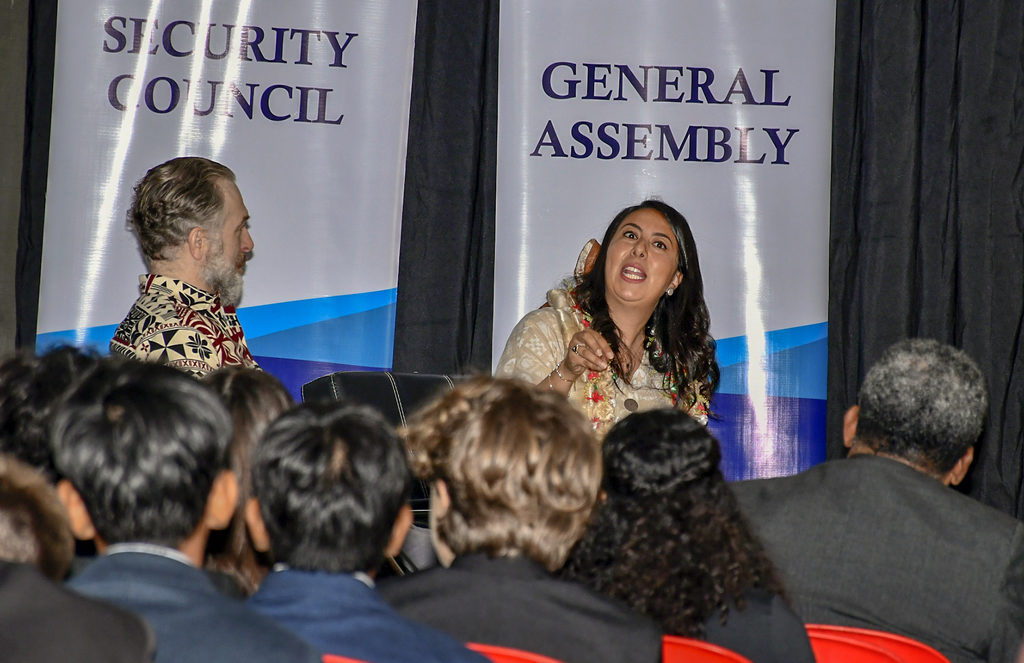
Rachael Bose presents an item during the opening of the International School Nadi, Model United Nations Conference. Picture: BALJEET SINGH
Some of the International School Nadi Model United Nations Conference delegates . Picture: BALJEET SINGH
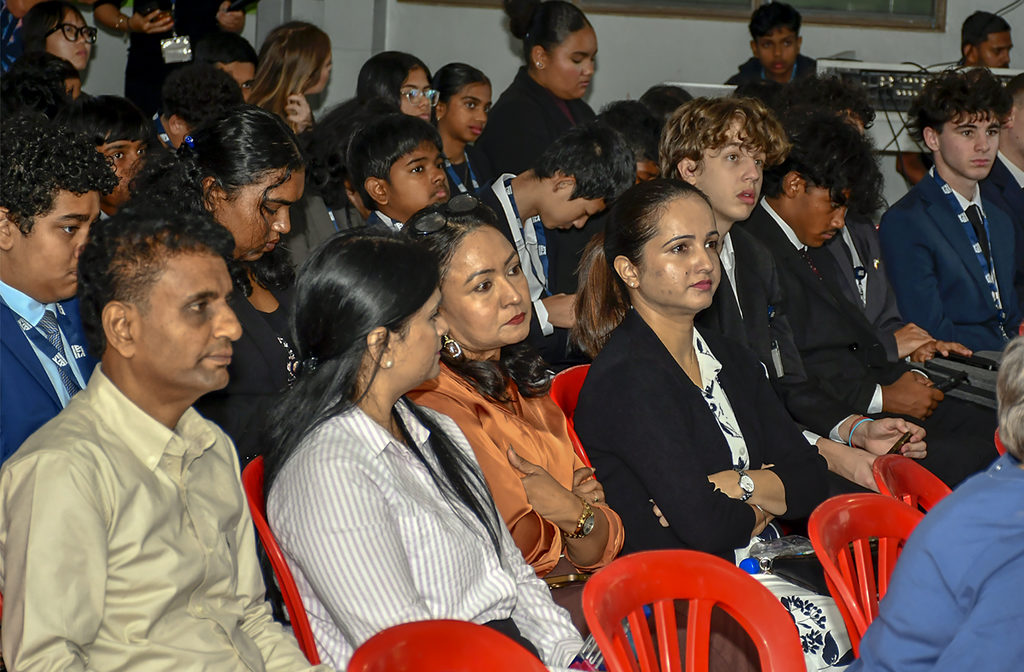
Delegates during the International School Nadi Model United Nations Conference in Nadi. Picture: BALJEET SINGH

