
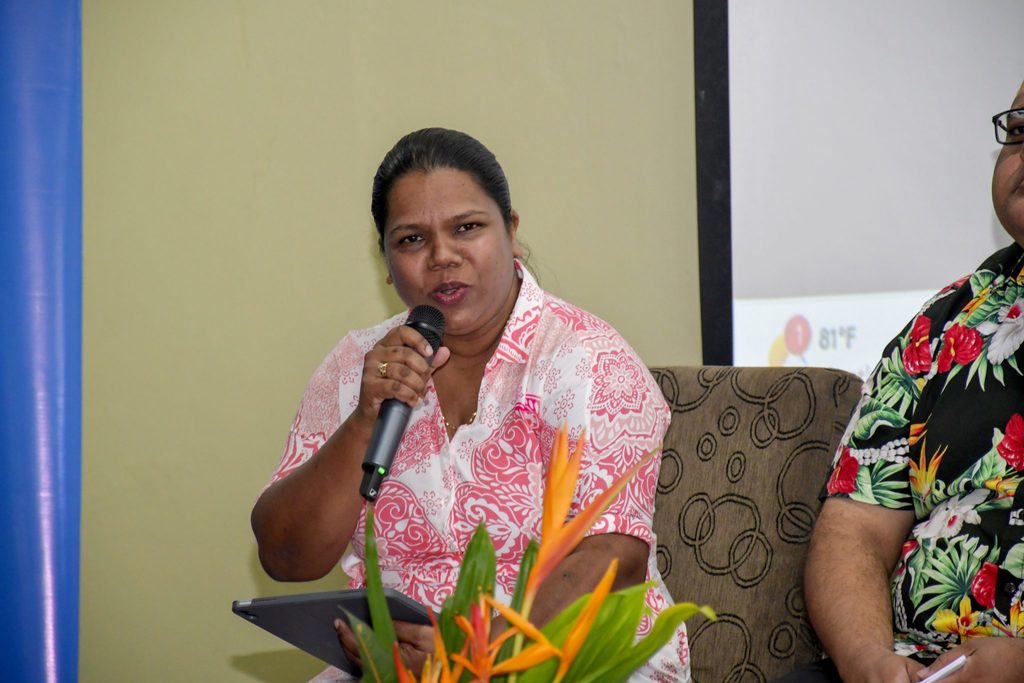
Leadership was never part of the original plan for Dr Rachel Devi.
As a secondary school student in Suva, medicine was always the goal, but she envisioned herself becoming a cardiologist, treating patients one at a time.
Today, as Head of the Family Health Unit at Fiji’s Ministry of Health and Medical Services, her work reaches far beyond the walls of a consulting room, shaping policies and programmes that affect the health and wellbeing of thousands of Fijians.
It is a journey that has transformed not only her career, but also her understanding of what leadership truly means.
“My passion for medicine goes back to my high school days,” she said.
“Initially, I wanted to become a cardiologist rather than work in public health.”
That ambition changed after she was posted to HIV medicine early in her career.
“It was during that time that I realised the profound impact a doctor working in public health could have on an entire population. That experience changed the direction of my career.”
From HIV medicine she moved into sexual and reproductive health before eventually leading the Family Health Unit, where she now oversees national programmes focused on maternal, child and reproductive health.
Move to population health
For Dr Devi, the greatest attraction of public health lies in its ability to improve lives on a national scale.
“When I look at population health, clinicians do remarkable work caring for individual patients in hospitals,” she said.
“However, as a public health physician, our work has the potential to improve the lives of entire communities. Instead of helping one patient at a time, we can positively influence the health of all women, children and young people across the country.”
That broader perspective also means confronting some of Fiji’s most pressing public health challenges.
While acknowledging progress across many areas, she believes the country’s burden of non-communicable diseases remains one of its greatest concerns.
“NCDs affect a significant proportion of our population and have enormous economic consequences, with hundreds of millions of dollars lost annually,.
“We are also seeing major challenges surrounding HIV, particularly among young people, as well as the growing impact of drug use.”
Although serious, she remains optimistic.
“These are significant issues, but they are not insurmountable. With strong prevention and mitigation strategies, we can address them effectively.”
Learning to lead through reflection
Behind those national responsibilities lies another lesson she considers equally important: leadership itself is a skill that must be learned.
A graduate of Leadership Fiji, Dr Devi credits the programme with helping prepare her for responsibilities that medical school alone could not.
“Honestly, we’re not born leaders. As medical doctors, we’re trained in medicine, not necessarily in leadership. Yet as we take on greater responsibility, leadership becomes an essential part of our role.”
Leadership Fiji, she said, equipped her with practical tools she continues to apply in managing teams and national health programs.
“These are essential competencies for anyone leading a team, a programme or even a country.”
Another significant influence came through the Fiji Australia Awards Alumni Reflective Leadership Programme, which introduced her to the concept of reflective leadership.
Rather than simply focusing on outcomes, reflective leadership encourages leaders to regularly examine their own performance, strengths and weaknesses.
“It is about taking the time to step back and ask yourself important questions: What am I doing? Am I doing it well? What can I improve?” she said.
She believes many leaders fail to create enough space for reflection, despite its importance in continuous improvement.
After serving at the Ministry of Health headquarters before undertaking postgraduate study at the University of Sydney, she found that returning with fresh perspectives strengthened both her confidence and effectiveness.
“The programme reinforced the importance of continually reflecting, re-energising yourself, strengthening areas of weakness and continuing to grow as a leader.”
Through the COVID-19 crisis
No experience, however, tested those leadership lessons more than the COVID-19 pandemic.
As head of Fiji’s COVID-19 vaccination programme, Dr Devi found herself leading the largest immunisation campaign in the nation’s history.
Professionally, it demanded relentless focus. Personally, it required sacrifices few outside the health sector ever witnessed.
Living in Pacific Harbour, she anticipated lockdowns once community transmission began and temporarily relocated to Suva.
“What I expected would be a week or two turned into several months away from my family,” she recalled.
Her daughter was only four years old at the time.
“Being separated from my family while managing such a critical national response was incredibly challenging.”
Like many frontline health workers, she experienced firsthand the emotional toll of balancing national duty with personal responsibilities.
Yet she believes the pandemic ultimately strengthened both the health system and the leaders within it.
“COVID-19 tested all of us, but it also taught us invaluable lessons.”
People at the heart of healthcare
Those experiences have reinforced one principle that now underpins her leadership philosophy: healthcare must always remain centred on people.
“Without putting people at the centre of healthcare, there is no healthcare,” she said.
“People are the reason we do this work. Compassion and people-centred leadership are inseparable in our profession.”
She describes compassion not simply as an admirable quality but as an essential requirement for anyone working in medicine.
“One prayer I’ve always had throughout my career is that I never lose my heart for my patients and for the people we serve. The moment I lose that compassion is the moment I should stop practising medicine.”
That people-first approach also shapes the advice she offers young women aspiring to leadership roles.
“I would encourage every young woman to dream big and aspire to achieve her goals,” she said.
“Be the change you want to see because lasting change begins with each one of us.”
She acknowledges that setbacks are inevitable, but insists they should never define a person’s future.
“You may fall, but always remember to get back up. Keep learning, keep growing and continue aspiring to become better.”
Ongoing commitment to serve
As Leadership Fiji marks its 25th anniversary this year, Dr Devi sees leadership not as a destination or title, but as an ongoing commitment to service, integrity and developing others.
“My message would be to continue leading by example, remain ready to serve, be a person of integrity even when no one is watching, and be the kind of leader others aspire to follow,” she said.
Drawing on her Christian faith, she describes leadership as a form of discipleship — creating opportunities for others to grow until they themselves become confident leaders.
“There is great fulfilment in watching members of your team develop and succeed.”
Ultimately, her philosophy is grounded in continuous learning.
“Continue reflecting on yourself, continue learning and never stop growing,” she said.
“Leadership is a lifelong journey of service and continuous improvement.”
For someone who once imagined spending her career treating individual hearts, Dr Rachel Devi now helps shape the health of an entire nation.
Through compassion, reflection and service, she demonstrates that effective leadership in healthcare is measured not only by policies delivered or programmes implemented, but by the lives improved along the way.

