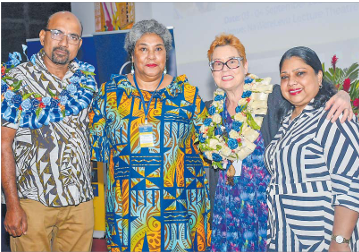
CHILDREN in multicultural classrooms need local contexts and oral traditions reflected in their reading materials rather than traditional Euro-centric definitions, says Macquarie University Adjunct Professor Margaret Sims.
Prof Sims told the recent Fiji National University Literature Training Workshop in Lautoka that modern definitions of literature must expand beyond Northern theories to include blogs, AI-generated content, and rich oral histories.
“What people think is literature is shaped by their history, by their past, by the institutions, the culture in which they live and a lot of the research, of course, is Euro-central,” she said.
Prof Sims emphasised that teaching materials must connect directly with students’ everyday realities instead of forcing foreign concepts onto them.
She explained a child living in an Australian desert would struggle to relate to a story about buying groceries at a city corner store.
Instead, educators should champion co-creation by turning local events, such as a local fire engine visit, into classroom reading materials.
This approach allows teachers to ground lessons in familiar experiences while extending student literacy.
“We have to give them the skills to deal with the literature, with the words that come to them in their everyday lives; there’s no point giving them skills to operate in a world that doesn’t exist for them.”