
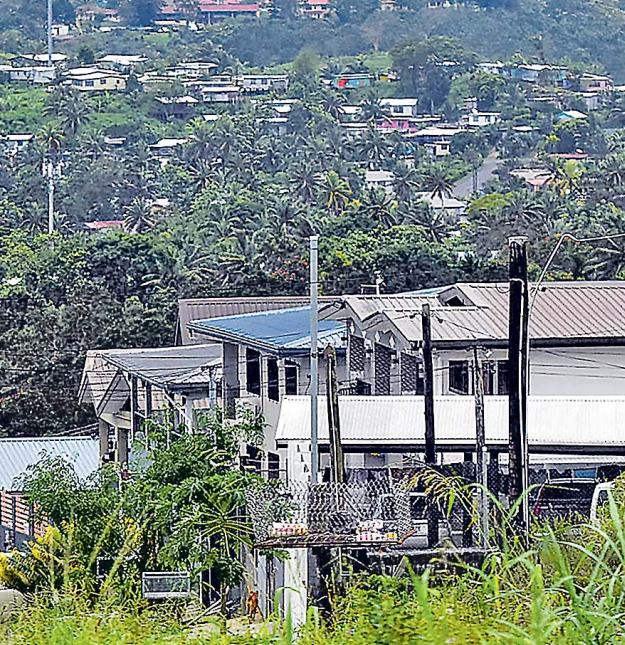
FIJI’S property market may look busy on paper, with more than 4000 properties changing hands in just 16 months.
But beneath the numbers is a more sobering reality.
The market is not booming.
A study by South Pacific Property Consulting Services (SPPCS) Limited Managing Director Dr Abdul Hassan has found that property activity across Fiji remained relatively subdued between January 2025 and April 2026, with little evidence of sustained growth.
A total of 4037 properties changed ownership during the period, but Dr Hassan’s analysis shows that transaction volumes remained largely stagnant.
The figures raise a fundamental question for Fiji’s economy: if property is one of the clearest indicators of confidence, what does a stagnant market say about how confident Fijians and investors really are?
The report says the real estate sector is closely tied to the broader economy because property transactions reflect the confidence of households, businesses, investors and financial institutions.
“Property transactions reflect the confidence of households, businesses, investors, and financial institutions,” the report states.
And that confidence appears to be uneven.
The surprise: Rural Fiji leads
Perhaps the biggest revelation from the study is where the property transactions are actually taking place.
Rural Fiji recorded 2224 property transactions, almost twice the 1169 transactions recorded in urban areas during the 16-month period.
The figures challenge the traditional perception that Fiji’s property market is primarily an urban story.
Instead, agricultural land, rural residential properties, undeveloped land and peri-urban development are driving a significant share of activity.
Nadi Rural was the standout performer, recording 462 transactions, representing about 20.8 per cent of all rural sales.
The report attributes this to continuing demand for residential subdivisions, tourism-related developments, agricultural land and investment opportunities along the expanding Nadi economic corridor.
Serua/Namosi followed with 253 transactions, Nausori Rural with 241 and Lautoka Rural with 228.
Together, those four areas accounted for more than half of all rural transactions.
The figures point to a property market increasingly stretching beyond traditional town boundaries as population growth, tourism and development push outward.
Suva still rules the cities
While rural Fiji dominated transaction numbers, Suva remained the undisputed leader among urban centres.
According to the report, Suva City recorded 330 transactions, accounting for about 28.3 per cent of all urban property sales.
Nasinu followed with 279 transactions, Lautoka with 191 and Nadi with 122.
Nausori recorded 98 transactions.
The report says the stronger activity in these centres reflects population growth, employment opportunities and expanding commercial development.
But the picture changes dramatically outside Fiji’s main economic centres.
Labasa recorded just 28 urban transactions during the period.
Rakiraki had 13, Savusavu recorded eight, Tavua had three, Levuka recorded two and Sigatoka recorded just one urban property transaction.
The contrast is stark.
It demonstrates that property investment remains heavily concentrated in places where jobs, infrastructure and commercial opportunities are strongest.
Two Fijis, one property market
The numbers effectively reveal two different property markets operating within Fiji.
There is the concentrated urban market, driven by employment, population growth and commercial activity.
Then there is the rural and peri-urban market, where land, subdivisions, agriculture, tourism and future development opportunities are creating demand. According to the report, the Central Division accounted for approximately 38 per cent of all recorded property transactions, while the Western Division contributed about 36 per cent.
Combined, they accounted for nearly three-quarters of national sales.
That concentration is not accidental.
The report says it reflects Fiji’s population distribution, stronger employment opportunities, infrastructure and concentration of commercial investment.
But it also suggests a wider economic challenge: areas without strong employment, infrastructure and investment are struggling to generate comparable property activity.
The affordability problem
Behind the transactions is another major issue — who can actually afford to buy?
The study identifies household disposable income, lending conditions, inflation and consumer confidence as key factors affecting the market.
Higher disposable income improves purchasing power and allows buyers to consider larger or more valuable properties.
But stagnant wages and increasing living costs have the opposite effect.
The report warns that these factors can limit affordability and suppress property market activity.
Employment is equally important.
“Employment growth remains one of the strongest drivers of property demand,” the report states.
As jobs and household incomes improve, people gain both the financial capacity and confidence to purchase homes or invest in property.
But when economic growth slows or unemployment rises, purchasing power falls.
Waiting for confidence
Consumer confidence may be one of the most important missing ingredients in Fiji’s property market.
The report says households that are optimistic about their financial future are more likely to make major long-term investments such as buying property.
But uncertainty can make buyers wait.
“When households are optimistic about their financial future and the direction of the economy, they are more inclined to make long-term investments such as purchasing real estate,” the report states.
That caution is reflected in the study’s overall finding that Fiji’s property market has not experienced significant growth in sales activity.
Demand for quality residential and commercial properties remains, but buyers and investors appear to be operating carefully.
Infrastructure can change the map
Where infrastructure goes, property demand can follow.
The study highlights roads, bridges, public transport, schools, healthcare facilities, utilities and commercial developments as major factors influencing the attractiveness of an area.
Locations benefitting from infrastructure improvements generally experience stronger demand, increased property values and higher transaction volumes.
That creates an important link between government investment and private property investment.
Infrastructure does more than improve connectivity.
It can reshape where people want to live, where businesses establish themselves and where investors see future opportunities.
For Fiji’s emerging economic corridors, this could be critical.
What happens next
Dr Hassan’s outlook is not pessimistic. It is cautiously optimistic.
The report expects continued infrastructure investment, improved employment opportunities, stable macroeconomic conditions, expanding tourism and renewed business confidence to support greater property market activity over the medium term.
Population growth and ongoing urban expansion are also expected to sustain demand for residential and commercial property.
But the recovery will not happen automatically.
Affordability, lending policies, inflation and investor confidence will continue to determine how quickly the market moves.
For now, Fiji’s property market is sending a mixed message.
The reports says more than 4000 properties changed hands in 16 months. That is significant.
But the lack of sustained growth tells another story, the market is active—but cautious.
Rural Fiji is surprisingly carrying much of the transaction volume, while the country’s major urban and economic centres continue to attract the bulk of investment.
The real test now is whether Fiji can convert this activity into sustained growth because property is more than bricks, concrete and land.
As Dr Hassan’s study points out, the sector is “an important contributor to national economic development and a valuable indicator of economic performance.”
If confidence, incomes, infrastructure and investment improve, the property market could accelerate.
If they do not, those 4037 transactions may ultimately be remembered not as the beginning of a property boom—but as evidence of a market that was treading water.

