
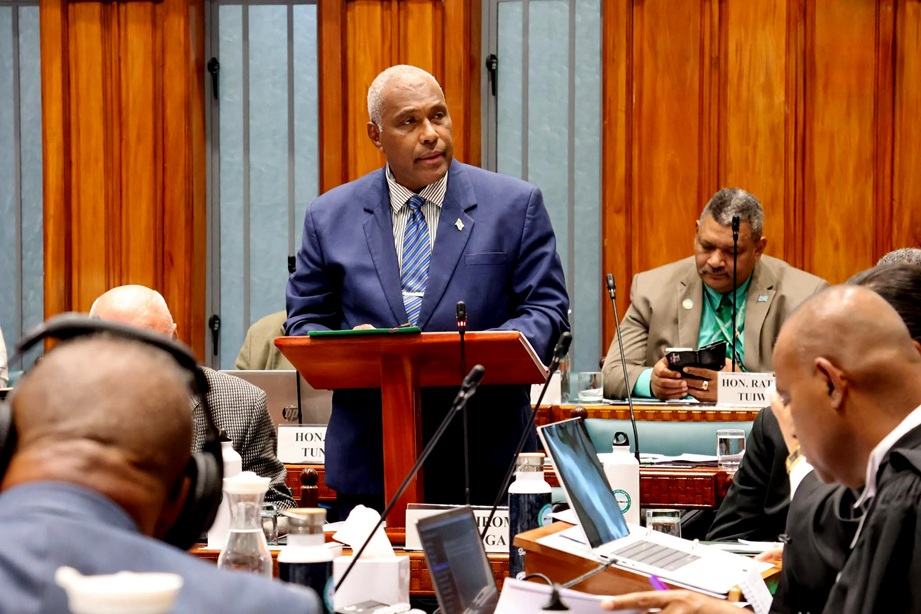
For years, many Fijians have carried a burden long after they had served their punishment. A single conviction — sometimes for a minor offence committed decades ago — could continue to close doors to employment, migration opportunities and social acceptance, even after a person had rebuilt their life. Now, the Criminal Records Bill 2025, passed unanimously in Parliament on May 27, seeks to change that. While presenting the Bill, Minister for Justice and Acting Attorney-General Siromi Turaga described the legislation as a landmark step towards restorative justice, one designed to give rehabilitated individuals who committed minor offences a genuine second chance. Serious violent offences are excluded from eligibility. “I rise with deep respect for our people,” Mr Turaga told Parliament. “People who struggle to take the difficult path to rebuild their rehabilitated lives, who have shown dignity and resilience under the weight of the injustice and discrimination of convictions for historical offences under criminal law.” He said the legislation created “a pathway of hope and justice” for people who had been left behind by the justice system.
Lessons from the pandemic
What makes the Bill unusual is its origin. Mr Turaga said it was not borne from a ministry policy initiative but from personal encounters with ordinary Fijians whose lives had been affected by criminal records. He recalled hearing stories from people arrested during the COVID-19 period, many of whom were detained for extended periods and faced a difficult choice. “For them to get their freedom back, there was only one option — enter a guilty plea.” The consequences of those convictions only became apparent later. Mr Turaga said many individuals who had hoped to participate in overseas employment opportunities, including Australia’s Pacific Australia Labour Mobility (PALM) scheme, discovered they were ineligible because of their criminal records. “It is through these discussions that it dawned on me the injustice of the law — the whole system.”
Beyond the Rehabilitation of Offenders Act
Fiji already has mechanisms allowing certain convictions to become spent after 10 years. However, Mr Turaga argued that the existing law falls short. Under current arrangements, individuals may obtain certificates after the rehabilitation period, but the conviction itself remains on record. “I have countless people who come to the office, send messages to me, Viber, by telephone, who plead with me, how can this Government help,” he told Parliament. The new legislation attempts to address that problem by allowing eligible convictions to become “spent” and, in some circumstances, “expunged”. For many applicants, a spent conviction will mean they are legally regarded as having no criminal record when answering questions from employers or other organisations. Government agencies will also be required to conceal spent convictions and prevent their disclosure except in specific circumstances outlined by law.
The principle of forgiveness
Perhaps the most striking aspect of the legislation is its emphasis on rehabilitation, forgiveness and community acceptance. The Bill is built around several governing principles, including rehabilitation, forgiveness, respect and second chances. The rehabilitation principle states that people who have been convicted of offences should be supported as valued members of society. The forgiveness principle recognises the role of victims, families, communities, mataqali and vanua in helping individuals rebuild their lives. The legislation also acknowledges the importance of providing young people who have made mistakes with opportunities to pursue education and employment without being permanently defined by a conviction. For Mr Turaga, these principles reflect a broader national commitment to compassion. “The Coalition Government, through the leadership of the Prime Minister, is here to provide a new hope to the people of Fiji.”
New opportunities for work and travel
One of the Bill’s most practical impacts could be on employment and migration opportunities. Mr Turaga noted that increasing numbers of Fijians are seeking opportunities overseas, whether through labour mobility schemes in Australia and New Zealand or military service in the US. “This Bill and new law will provide that pathway,” he said. He shared the example of a man whose last conviction occurred about 30 years ago. Although his family had secured a green card opportunity in the US, he was unable to travel because of the conviction. “By the operation of this Bill, when it becomes an Act, those convictions will be spent.” Mr Turaga said the legislation aimed to ensure that people who had demonstrated rehabilitation were not indefinitely punished for mistakes made many years earlier.
Safeguards remain
While the Bill expands opportunities for rehabilitated individuals, it does not erase all criminal history in every circumstance. Eligibility under the legislation does not extend to convictions involving serious violence. There are also significant exceptions where criminal records may still be disclosed, including for law enforcement investigations, court proceedings, intelligence and national security functions, and assessments involving work with children or persons with disabilities. Applicants seeking to join the Fiji Police Force, Republic of Fiji Military Forces, Fiji Corrections Service or certain national security agencies must also continue to disclose relevant criminal histories. The legislation further creates penalties for unlawful disclosure of spent or expunged convictions, with fines of up to $20,000 for serious breaches.
A shift in philosophy
Beyond its legal provisions, the Criminal Records Act represents a shift in how Fiji approaches justice. Rather than focusing solely on punishment, it recognises rehabilitation as a process worthy of support and reward. For thousands of Fijians carrying the weight of old convictions, the legislation offers something many have long sought — the opportunity to move forward. “The Coalition Government have delivered by providing a new opportunity for people,” Mr Turaga told Parliament. For many who have spent years rebuilding their lives, that opportunity may prove transformative.

