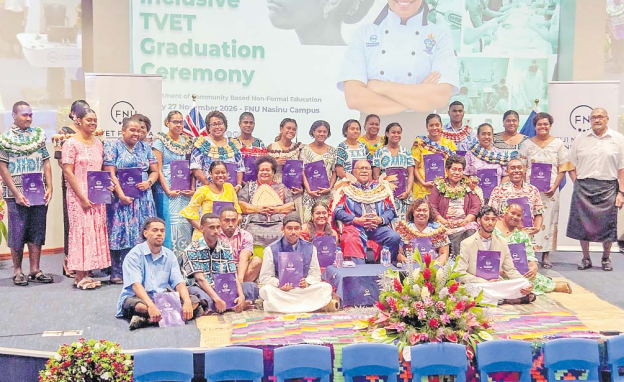
Six hundred and sixty-five students whose paths to education have been shaped by homelessness, financial hardship and personal challenges, gaining a qualification has opened new opportunities to build better futures.
The graduates received their qualifications at the Fiji National University’s (FNU) Inclusive TVET Graduation Ceremony at Nasinu Campus yesterday, marking an important step towards greater
economic independence and improved livelihoods.
The graduates comprised 364 men and 301 women who gained practical skills aimed at helping them secure employment, support their families and contribute to their communities.
Their journeys were as diverse as their backgrounds.
They came from informal settlements across Suva, Nausori, Tailevu, Naitasiri and Navua, as well as Public Rental Board housing communities.
Among them were young people who had experienced homelessness, individuals under the care of the Social Welfare Department, people rebuilding their lives after difficult circumstances, and learners from other Pacific Island countries.
Delivering the keynote address, Prime Minister Sitiveni Rabuka commended the graduates for refusing to allow their circumstances to determine their future.
“We celebrate perseverance and the willingness to embrace new opportunities. I tell you this morning, dare to hope, dare to win, dare to achieve, whatever your situation may be,” he said.
He acknowledged that many graduates had experienced interrupted education, employment difficulties and personal responsibilities that had prevented them from pursuing further studies earlier in life.
“You are here today because you made a decision not to allow those circumstances define your future. You chose to learn. You chose to develop yourselves. You chose to take positive steps towards improving your lives and the lives of those who depend on you.”
Mr Rabuka said talent was not determined by a person’s background or the opportunities available to them, highlighting the role of technical and vocational education in helping people secure employment, establish businesses and contribute to national development.
“Talent exists in every community, in every village, in every segment, and in every household across our island.”