
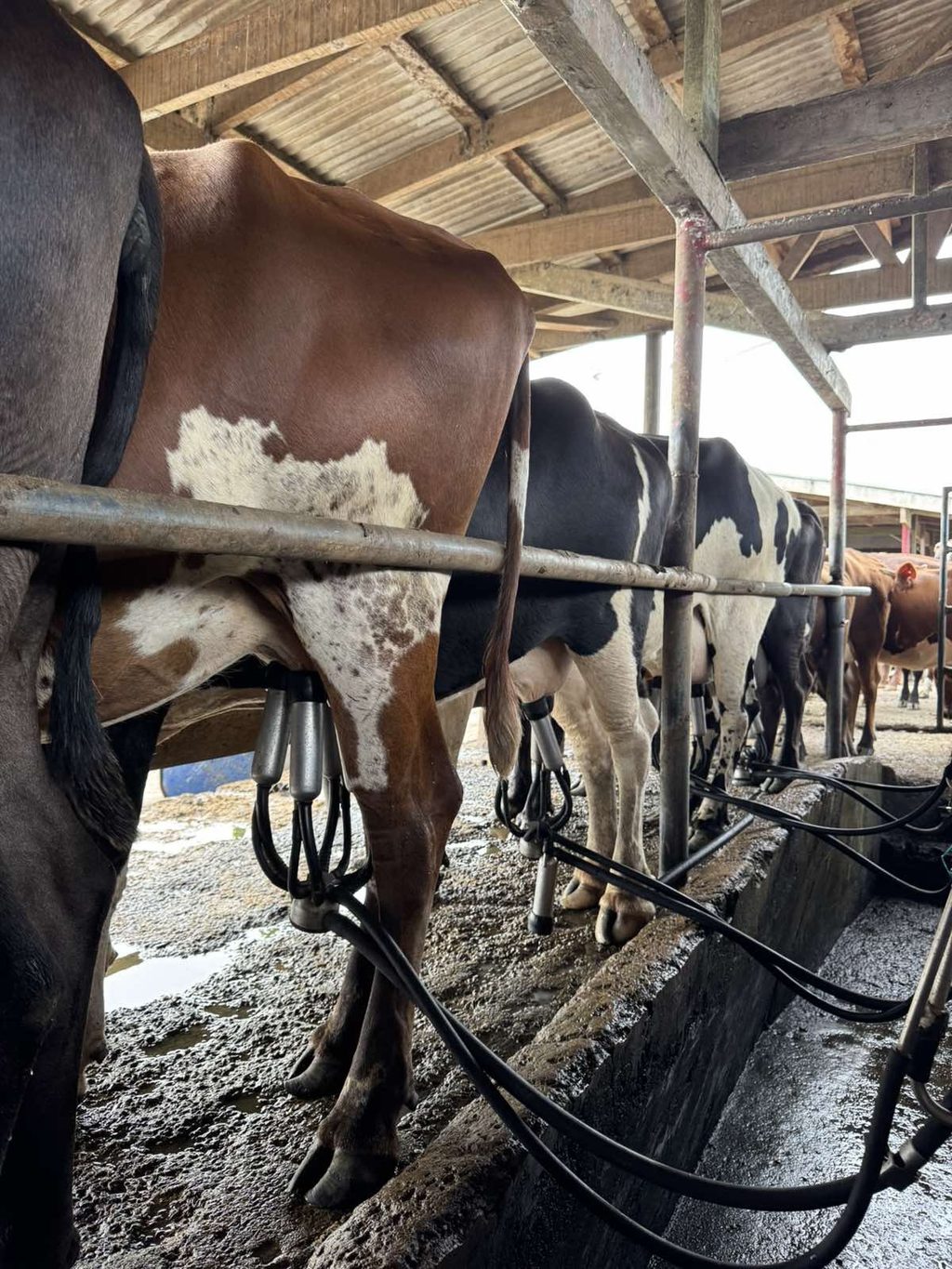
FOR over a decade, Fiji’s dairy industry has been facing on-going challenges of land lease expiry, climate change, cattle diseases, rising costs, cattle theft and aging farmer base resulting in high import dependence and hindering farmers’ ability to increase herd sizes.
The Fiji Cooperative Diary Company Limited (FCDCL), a cooperative run by dairy farmers mostly in the Tailevu and Naitasiri areas, stressed this in an interview, highlighting that the 2009 brucellosis and bovine tuberculosis (TB) outbreak forced mass cattle culling, leaving herds depleted and production depressed.
FCDCL chief executive officer Vimal Chand said after the TB outbreak, milk production declined to around three million litres from 10 million litres previously.
However, he said production has increased to six million litres now but the challenges of increasing the herd sizes remain.
He said farmers also reported rising temperatures, declining rainfall, pasture loss, water scarcity and increased parasites and diseases were reducing milk yields.
He said the rising costs of feeds, fuel and transport costs were eroding farmer margins because majority are smallholders with limited resources and education, making adoption for modern practices hard.
“Rising feed, fuel and transportation costs are squeezing dairy farmers’ margins worldwide including Fiji by increasing production expense, reducing profitability, and difficult trade-offs in herd nutrition, logistics and investments,” he said.
“Feed alone can account for up to 50 per cent of farm costs, and when combined with surging fuel and freight charges, farmers face tighter cashflows.”
Mr Chand said these challenges have led Fiji to rely on 75 per cent imports of its dairy products creating major trade burden.
“The current output meets only 25 per cent of the domestic demand, leaving a shortfall of 18 million litres annually.”
He said to reduce this dependence, farmers needed to increase herd size through cattle imports and rearing programs that will improve breed through the introduction of high yield beef to lift production, improvement of feed systems by having semi-indoor feed facilities and maintaining resilient pastures to counter climate stress.
He said there also needed to be restocking and veterinary support, farmers training and extension services and making more land available for land farming.
He added that although the Government has been very supportive to the dairy industry with the rise in grants over the years, the dairy farmers are still not receiving the full sustainable price.
He said Government’s support helped stabilise income, provide feed subsidies, milk top up price, disease management, training, veterinary services, farms, advisory services and partnership with international experts.
However, he said stronger farmer- Government engagement is needed to accelerate herd recovery and ensure sustainable milk supply because Fijis dairy farmers are not receiving a fully sustainable price especially the farm gate milk price.
Meanwhile, local dairy farmers like Ravindra Prasad of Nandan’s Dairy farm in Viria Naitasiri and Harvindar Singh of J Singh Dairy farm in Waimaro said the bad weather, rise in costs of feeds and labour and fuel have resulted in the decline of milk production.
Mr Prasad said his farm now produced around 150 to 160 litres of milk daily compared to 200 litres previously.
He said the operating cost have also doubled, with feed expenses having increased from $150 to $300 weekly, and fuel costs from $100 to $200 weekly.
He said despite those challenges he continued to invest in his farm with support from the Government.
“Even we have challenges, things keep fluctuating but we cannot rely totally on government,” Mr Prasad said.
“Because the Government is there to support but we also need to work hard and show them that we are interested and investing in the farm, so it will attract them that we are doing the good thing and they will help and invest too,” he said.
Similarly, Mr Singh stated that his farm used to produce around 1600 litres of milk a day but now they only produce around 1300 litres of milk a day.
He said the cost of feed, fuel, transport, labour and farm supplies has doubled as well.
“A bag of copra which used to cost around $8 previously is almost $30 now. For fuel, I used to spend around $5000 a month, which has doubled to $10,000 now.”
The two farmers also said the current farm gate prices of $1.07 and $1.12 a litre of milk were not enough considering the work they put into it, the expenses and the operating costs of their farms.
They are therefore calling for an increase in the farm gate price to around $1.50 to $1.80 a litre.
FCDCL has confirmed that the farm gate milk price will be determined independently by the Fijian Competition & Consumer Commission (FCCC).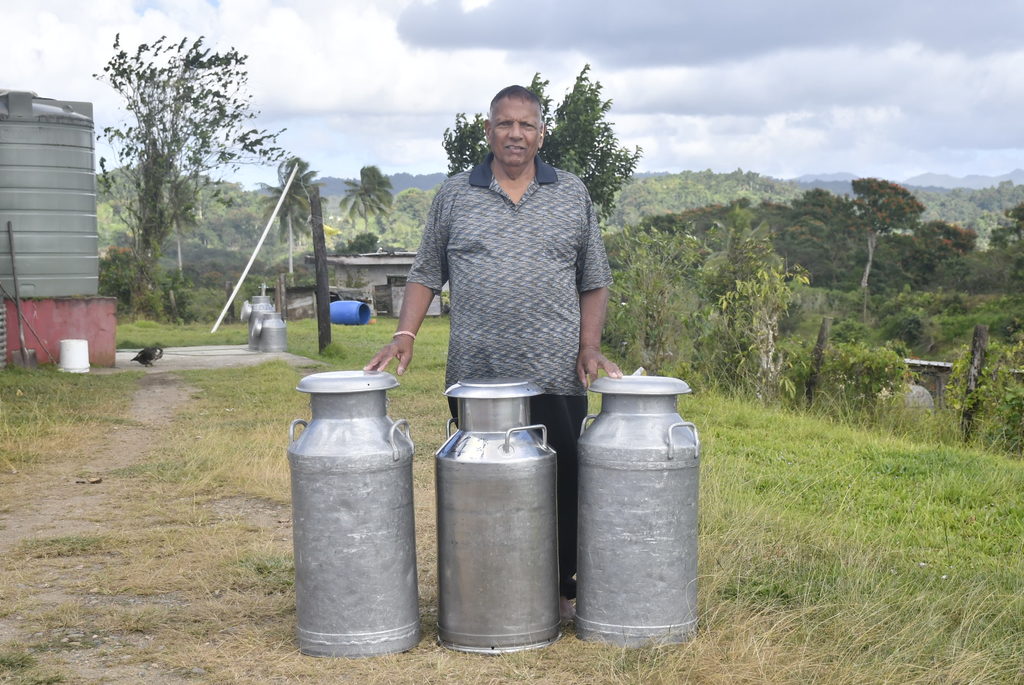
Ravindra Prasad of Nandan’s dairy farm in Naitasiri. Picture: JONACANI LALAKOBAU

