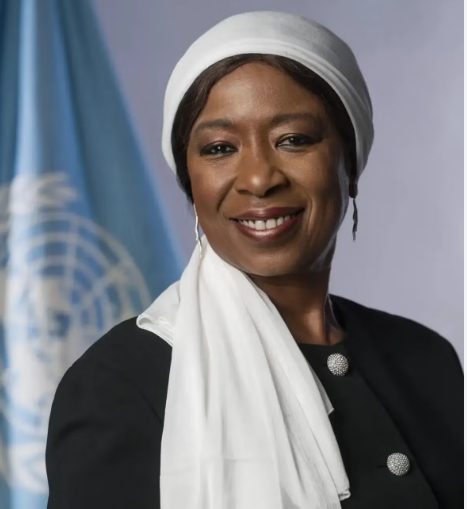
THE head of the United Nations Population Fund (UNFPA), Diene Keita, will be in the country tomorrow to undertake a two-day official visit, placing a renewed international spotlight on the country’s escalating HIV cases and ongoing efforts to strengthen maternal health care services.
Ms Keita, who serves as United Nations Under-Secretary-General and executive director of UNFPA, will be in Fiji on April 20 and 21 as part of her first official mission to the Pacific since her appointment by Secretary-General António Guterres in August 2025.
Rising HIV concerns
Her visit comes at a critical juncture for Fiji’s public health response.
Recent Ministry of Health data shows a sharp rise in HIV infections, with 2,003 new cases recorded in 2025 compared to 1,583 in 2024.
The national diagnosis rate has also climbed to 226 per 100,000 people, raising concerns about transmission trends, particularly among young people and vulnerable groups.
During her visit, Ms Keita is expected to hold high-level discussions with Prime Minister Sitiveni Rabuka and Cabinet ministers, alongside engagements focused on strengthening national responses to HIV, reproductive health challenges, and broader development priorities.
A key highlight will be UNFPA’s support for Fiji’s condom and harm reduction programmes, and addressing mother to child transmission of HIV—initiatives aimed at curbing the spread of HIV in the country.
Health officials say these programs represent a significant shift towards evidence-based interventions designed to reach at-risk populations and reduce long-term public health costs.
Development pressures and progress
Fiji’s broader development landscape will also feature prominently in discussions.
While the country continues to play a leadership role in the Pacific, it faces mounting pressures from climate change, public health threats, and unequal access to essential services—particularly in remote and maritime communities where geography remains a barrier to timely care.
Despite these challenges, progress has been recorded in maternal health.
Maternal mortality has declined from 86 to 64.5 per 100,000 live births, while 99.8 per cent of births are now attended by skilled personnel.
These gains reflect sustained investment in healthcare systems, partnerships with development agencies, and ongoing policy reforms.
However, access gaps persist for women in isolated areas, where distance, cost, and transport limitations continue to delay or prevent access to essential services.
Addressing these “last-mile” challenges remain a central focus of both government and development partners.
Expanding maternal care in Kadavu
In a move aimed at addressing these disparities, Ms Keita will travel to Kadavu to inaugurate a new maternity waiting home.
The facility is expected to benefit around 10,000 people across approximately 70 villages, providing safer and more accessible delivery services for women who would otherwise face long and difficult journeys to healthcare facilities.
UNFPA’s work in Fiji spans several priority areas, including expanding access to family planning—where more than one in four women still face unmet needs—strengthening HIV prevention programmes, supporting cervical cancer screening, advancing youth education initiatives, and addressing high rates of gender-based violence through improved prevention and response services.
The organisation is also working to ensure that sexual and reproductive health services are integrated into disaster preparedness and response frameworks, a crucial consideration in a region frequently affected by cyclones and other climate-related emergencies.
Experienced global leader
Ms Keita brings more than three decades of experience in international development, diplomacy and government. Prior to leading UNFPA, she served as Assistant Secretary-General and Deputy Executive Director (Programme), overseeing the organisation’s global operations.
She has also held ministerial office in Guinea and worked extensively across Africa with the United Nations Development Programme and UNFPA, including postings in Mauritania, Benin, the Democratic Republic of the Congo, and Nigeria.
A strong advocate for women and youth, she has consistently championed gender equality, sexual and reproductive health and rights, and the role of young people in driving sustainable development and peace.
Regional mission continues
Her Pacific mission will continue in Papua New Guinea, before concluding in Australia, where she is scheduled to attend the Women Deliver Conference—a major international forum on gender equality and reproductive health.
UNFPA officials say the visit provides an opportunity to elevate Pacific priorities on the global stage, advocate for sustained investment in health systems, and reinforce commitments to rights-based, people-centred development in line with international frameworks on population and development.