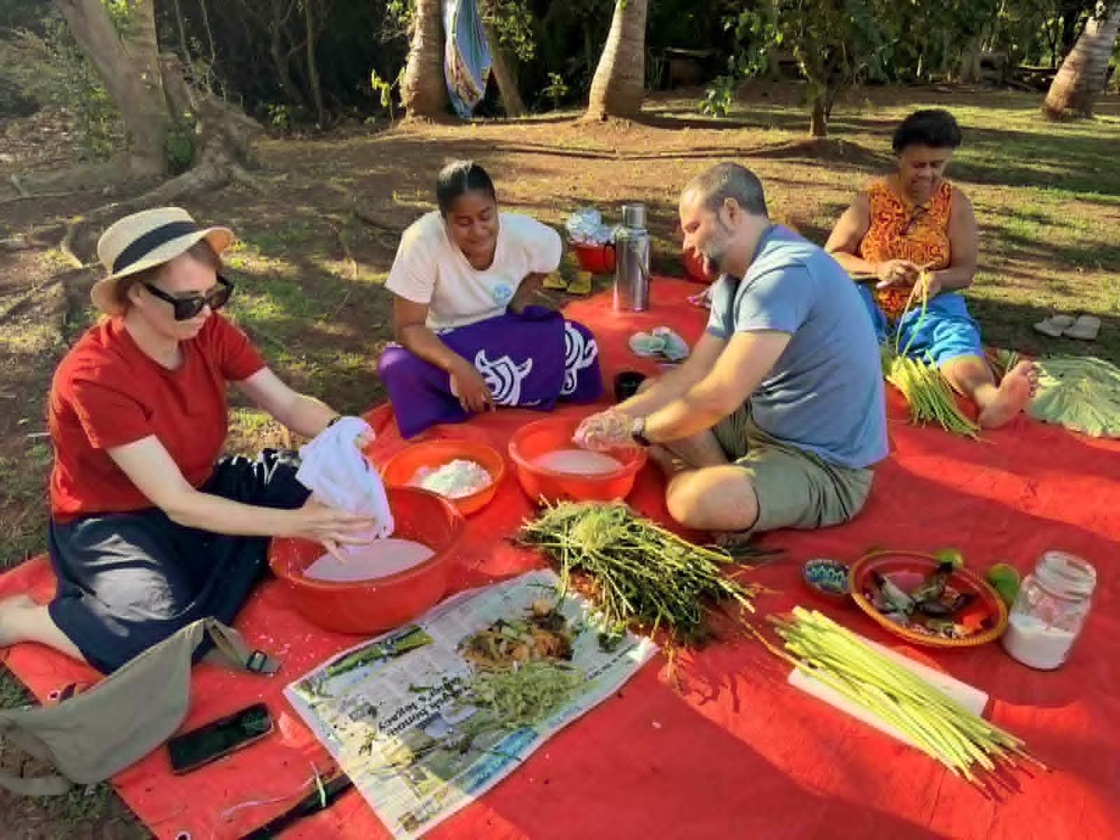
Award-Winning Kana Vinaka cookbook author Colin Chung and hospitality leader Greg Cornwall recently conducted a two-day culinary training and strategic planning workshop at Nanumi Au Eco Village in Rakiraki.
The two delivered hands-on training in food preparation, presentation, kitchen organisation, food safety and hospitality using ingredients that are grown, harvested, and foraged throughout Fiji’s Suncoast.
The training forms part of Nanumi Au’s unique social enterprise model, where the eco village works in partnership with the Natiliva Women’s Club from Navutulevu Village, Rakiraki, to create meaningful employment, build local capability and ensure tourism directly benefits the community.
Through this collaboration, local women played a leading role in delivering authentic guest experiences while developing skills, confidence, and sustainable livelihood opportunities.
Mr Chung is the author of the Kana Vinaka cookbook, while Mr Cornwall is its co-publisher and brings more than 50 years of hospitality experience across Fiji’s premier resorts and the international hospitality industry.
A passionate advocate for agritourism, Mr Cornwall has dedicated much of his career to strengthening the connection between agriculture and tourism, championing local producers, celebrating indigenous ingredients, and promoting sustainable food experiences throughout Fiji and the South Pacific.
They shared decades of practical knowledge in menu development, kitchen operations, guest service, and food presentation while mentoring local women to confidently showcase Fiji’s extraordinary local produce through authentic and memorable dining experiences.
Beyond culinary training, the visit also laid the foundations for a long-term food sustainability strategy at Nanumi Au through the development of a Food Forest Masterplan.
The food forest will supply seasonal produce for guests, strengthen biodiversity, improve climate resilience, and create an immersive farm-to-plate experience where visitors can learn how food is grown, harvested, and transformed into meals that celebrate the flavours of Fiji.
For Nanumi Au Eco Village founders Jennifer and Kolinio Samuta, the collaboration reflects a simple philosophy: sustainable tourism begins by investing in local people.
“Our vision has never been to simply build accommodation,” Mrs Samuta said.
“We are building opportunities, confidence, and capability within our village.
“Every guest who visits Nanumi Au is welcomed by our community, so it is only natural that tourism should invest back into the people who make those experiences possible.
“By strengthening local skills, celebrating traditional knowledge and showcasing the incredible ingredients growing around us, we are creating experiences that are uniquely Fijian while ensuring the benefits of tourism remain within the community.”