
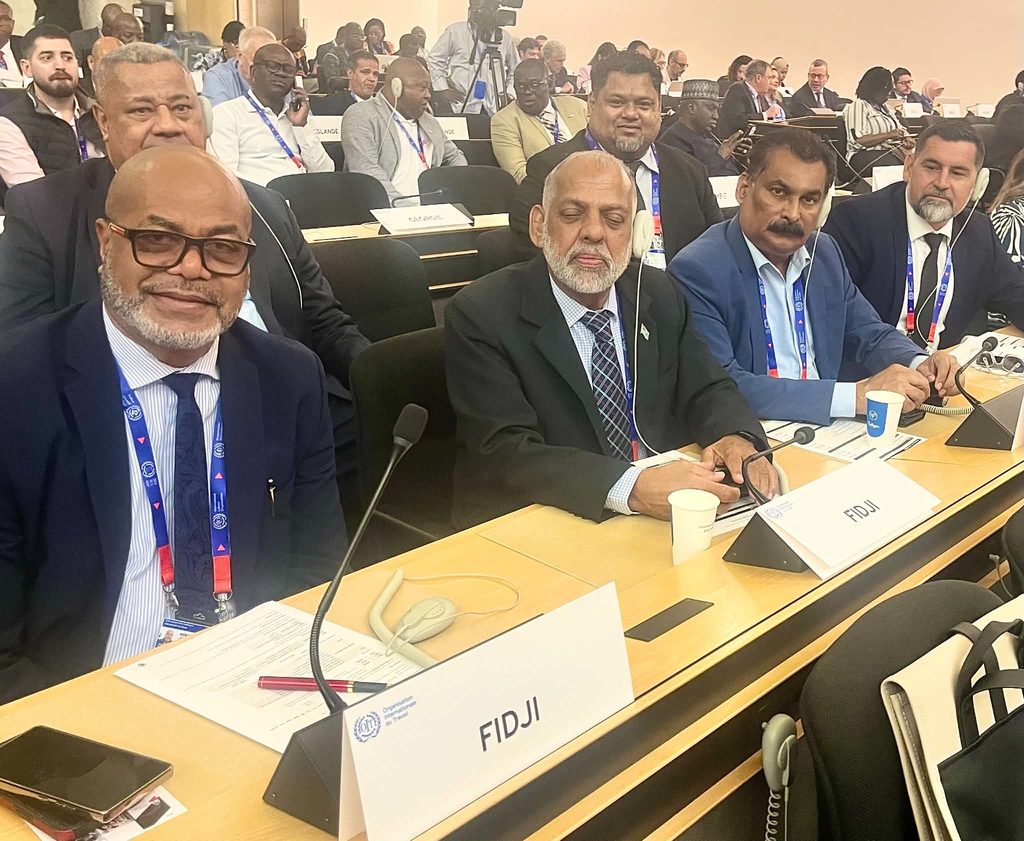
The 114th International Labour Conference (ILC) took place earlier this month from June 1 – 12, 2026.
Held in Geneva, this annual event is where International Labour Standards (ILS) are discussed, debated and agreed on.
This is the platform where 187 International Labour Organisation (ILO) member countries bring to the discussion their respective positions on the ILS.
These ILS are eventually ratified by a country and then domesticated through national labour laws – in Fiji, by Cabinet in the form of a Regulation or by Parliament in the form of an of Act.
What employers and workers see and experience on the shop floor, and what labour inspectors enforce in practice, all starts at the ILC.
Fiji’s obligation
As a member of the ILO, the Fiji Government is obligated to accredit and send a tripartite delegation to the ILC – aligning with ILO’s principles of tripartism and social dialogue.
There are consequences when this obligation is not fulfilled.
The Fiji employers were represented by the president and chief executive officer (CEO) of the Fiji Commerce & Employers Federation (FCEF).
A unique feature of the ILC is the Committee on the Application of Standards (CAS), where countries alleged to have breached International Labour Standards are called to appear.
Fiji has previously appeared before the CAS for non-compliance with ILO Conventions.
The Credentials Committee also monitors governments’ obligations to accredit and send a full tripartite delegation to the ILC.
At this year’s ILC, several Pacific countries were called to account for failing to meet this requirement, including instances where only government representatives were sent.
About the conference
The two-week conference is not just plenaries where speeches are delivered or issues raised in panel discussions.
There are standards setting committees, committees on re-current and general discussions, finance committee (ILO operations) and the credentials committee.
The two weeks include engaging in multiple individual constituent meetings (employers, workers, government) to form respective positions on the ILS, multiple committee meetings (tripartite) that will debate and potentially arrive at a consensus on the ILS and bipartite meetings to lobby other tripartite partners to re-consider their position or support a specific section proposed in the potential ILS.
Meetings usually start at 8.30am every morning and can sometimes end early the next morning.
It is also possible that no consensus is reached on certain provisions of the ILS being discussed – the committee convenes again the next day, sometimes in the next few hours, to pick up where it left off.
Small states in a complex global system
The operational architecture of the ILC is complex and can get overwhelming – especially for small countries including countries and constituents who have not prepared for what is on the agenda at the ILC.
There are 187 ILO member countries attending the ILC with their respective positions on the ILS.
Various blocks such as the European Union (tripartite), Africa (Government), etc also engage at the ILC with pre-established positions.
FCEF have, on many occasions, encouraged the Fiji Government to support the development of common Pacific tripartite positions on various topics discussed at the ILC, to ensure strategic engagement as a block of big ocean states (BOS).
Preparations start as soon as one ILC ends and before the next. A specific ILS can take many years to gain consensus through social dialogue and passed through voting.
To pass an ILS, each constituent of the ILO is entitled to one vote – including FCEF.
Prior to and at the ILC, the employers’ group is supported by the International Organization of Employers (IOE) and the Bureau of Employers Activities (ACTEMP) of the ILO.
FCEF is a member of the IOE – an important platform to strengthen our lobbying and advocacy at the international stage. ACTEMP provides the in-roads within ILO for FCEF to discuss specific support Fiji employers and private sector.
This year’s landmark
This year’s ILC produced a landmark ILS in the form of an ILO Convention – Decent Work in the Platform Economy – the first binding ILS to protect platform workers and businesses as it establishes a balanced and workable framework for one of the fastest-growing sectors of the global economy.
The IOE secretary-general Roberto Suárez Santos said: “The new Convention recognises a fundamental reality: the platform economy includes self-employed and employees. Crucially, it rejects a one-size-fits-all approach and avoids imposing a presumption of employment. Instead, it respects national legal systems and allows countries to determine employment status according to their own laws and established criteria.”
The substantive discussions at committee level, although the topic itself has been discussion in various forums in the past, started 3 ILC’s ago.
This means that the Fiji tripartite, including FCEF has been contributing to this ILS and finally excised its right to vote and pass the ILO Convention on Decent Work in the Platform Economy.
FCEF engagement and strategic partnerships
The side meetings to discuss specific Fiji employer and private sector priorities have proven to be extremely valuable. These included meetings with, but not limited to:
the IOE and ILO/ACTEMP Senior Management on effective and proximity support to FCEF
bilateral meetings with the Australian Chamber of Commerce & Industry and Business New Zealand on capacity building opportunities for FCEF secretariat and board including PACER Plus and labour mobility
the International Trade Center and Pacific Trade Invest on trade opportunities and PACER Plus
the ILO director general to articulate priorities, challenges and opportunities particularly in light of ILO reforms.
FCEF will continue to represent its members and the Fiji private sector in future International Labour Conference (ILC), by supporting Government to fulfill its obligations to the ILO and remaining part of the tripartite delegation.
GAYLENE KAMALI is manager Advocacy & Corporate Communication for Fiji Commerce and Employers Federation (FCEF). The views expressed in this article are not necessarily the views of The Fiji Times.

