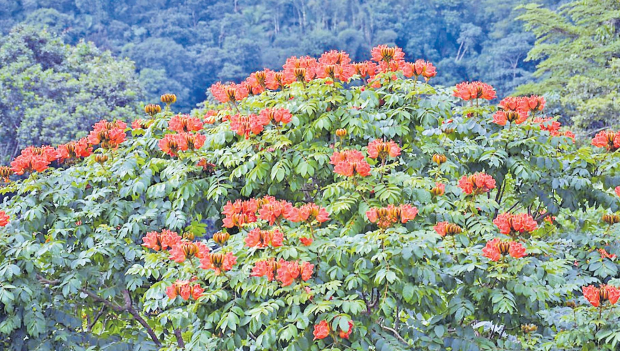
African tulip trees threatening Fiji’s native forests is finding a new purpose as fuel wood, with the Government exploring whether a long-standing environmental problem can be turned into an economic opportunity.
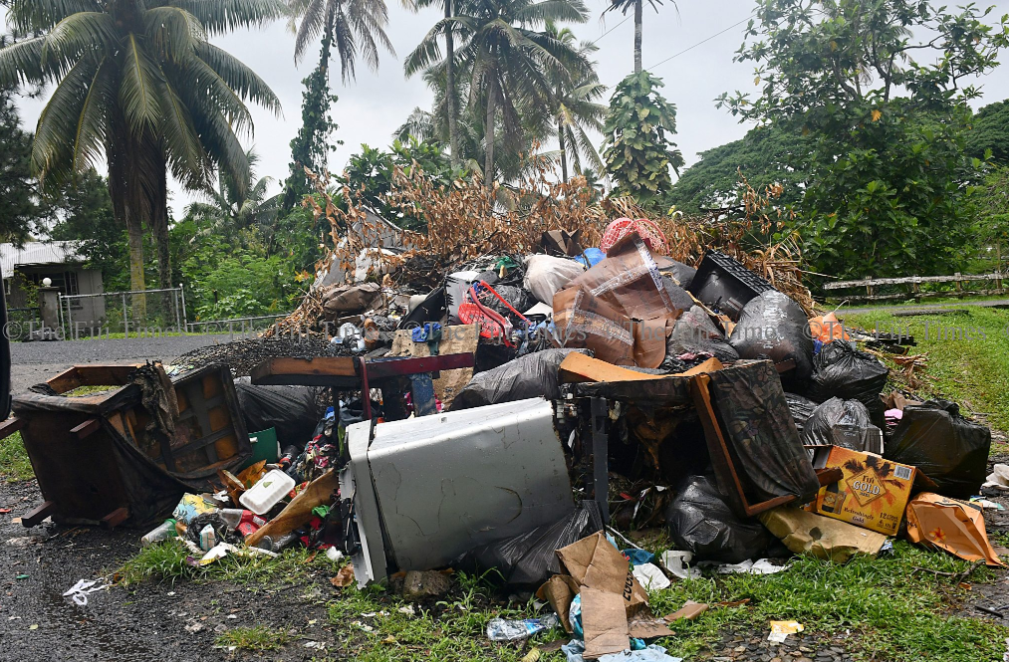
At the Nabou Green biofuel plant, between Sigatoka and Nadi, the trees are being harvested for fuel wood, offering a glimpse of how the species could be put to productive use while efforts continue to contain its spread.
The development marks a potential shift in the fight against Spathodea campanulata, a tree introduced to Fiji as an ornamental plant in the 1930s that has since become widely established across the country. Minister for Fisheries and Forestry Alitia Bainivalu told Parliament earlier this month that the volume of African tulip being harvested for fuel wood was increasing.
“Another emerging area of use of the African tulip is as a fuel wood resource,” she said.
The initiative comes as the Ministry of Fisheries and Forestry investigates other ways to use the invasive species, including plywood, veneer, engineered wood products and potentially boat-building materials.
Ms Bainivalu said the challenge was to find commercial value in a tree that posed a threat to native vegetation, without creating incentives for its further spread.
“While the African tulip is viewed as an invasive species, our objective, the Ministry of Forestry’s objective, is to protect Fiji’s native forests and biodiversity, and also identify practical opportunities to convert a challenging invasive resource into useful products, and also create employment opportunities and add economic value.”
Beyond the firewood pile
Fuel wood is only one part of the ministry’s broader investigation into the potential uses of African tulip timber.
Ms Bainivalu said research was undertaken during the 2025-2026 financial year in collaboration with Long Investment Company Limited in Savusavu, while further work was being carried out with ROCOLA Pty Ltd in Matawalu, Lautoka.
One area being investigated is whether suitable African tulip timber could be used in boat construction as an alternative to fibreglass.
The ministry is also examining other possible applications in the construction industry, potentially opening new avenues for timber utilisation and employment.
Assistant Minister for Public Enterprises Sachida Nand and Opposition MP Inia Seruiratu raised questions in Parliament about the Government’s efforts to manage the tree and develop renewable energy uses, including earlier interest in pelletising it.
The investigations reflect an attempt to connect environmental management with practical economic opportunities. If viable uses can be established, material removed through control programs could potentially become a resource rather than simply waste.
However, commercial utilisation alone will not solve the problem.
Why eradication is difficult
African tulip has become naturalised throughout Fiji, particularly in disturbed, degraded and abandoned areas. Its presence in areas of conservation significance has added to concerns about its impact on native vegetation and biodiversity.
Ms Bainivalu said complete eradication remained difficult because of the tree’s widespread distribution and ability to regenerate.
“Given the species widespread distribution and capacity to regenerate, complete eradication is therefore a significant challenge,” she said.
The ministry is instead concentrating on preventing further expansion, reducing the tree’s impact in priority areas, restoring affected forests and agricultural land, and finding beneficial uses for material removed.
Its approach combines targeted removal, forest restoration, research, commercial utilisation and community participation.
A biological solution
The Government is also investigating biological control in collaboration with research institutions in New Zealand.
Two potential agents, a gall mite and a flea beetle, have been considered. The gall mite entered Fiji accidentally and is already widespread, while the flea beetle has not been released.
Ms Bainivalu said rigorous testing was necessary to ensure any biological control agent affected only African tulip and did not threaten native vegetation.
That precaution is critical because an intervention intended to control one invasive species must not create another environmental problem.
Ultimately, Fiji’s challenge is twofold: contain an established invader and find practical ways to restore affected landscapes.
The harvesting at Nabou Green offers one possible avenue, but its long-term contribution will depend on whether commercial uses can be developed alongside effective control measures.
For now, African tulip’s journey from ornamental tree to invasive species, and potentially to fuel, timber and other products, highlights the search for solutions that protect Fiji’s forests while creating economic value from the material removed.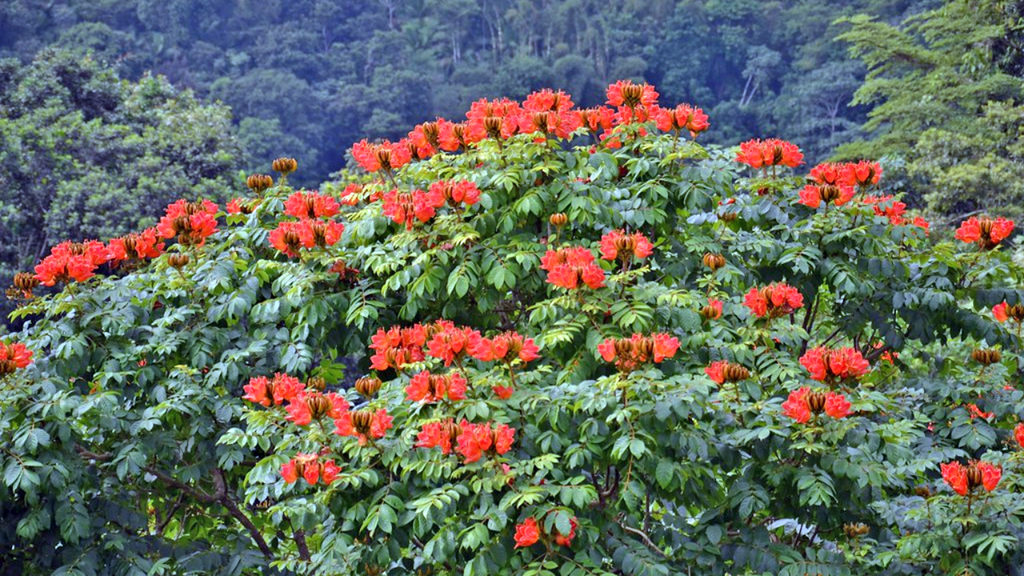
The African tulip. Picture: MINISTRY OF FORESTRY

Minister for Fisheries and Forestry Alitia Bainivalu. Picture: LITIA RITOVA

Opposition Leader Inia Seruiratu.
Picture: LITIA RITOVA