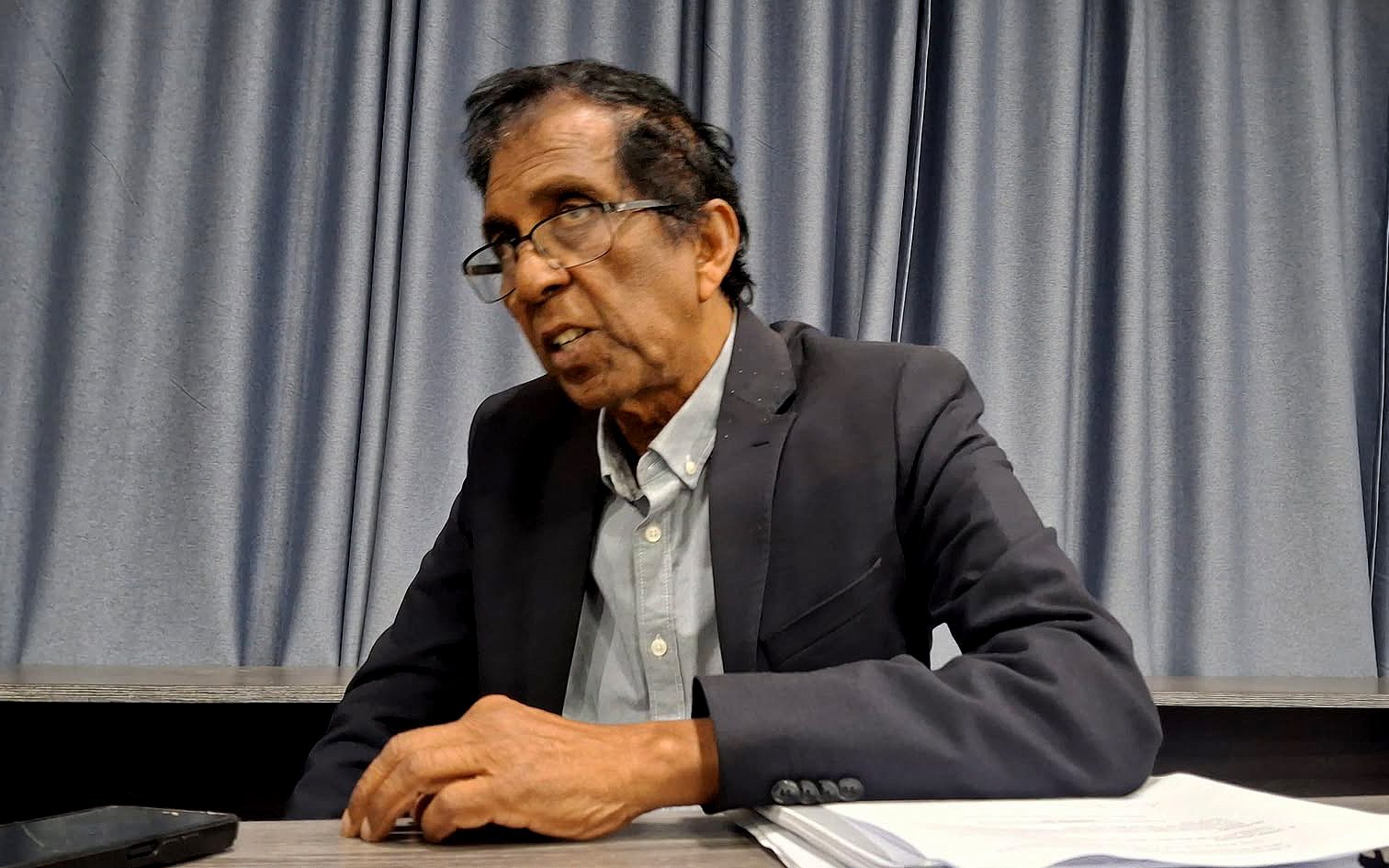
FIJI could face higher food prices, declining agricultural production and further economic pressure if the prolonged El Niño-induced drought continues beyond December, says former deputy prime minister and National Federation Party leader Professor Biman Prasad.
He warned that the drought, which could become one of the longest experienced by the country, was already affecting agricultural production, particularly the sugar industry.
Prof Prasad said sugar cane plantations were being stunted, raising concerns about the next harvesting season and the wider economic consequences.
“This one seems to be one of the longest ones compared to the one that we had in 1998,” Prof Prasad said.
“And it is possible, and all the predictions are that it may continue beyond December.”
He said prolonged dry conditions could result in a drastic decline in agricultural production, push up the prices of locally produced food and increase Fiji’s reliance on imported food.
“Obviously, this will have a serious impact, particularly on our agriculture sector, our sugar sector.
“Sugar cane plantation is already being stunted, one that will be harvested in the next season.”
Prof Prasad said the potential effects of the drought would be compounded by the ongoing global fuel crisis, which was placing pressure on economies worldwide.
Fiji was not immune to the effects, he said, warning that the country should prepare for more serious economic consequences if the drought persisted.
“Coupled with that, the impact of the global fuel crisis, which still is out there, it is having a disastrous impact on many economies around the world, and Fiji is not immune to the effect of the global fuel crisis.”
He called on the Government to urgently consider strategies to manage the situation and cushion the impact on ordinary Fijians.
“As a country, you know, we have to be ready.
“We have to think about strategies as to how we can deal with this, navigate this, so that the impact on our people can be cushioned.”