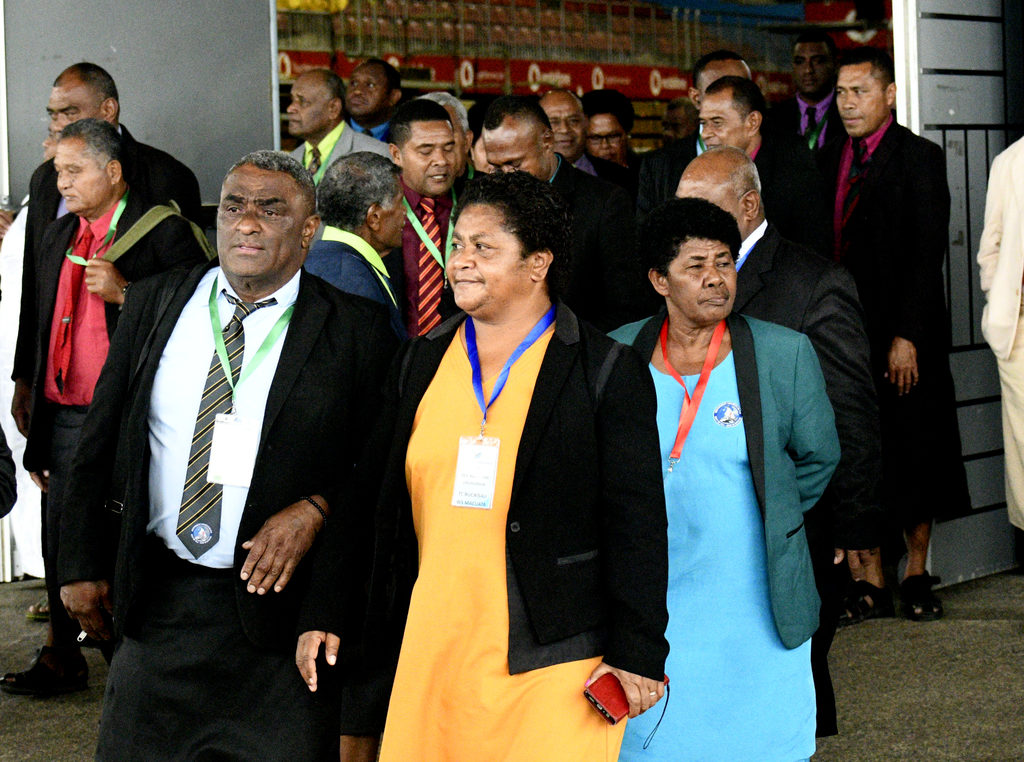
THE Methodist Church in Fiji is preparing to enter a new chapter of self-examination and renewal, with its ministers being challenged to confront the personal burdens that can limit their leadership and service.
The challenge came from the church’s outgoing president, Reverend Dr. Semisi Turagavou, during his address to the Ministerial Session of the 2026 Annual Conference in Suva, where he announced that 2027–2028 would be observed across the Connexion as the “Year of Liberation and Reformation.”
The theme he said, follows directly from the previous Conference theme, “Elevating Christ’s Church to Another Level,” which called on the church to deepen its spiritual life, integrity and effectiveness.
But Mr Turagavou acknowledged that the call to elevation had not been fully realised.
While there had been signs of growth and renewed commitment in many congregations, he told ministers that elevation “was not achieved everywhere” and that some continued to carry burdens, many of them self-imposed that had held them back.
“A church cannot be elevated while her ministers remain shackled. You cannot lift a people while carrying chains yourself,” he told delegates.
Liberation must begin with the ministry
For Mr Turagavou, the new conference theme is not simply a slogan for the wider Church. It begins with the people entrusted to lead it.
Drawing on the biblical account of Israel’s liberation at Sinai and Christ’s proclamation of liberty in Luke 4, he said liberation must come before reformation.
That process, he stressed must begin within the ministry before it can extend to congregations.
The centre of his address was therefore a direct appeal for greater personal discipline among ordained ministers and lay pastors.
One of the most candid issues he raised was the excessive consumption of yaqona within the ministry.
He made clear that his concern was not with the culture itself, but with self-discipline and the consequences of over-consumption.
He said excessive consumption had, in some cases, contributed to reduced pastoral visitation, weaker sermon preparation and Bible study, lower attendance at training program and diminished energy for evangelism and outreach.
The consequences, he said extended beyond individual ministers to their wellbeing and the public witness of the church.
He also reaffirmed the church’s existing discipline on smoking and called for the same standard to apply with equal seriousness to lay pastors and ordained ministers.
Congregations, he noted do not distinguish between the two when judging the example set by those who lead them.
Breaking the chains of debt
Financial pressure was another area Mr Turagavou placed before ministers as part of the call to liberation.
He urged ministers to confront financial bondage arising from loans, credit purchases and unnecessary borrowing.
The process of becoming “unshackled”, he said, should be disciplined and prayerful.
He also encouraged ministers to prepare early for retirement rather than leaving such planning until later in their careers.
Among his suggestions were acquiring land and building a home during the years of active service.
He also encouraged voluntary membership of the Fiji National Provident Fund as one way of preparing for a dignified retirement.
The financial message to ministers came as the annual conference also received a report showing that the Methodist Church in Fiji remains in a strong overall financial position.
According to the church, as of May 31, 2025, the Church’s total assets had increased from $55.51 million in 2024 to $58.63 million in 2025, an increase of about $3.12 million.
Liabilities rose only marginally, from $4.52 million to $4.58 million, while net assets increased from $50.99 million to $54.05 million.
A major contributor was the growth in financial assets, particularly equity investments, which increased from about $37.95 million to $42.22 million.
Property, plant and equipment also increased, from $8.42 million to $8.69 million.
The report showed accumulated funds of $23.27 million and an unrealised gains reserve of $30.79 million.
However, the church’s cash and cash equivalents declined from about $7.70 million in 2024 to $5.64 million in 2025, highlighting the importance of continued attention to cash flow and liquidity management.
Character, health and the example of leadership
Mr Turagavou’s appeal for reform went beyond personal habits and finances.
He spoke about the church’s standing within the vanua and among its people, saying that this standing depends on character rather than position.
He also addressed the dress and presentation of ministers, saying these should reflect the decorum expected of their calling.
Physical wellbeing was another concern.
The outgoing president warned that preventable non-communicable diseases continue to shorten and limit ministry across the Pacific, placing health alongside discipline, financial responsibility and personal conduct as part of effective Christian leadership.
For ministers, the message was that leadership cannot be separated from the condition of the person exercising it.
A call to stop “managing decline”
The president also challenged what he described as stagnation in circuits and divisions.
He called for visionary ministers who would lead congregations with courage and clear direction rather than simply “managing decline.”
That call was accompanied by an appeal for strained relationships between divisional superintendents and circuit ministers to be repaired.
Unity among ministers, he said, is essential to the church’s witness.
The emphasis on relationships formed part of the wider message of liberation: the Church cannot move forward if those responsible for its leadership remain divided or burdened by unresolved tensions.
Rethinking the future
of ministry
Mr Turagavou also used his address to outline his vision for the future of the ministry, particularly in relation to the health, deployment and stationing of ministers.
He proposed that the office of Superintendent, or Talatala Qase, should be held by ministers who are responsive and in good health.
Leadership, he said, is demanding and requires both a healthy body and a sound mind.
He appealed to senior ministers to be honest with themselves about their health and to make way for capable brothers and sisters to undertake leadership responsibilities.
He further proposed that ministers above the age of 65 be posted to a circuit rather than serve as Divisional Superintendents.
The intention, he said would be to keep the ministry moving from strength to strength while allowing senior ministers to continue serving meaningfully within a smaller circuit.
He acknowledged that the proposal could appear awkward or disrespectful to some ministers but maintained that it would ultimately benefit the ministry.
A new approach to stationing
He also called for reform of the regulation governing the first, second and third readings of conference appointments.
He said the practice had remained largely unchanged for more than 30 years and questioned whether the movement of the Spirit of God was evident during the second and third readings.
He cautioned that the process had in some cases been used to campaign and lobby for outcomes.
His proposal was straightforward: a single reading should be sufficient.
Ministers, he said should be submissive and place their faith in God.
The proposal reflected the broader reform he was calling for – a move away from practices and behaviours that can become burdens.
Leadership transition takes shape
As the conference continued, the church also began preparing for its next leadership phase.
On the third day of the conference, Rev. Dr. Jolami Lasawa was elected president elect for 2027, while Rev. Dr. Semisi Turagavou was elected general secretary elect for 2027.
Mr Lasawa will assume the presidency in 2027, providing spiritual and pastoral leadership as the Methodist Church in Fiji continues its mission and ministry in Fiji and beyond.
For Mr Turagavou, the move from President to General Secretary Elect will mark another significant stage in his service to the church.
The conference also held an election for assistant general secretary, a position currently held by Rev. Dr. Anil Reuben, although the result was to be announced the following day. Mr Reuben’s current five-year term concludes in April 2027.
The leadership elections came alongside deliberations on issues concerning Davuilevu Theological College, the Deaconess Order and the Women’s Fellowship.
Representatives of the institutions and departments responded to questions and issues raised by conference members.
Together, the discussions reflected the continuing work of the church in strengthening theological education, ministry, fellowship and institutional life.
“Lighter than we came”
The conference is ultimately about more than elections, finances and regulations.
The ministerial session brings together divisional superintendents, circuit ministers and lay pastors from across the connexion to deliberate on the spiritual direction and governance of the church for the year ahead.
Rev. Dr. Turagavou used that gathering to turn the focus inward.
His message was that institutional renewal cannot be separated from personal renewal and that the church’s ability to rise depends first on the willingness of its ministers to confront what weighs them down.
“We cannot lift what we have not first set free,” he said.
He listed the burdens that must be confronted: “excess, debt, neglect, disorder, and broken relationships.”
He closed with a vision for the ministerial session itself – that it should become “a place of honest confession, renewed discipline, and reformed vision.”
And he left ministers with a hope that reaches to the heart of the church’s new theme: that they would leave “lighter than we came: unshackled, and ready to lead a Church that is truly, visibly free in Christ.”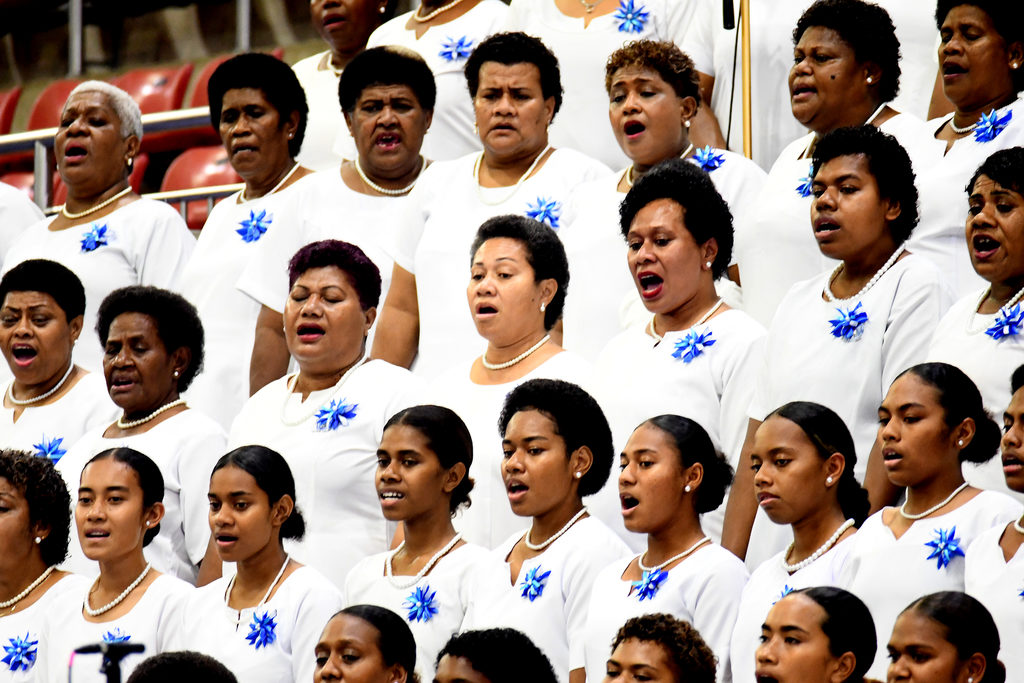
Lautoka Division was part of the Methodist Church in Fiji 2026 Annual Conference Festival of Praise at the Vodafone Arena in Suva. Picture: JONA KONATACI
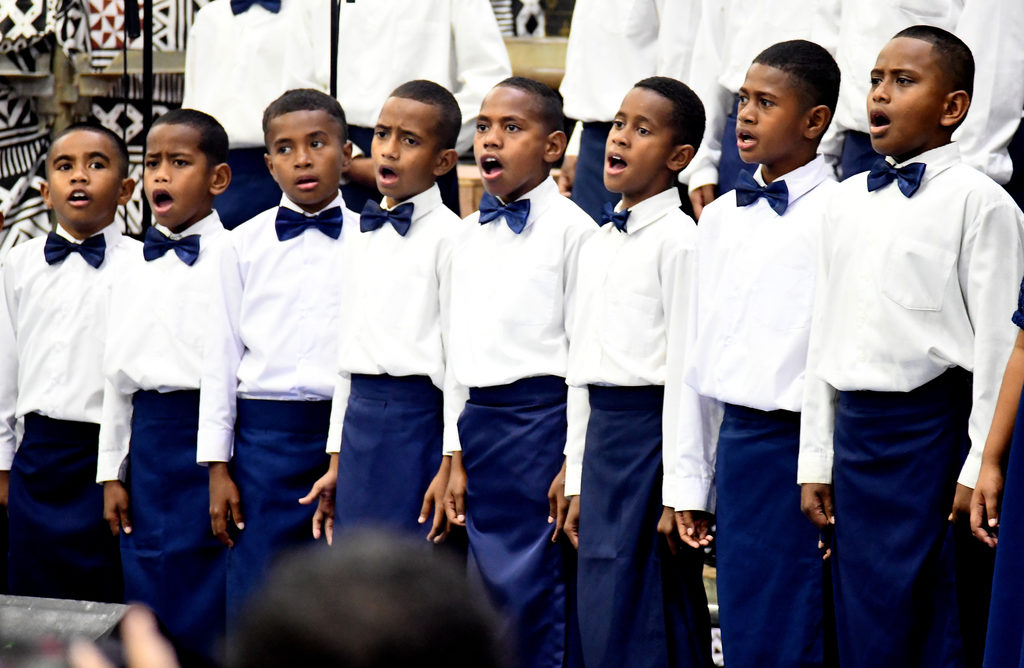
Children were part of the Nausori Division during the Methodist Church in Fiji 2026 Annual Conference Festival of Praise at the Vodafone Arena in Suva. Picture: JONA KONATACI
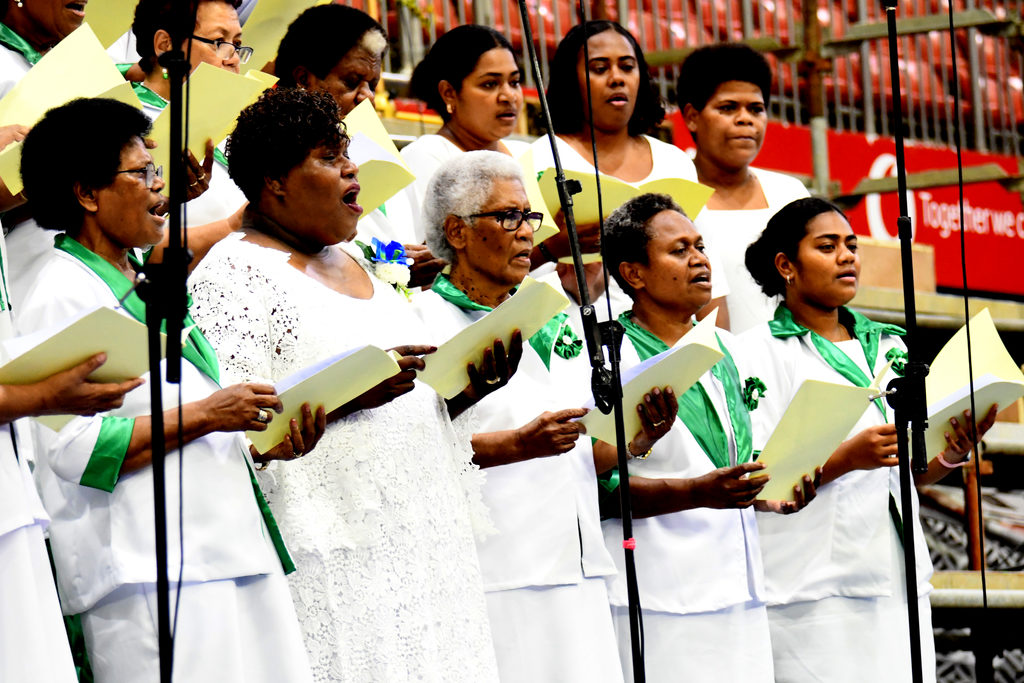
Ballantine Memorial School Old Girls were part of the Methodist Church in Fiji 2026 Annual Conference Festival of Praise at the Vodafone Arena in Suva. Picture: JONA KONATACI
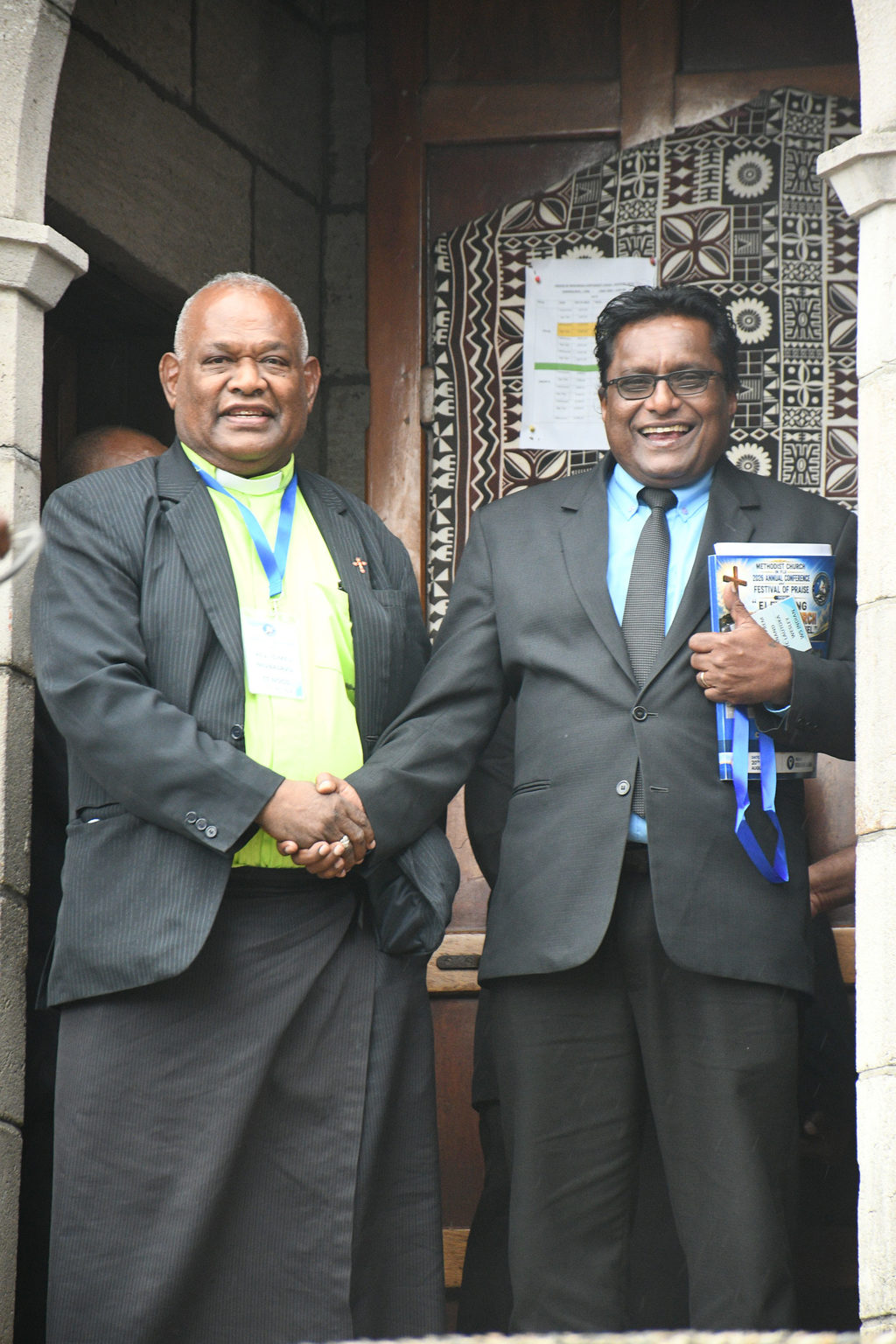
Rev. Isimeli Niubalavu and Rev. Abel Nand during the opening of the Methodist Church in Fiji’s 2026 Annual Conference at Centenary Church in Suva.
Picture : TIMOCI DAWAI
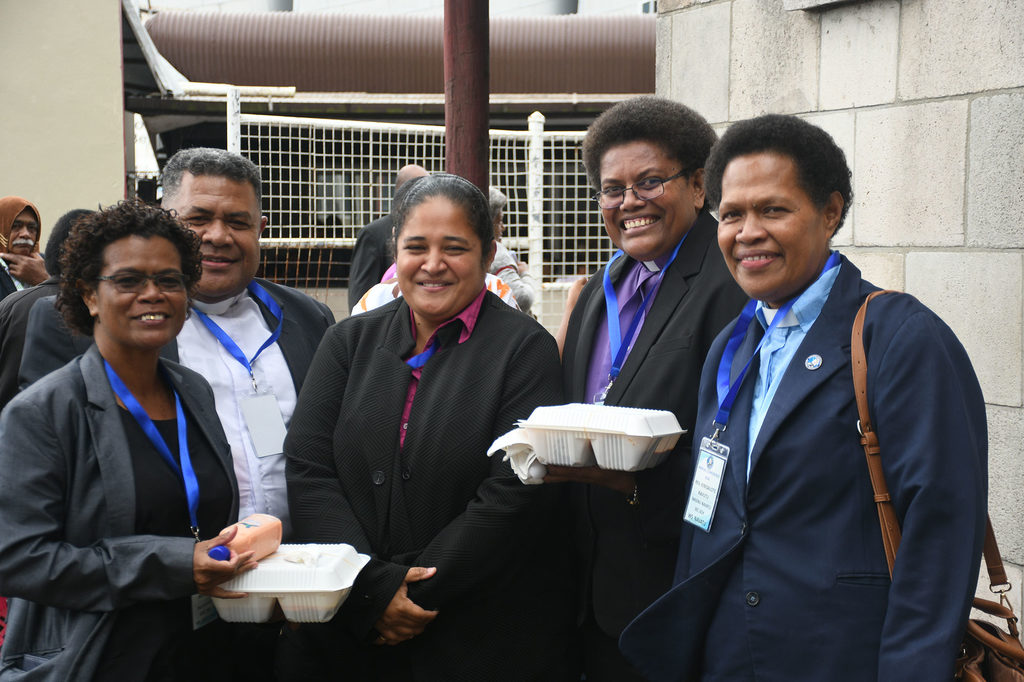
Members, lay pastors and representatives of the Methodist Church in Fiji gather at Centenary Church in Suva for the opening of the Methodist Church in Fiji’s 2026 Annual Conference.
Picture : TIMOCI DAWAI