
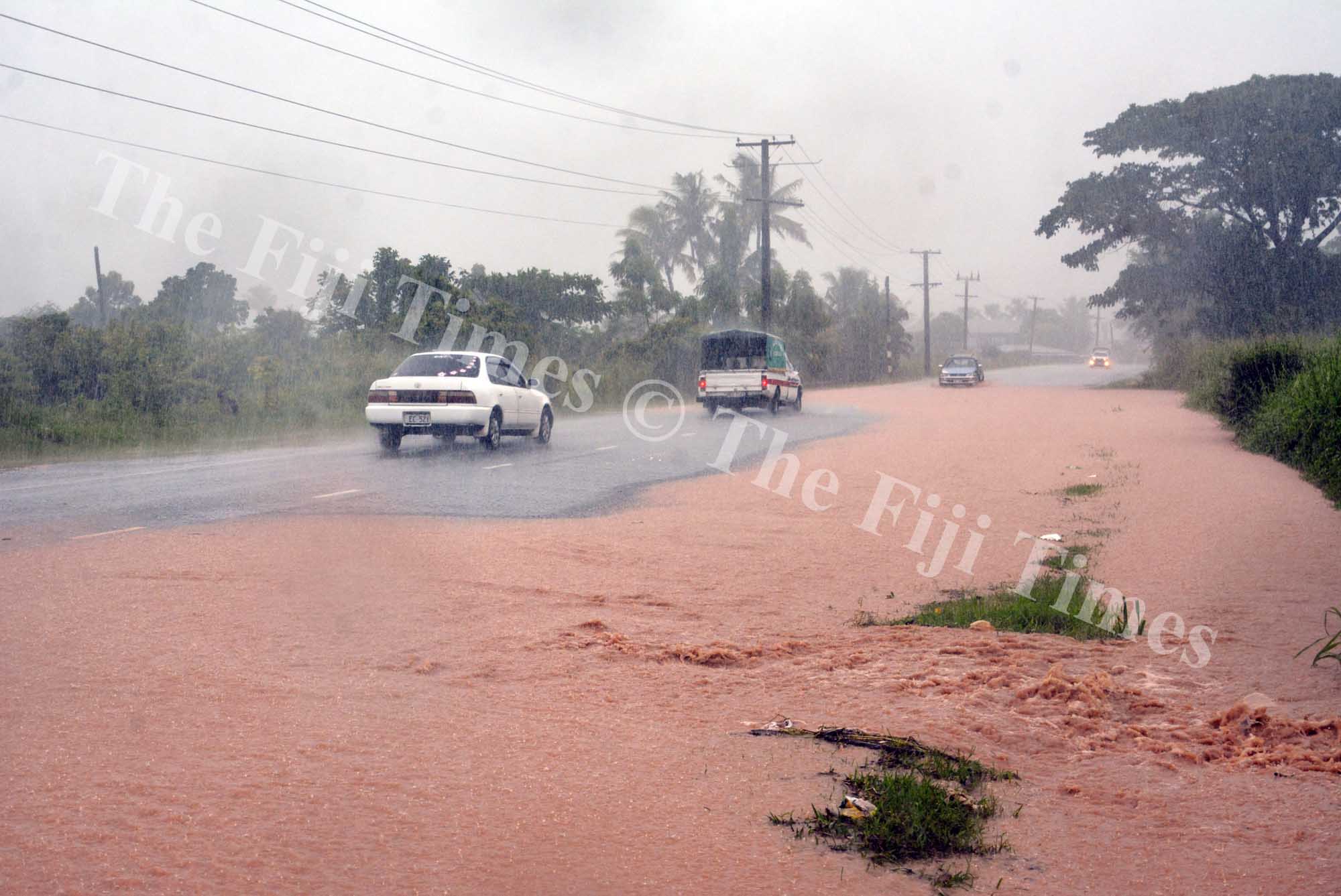
The Fiji Meteorological Service (FMS) principal scientific officer hydrology Viliame Vereivalu says soil texture and characteristics of catchment areas are contributing factors to flash floods.
Mr Vereivalu highlighted this during the Coastal Inundation Forecasting Initiative (CIFI) stakeholders meeting on Thursday.
“Just comparing here, so if 40ml per hour of rainfall falls into the upper catchment of Nadi or Rewa and that same amount falls into the upper catchment of Rakiraki – Rakiraki will be flooded because the catchment is smaller and rivers are steep,” he said.
“For Rewa, there won’t be any effect downstream – so the size of catchments and steepness of rivers play a very big part.
“If we go into details soil texture as well is a factor, if we have clay soil and sand soil – sand soil will infiltrate more water compared to clay soil – if it rains for a bit there will be surface run-off with regards to clay soil.
“Structural measures are important but they are expensive and what we at FMS are doing is non-structural measures – which are efficient flood forecast-warning system, a system of flood risk assessment, awareness raising and improving information together with flood-related data.
“Those that are living in flood prone areas will never leave because it could either be too expensive or they wouldn’t have anywhere to go – we can’t stop all these disasters from happening however we can be prepared for it.”

