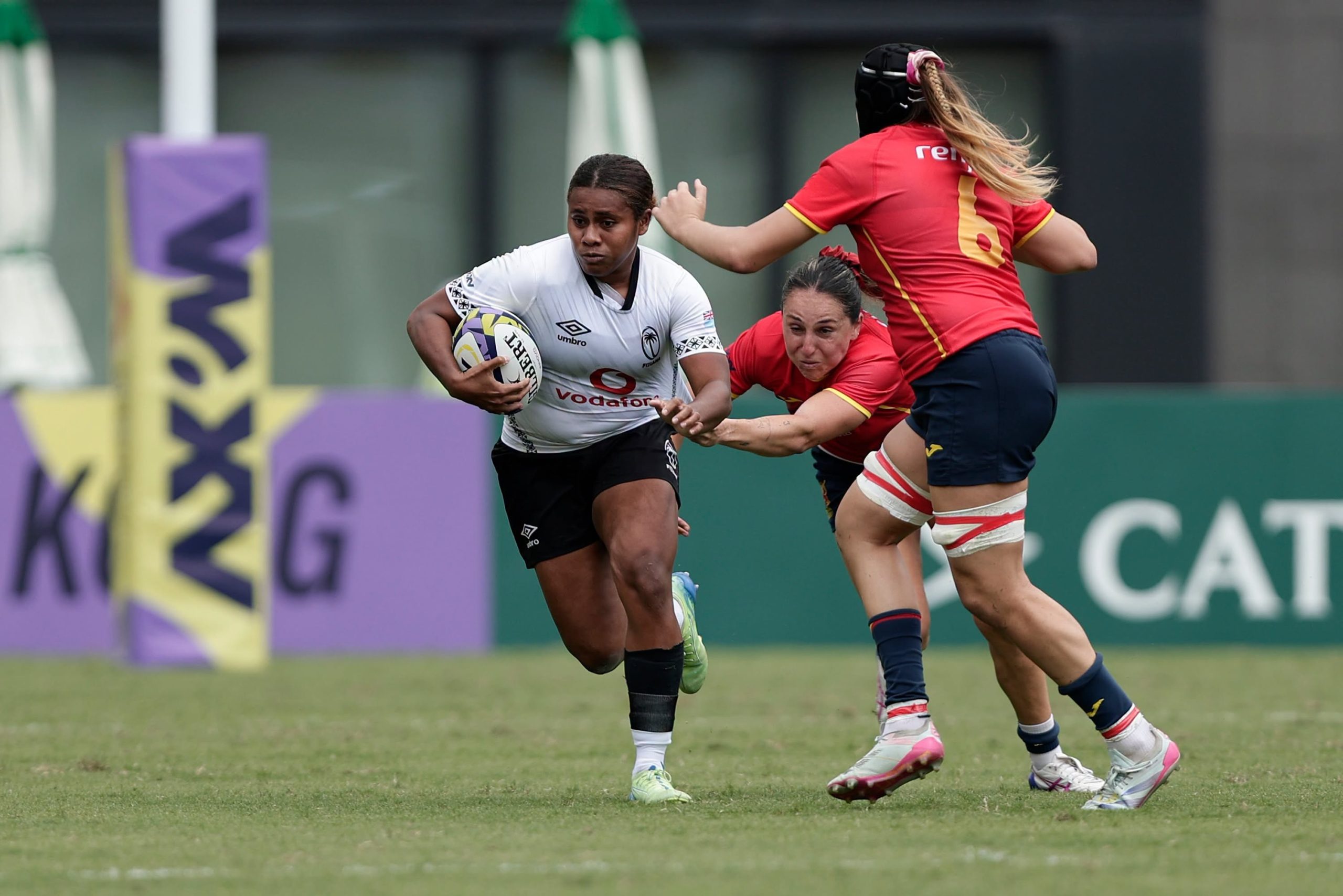
WILLIE Walker’s side must match the Netherlands’ structure and discipline without losing the attacking freedom that has powered Fiji’s campaign
The Fijiana XV have shown they can score tries. They have shown they can recover from adversity. They have shown they can turn a match on its head in a matter of minutes.
Against the Netherlands, however, they will be asked a different question: can Fiji control a Test match when the opposition refuses to play at Fiji’s preferred tempo?
That could be the defining challenge when the two unbeaten sides meet in the final round of the WXV Global Series Challenger.
Fiji’s attacking instincts have been one of their greatest weapons, with their ability to move the ball quickly and exploit broken-field opportunities producing eight tries against Hong Kong China. But the Netherlands have already demonstrated they can take a match into a completely different territory.
Their 70-0 demolition of Samoa displayed their attacking power, while the narrow 17-15 victory over Brazil showed their ability to grind out a result through territory, kicking, structured phases and forward pressure.
For Walker, the first priority must therefore be the set-piece battle.
The Dutch maul has the potential to become one of the biggest threats to Fijiana. Repeated lineout opportunities inside Fiji’s 22 would allow the Netherlands to apply pressure without having to beat Fiji’s defensive line in open play.
Fiji must contest the lineout, defend the maul before it gathers momentum and, most importantly, avoid conceding unnecessary penalties that hand the Dutch easy territory.
The second battle will be territory.
The Netherlands have shown they are prepared to kick for position and force opponents to play from deep. Fiji cannot respond to every situation by trying to run the ball.
There will be moments when the correct decision is simply to clear the danger.
That will require discipline from the Fijiana backs and forwards, particularly when they are under pressure in their own 22.
But Fiji must also be careful not to allow structure to suffocate their greatest weapon — tempo.
When Fijiana secure quick ball, they become a different proposition. The challenge is finding the balance between playing fast and playing hurriedly.
That distinction could decide the match.
Fiji will need accurate first-phase possession, clean breakdown work and runners attacking the Dutch defensive line before it has time to reset. Quick ball should be used to create mismatches, but speculative passes must be eliminated.
There is also the threat of Netherlands winger Kika Mulling, who has already scored five tries in the tournament.
Fiji cannot simply mark Mulling as an individual threat. They must identify the movements and attacking patterns that create space for her.
Captain Linde van der Velden will also demand attention. Fiji should look to make the influential forward defend repeatedly by moving the point of attack and forcing her into consecutive defensive decisions.
The final 20 minutes could prove crucial.
Fiji’s comeback against Spain showed their ability to finish strongly, but the Netherlands have already demonstrated against Brazil that they can remain composed under pressure.
For Walker, the challenge is therefore bigger than producing another attacking masterclass.
It is about control.
Fijiana must impose their pace without becoming impatient, defend the Dutch maul without giving away penalties, win the territorial battle and retain the accuracy required to turn possession into points.
If they can do that, their attacking weapons will have the platform to flourish.
If they cannot, the Netherlands have shown they possess the structure and patience to turn Saturday’s contest into an arm-wrestle — exactly the type of Test that will reveal how far this Fijiana side has really progressed.